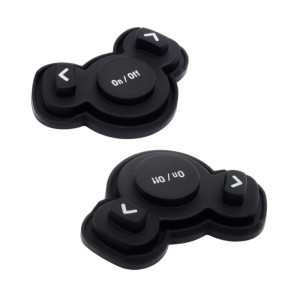
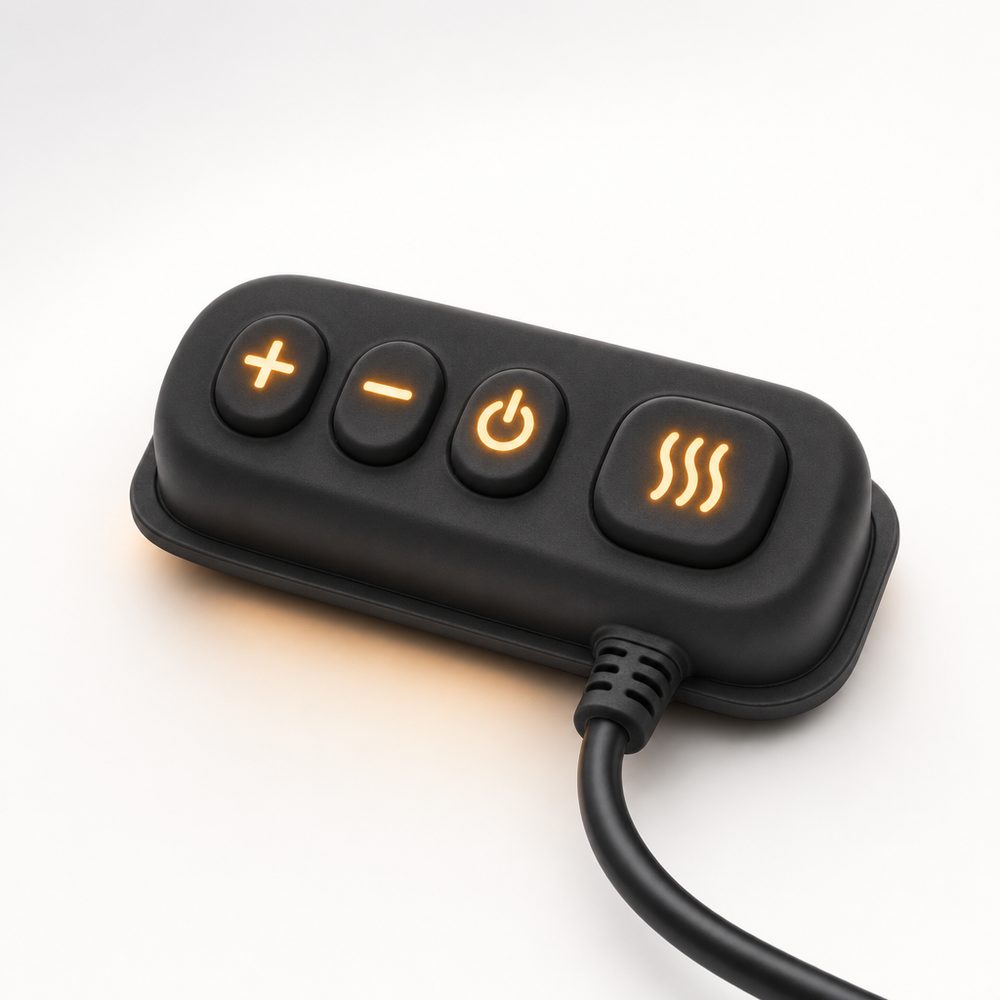
Manufacturer FromRubber Backlit Silicone Keypad Button For Heated Clothing
Item specifics
- Design
- Follow 3D Drawing Or Physical Object
- Printing
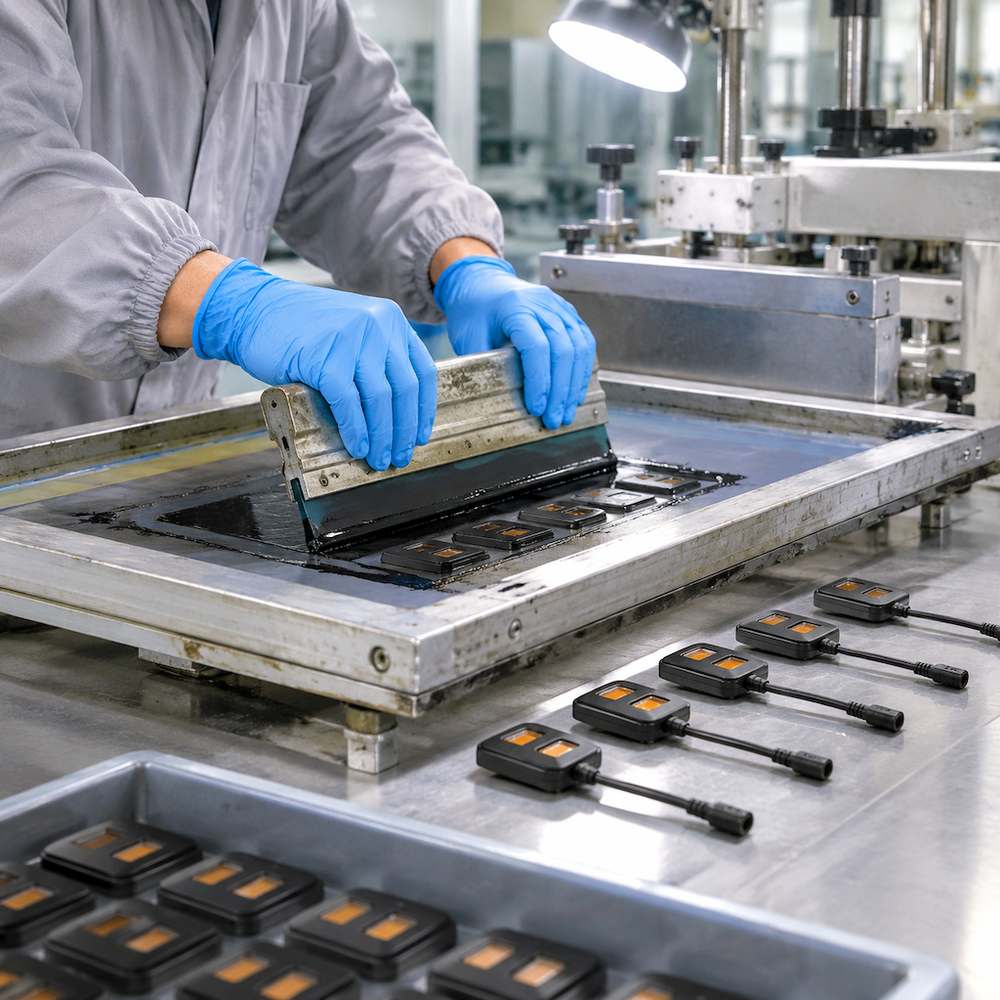
- Laser Etching
- Feature
- Backlit
- MOQ
- 1000pcs
- Application
- Heated Clothing
Review
Description
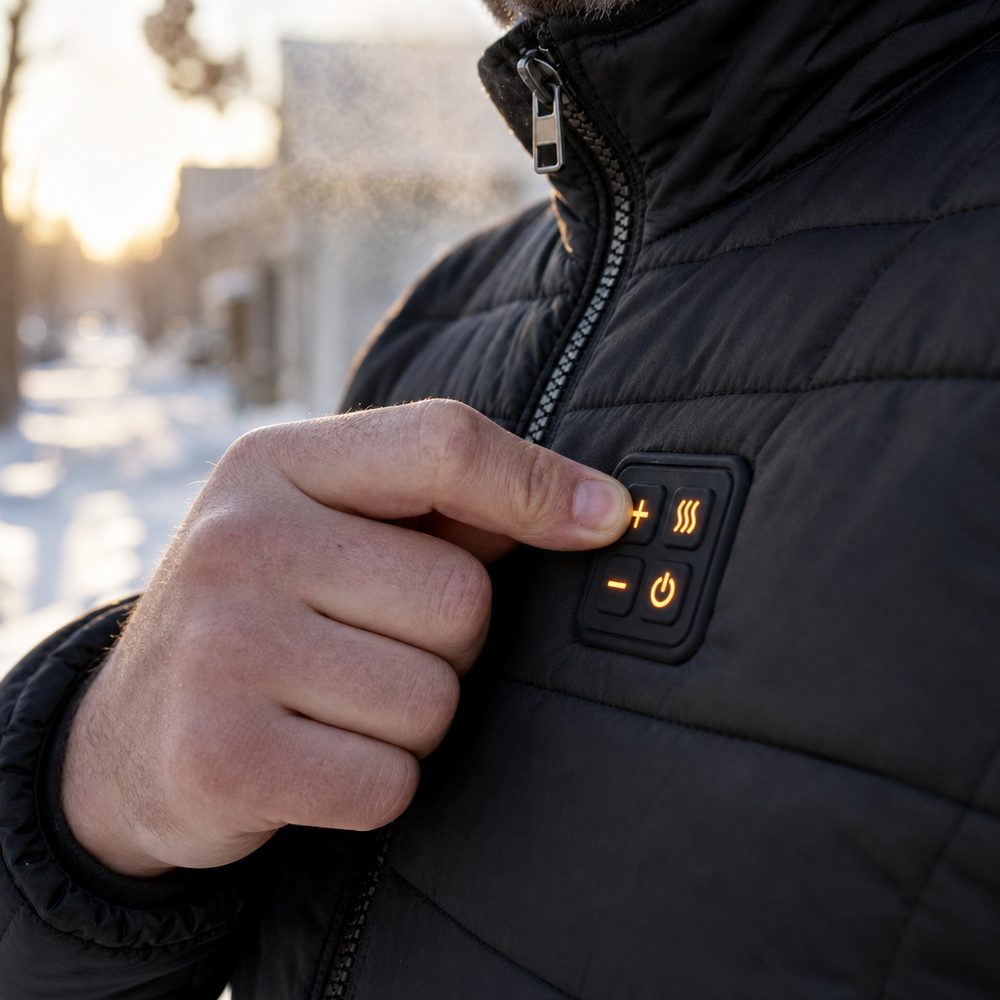
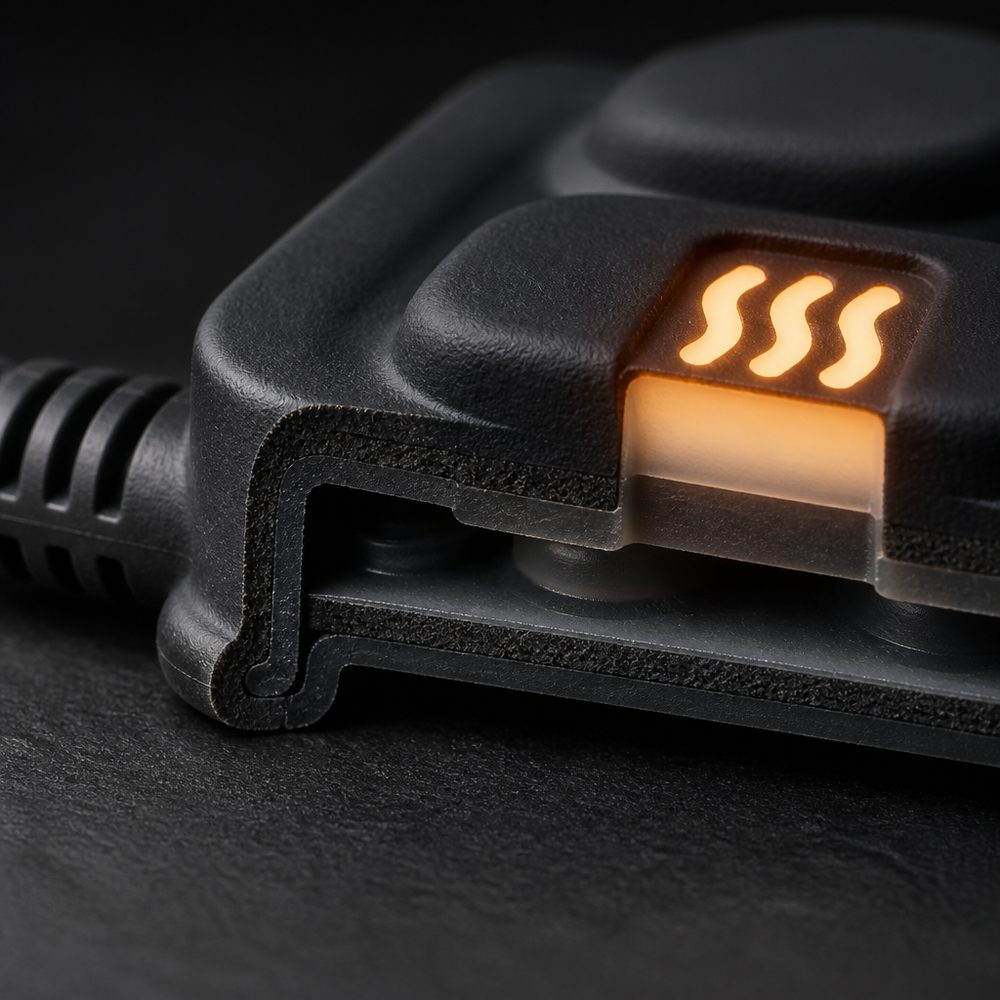
A heated jacket controller is worn against the body, flexed every time the wearer moves, and washed - sometimes weekly. That combination, not the electronics, is what limits the keypad. The silicone has to stay flexible at low temperature, the legend has to survive detergent and abrasion, and the seal has to keep moisture out of a controller that lives next to a battery. A keypad that looks right on a sample board can fail on the third wash. The design levers are thin: a low-profile key with a soft web, a two-layer legend that cannot peel, and a sealing arrangement that tolerates flexing rather than resisting it. Three requirements conflict on a garment controller: thin for comfort, durable for washing, and tactile through fabric. The design has to trade them deliberately. Domestic washing combines water, detergent, heat and mechanical action. Legends lift, coatings chalk, and thin sections flex thousands of times. A wash protocol aligned to ISO 6330 conditions, run before and after cycling, gives a result that means something; testing a new part straight out of the bag does not. Post-curing before assembly is the single most effective preparation. A jacket is worn in winter. Silicone keeps its flexibility far below freezing, but a highly filled or partly cured compound stiffens and a thin web can crack at the flex point. Standard silicone grades are usually adequate well below the temperatures a garment sees, provided the compound is properly cured and the web is not thinner than the design requires. A thin key is comfortable but gives a weak click through fabric. The compromise is usually a small raised key with a defined dome under it, so the actuation comes from the dome geometry rather than from wall thickness. Where the controller is operated with gloves, the key needs a wider top face and a firmer force. The envelope below is a starting point for a heated apparel controller. The wash standard and the battery interface set the final requirements. Ranges describe a typical design envelope. Final thickness, force and wash criteria are agreed against the garment construction and the customer's test protocol. Returns from heated apparel cluster around moisture, flex fatigue and legend loss - all three of which show up after weeks rather than days. The battery connector is the weakest point in the assembly, not the keypad itself. Water wicks along the cable and reaches the contact area. A moulded strain relief and a seal at the cable entry, rather than a separate boot, is more reliable on a garment that flexes constantly. Thin silicone flexed repeatedly at the same line cracks. The fix is geometric: spread the bend over a longer section, avoid a sharp transition from thin web to thick body, and radius every internal corner. Failures here look like material failures but are stress concentrations. Ultra-thin wall behaviour is analysed in tear strength in ultra-thin keypads. Sweat, detergent and abrasion attack the surface. Two-layer legends survive; surface printing does not. A coating that resists sweat also resists the sebum and salt that degrade an unprotected surface, which is the same mechanism documented in Sweat Corrosion in Wearable Silicone Keypads. Backlight on a garment controller is usually about finding the button in the dark rather than about appearance, which changes what matters in the design. Even brightness across three or four keys matters less than a clear, unambiguous glow at each key and a legend readable at arm's length. A thin light guide with a diffusing layer, rather than a complex multi-LED array, is usually enough. Methods are compared in Can silicone keypads be backlit, and what are the common. The controller runs from the same battery as the heating element, so backlight current is drawn from the runtime the user actually cares about. Low-current LEDs with a short auto-off, or backlight only on a button press, is a better use of the budget than permanent illumination. The keypad is bonded or clamped into a housing that is often fabric-covered. Adhesive choice matters: a pressure-sensitive tape that performs well on a rigid housing can lift on a flexible one. A mechanical clamp ring, or a moulded flange trapped by the housing, is the more durable arrangement. Yes, if the legend is two-layer and the compound is post-cured, the housing seals at the cable entry and the part is not flexed at a stress concentration. Washing is a system test, so the assembly is what gets validated. With the right force and a wider key face, yes. Force has to be specified for gloved use at the design stage because it changes the web geometry, not just the key top. For a controller used outdoors in winter, usually yes - but only with a low-current design and auto-off. Permanent illumination competes directly with heating runtime. Send the controller housing drawing, the garment mounting method and the wash protocol. We will review web thickness, legend construction and cable sealing. Related: sweat corrosion in wearable keypads and tear strength in ultra-thin silicone. FromRubber moulds silicone keypads for wearable and OEM product programmes. We do not sell retail.Backlit Silicone Keypad Button for Heated Clothing: Designed for the Wash, Not the Shelf
Wash Cycles, Cold and Thin Walls
Wash and Dry Durability
Low-Temperature Flexibility
Thin Walls Versus Tactile Feel
Specification Envelope for a Garment Controller Keypad
Parameter Typical envelope Why it drives the result Material VMQ silicone, 30-50 Shore A Soft feel through fabric, flexible when cold Wall thickness 0.8-1.5 mm web, thicker body Thin for comfort, thick enough not to crack at flex points Key height Low profile with a defined dome Tactile feedback without a tall key Actuation force Raised where gloves are used Feel through fabric and gloves Legend Two-layer, laser etched Printing does not survive washing Wash Protocol aligned to ISO 6330 conditions Gives a result that reflects real use Seal Moulded strain relief at the cable entry The connector is the weak point, not the key Where Garment Keypads Fail
Moisture at the Connector
Cracks at Flex Points
Legend and Coating Loss
Backlight and Assembly for a Garment
Backlight for Gloved Hands in the Dark
Power Budget
Assembly and Sealing
Heated Clothing Keypad Questions
Can a silicone keypad survive machine washing?
Will the keys still work with gloves?
Is backlight worth the battery cost?
Send the Garment Interface and the Wash Standard