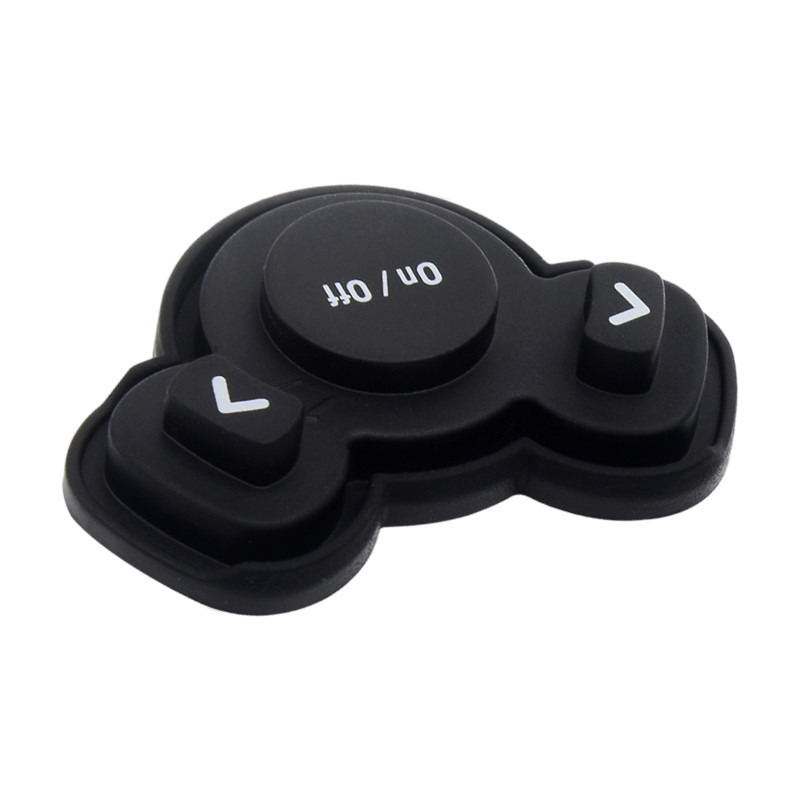
15 Years Experience Manufacturer Desige and Directly Provide Rubber Keypad
Item specifics
- Design
- Follow 3D Drawing Or Physical Object
- Printing
- Silk Screen Printing
- Feature
- Clear and Bright Characters
- MOQ
- 1000pcs
- Application
- According to Your Need
Review
Description
The difference between a factory-direct keypad and one routed through a trading company does not show up on the invoice. It shows up when the drawing is questioned, when a mould has to be modified and when a batch has to be traced. This page describes what actually changes when the toolmaker, the moulder and the printer are the same organisation, and where the model does not help. A trading company forwards a drawing; a manufacturer reads it. The practical difference appears in the first two weeks, when the question is whether a key web can be moulded at the thickness shown, whether the parting line can be kept off the sealing land, and whether the legend will survive the cleaning agent. A trader has to relay those questions and relay the answers back, and each relay loses detail. The second difference is change control. When a modification is agreed, a factory can adjust the tool and re-run a sample without a commercial negotiation in between. That does not make changes free, but it shortens the loop from a decision to a moulded part, which is usually what delays a project. A keypad tool is not complicated in the way a large injection mould is, but it is sensitive: the key web, the dome and the contact pill all depend on tool condition. When the tool is made and run in the same place, a first-article problem can be examined on the bench by the person who cut the cavity, and the correction is applied to the tool rather than negotiated with a third party. Colocation also matters for the secondary operations. Screen printing, laser etching and colour matching are all downstream of moulding, and each of them can hide or reveal a moulding defect. When those steps are in the same building, a legend that does not align with a key is diagnosed once instead of being passed between suppliers. Experience shows up as recognition, not as a claim. A manufacturer that has moulded keypads for instruments, medical devices, appliances and toys has already seen the failure patterns: the web that tears at the corner key, the legend that lifts after alcohol wiping, the carbon pill that drifts in resistance after life cycling, the sealing lip that is cut by a sharp housing edge on assembly. That recognition is useful at the review stage, where it can be applied before the tool is cut. It is not a substitute for testing the actual part, and any supplier that presents experience as a guarantee of performance is describing something they cannot control. A direct relationship changes the documents. Drawings, first-article reports and material declarations come from the party that produced the part, which matters when a customer's quality team audits the file. Traceability from compound batch to carton is a factory record rather than a compiled summary. It also changes the limits. A factory will say when a request is outside its process, for example a keypad requiring a level of optical clarity or a tolerance the tool cannot hold. A trader is more likely to accept the request and discover the limit later. Being told early is worth more than being told yes. Capability statements describe the processes available in-house; project-specific figures such as tool life and cycle time are confirmed against the actual part design. Tooling ownership is agreed in the commercial terms of each project. Where the customer pays for the tool, ownership and tool transfer conditions are stated in writing, because that decides what happens if production moves later. Yes. An existing keypad can be measured, modelled and reviewed, and where the original tool is available it can be assessed for reuse. Transfer projects usually start with a comparison between the existing part and the drawing. The tool is corrected and a new sample is moulded. Because toolmaking and moulding sit together, the correction is applied by the people who cut the cavity rather than negotiated through a third party. Certificates are published on the certification download page of this site, and the standard set that applies to a specific project is confirmed at RFQ. The company profile states DFM feedback within 48 hours and drawing to sample in two weeks, which are the two dates a project schedule is usually built on. Share the 3D model, the 2D drawing and the target application. The review returns the moulding constraints, tooling approach, material recommendation and the documents that will accompany first article.Buying a Rubber Keypad Directly From the Manufacturer: What Changes at the Drawing Stage
Direct Manufacturer Versus Trader: What Changes at the Drawing Stage
Who owns the DFM feedback

Tooling and Moulding Under One Roof
Why colocation shortens iteration
What a Long Project History Actually Buys You
A pattern library of failure modes


Working Directly With a Factory: The Practical Differences
Communication, documents and traceability
Manufacturing Scope and Project Fields
Questions About Buying Factory Direct
Do you own the tooling or does the customer?
Can a project be transferred from another supplier?
What happens if the first sample is not right?
Which quality documents come with a project?
Send a Drawing or an Existing Part