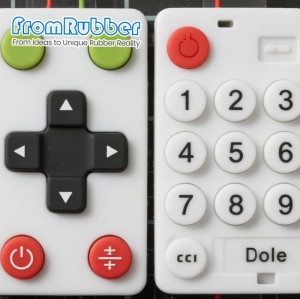
FromRubber Custom Silicone Rubber Keypad For Air and Water Quality Detector
Item specifics
- Design
- Follow 3D Drawing Or Physical Object
- Printing
- Silk Screen Printing
- Feature
- Clear and Bright Characters
- MOQ
- 1000pcs
- Application
- Air and Water Quality Detector
Review
Description
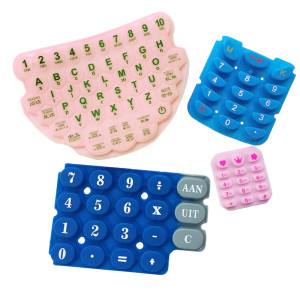
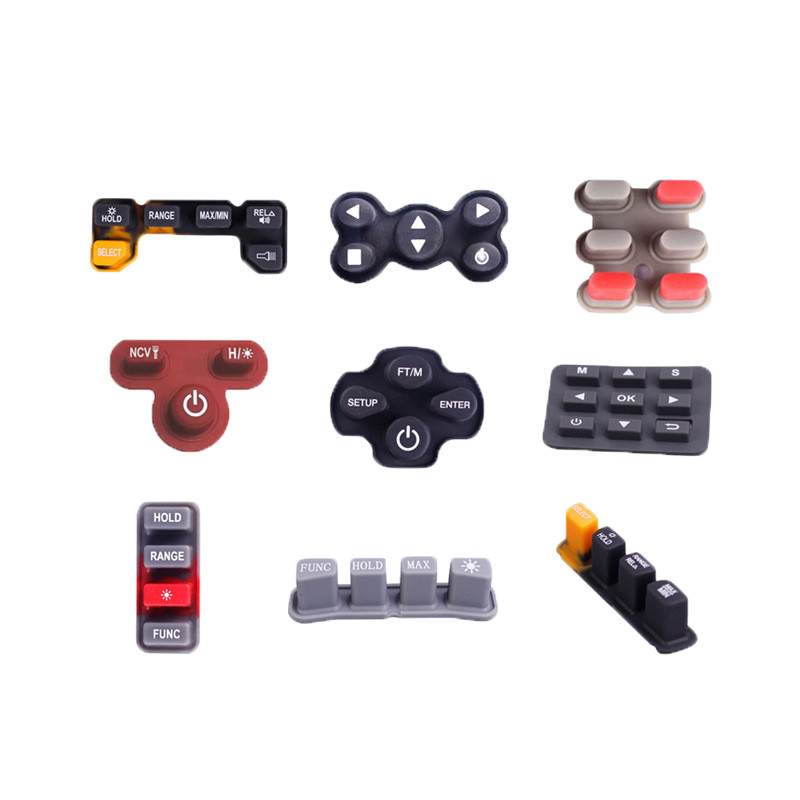
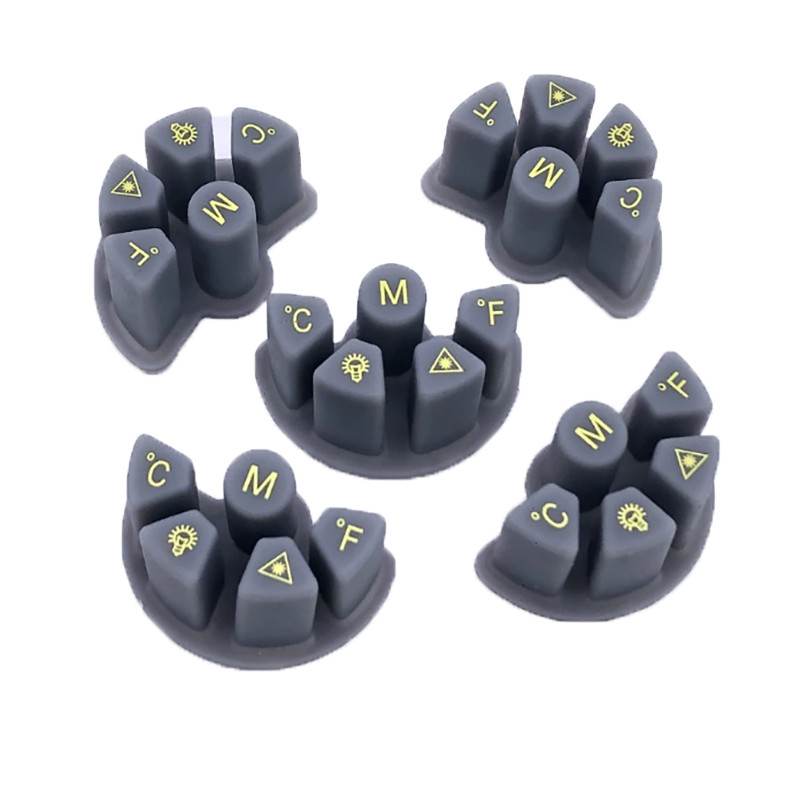
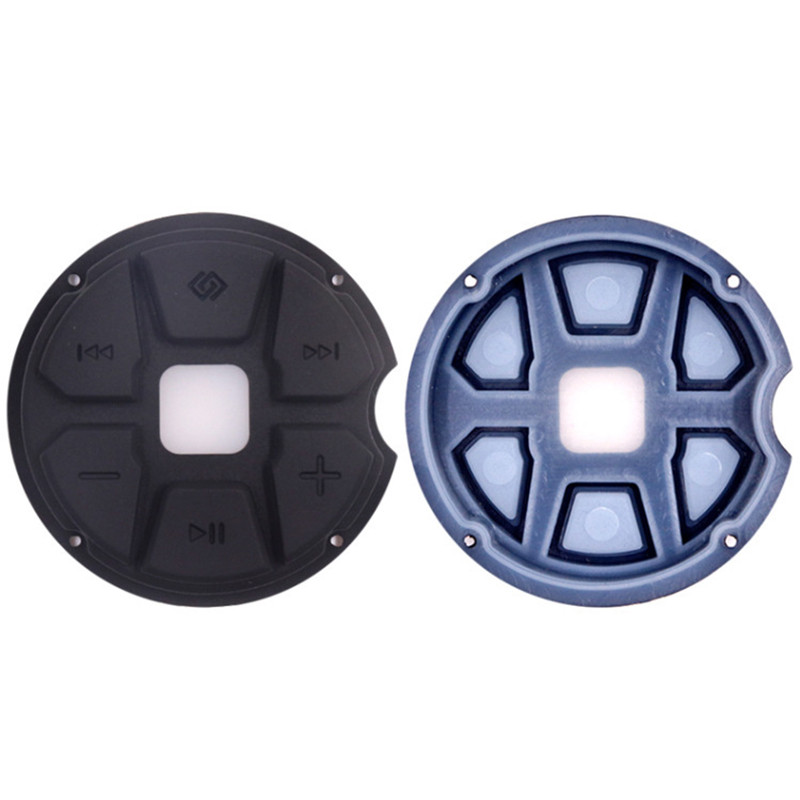
Portable detectors fail at the interface a user touches most. This page sets out the four decisions that determine whether a molded silicone keypad survives field use on air and water quality instruments: sealing architecture, key web geometry, contact method, and legend durability under disinfectant wiping. It is written for hardware engineers and sourcing teams specifying a custom keypad, not for retail buyers. Most detector housings are sealed with an O-ring at the battery door and ultrasonic welding at the shell joint. The keypad is different: it is a flexible membrane held against a rigid flange, and every keystroke moves it. A flat gasket compressed between the keypad skirt and the housing relaxes over thousands of cycles, and the gap that opens is measured in tenths of a millimetre, which is enough for condensate and splash to migrate onto the contact area. The second failure mode is not water at all. Detectors are wiped with isopropyl alcohol, quaternary ammonium or diluted hypochlorite between sampling points. Solvent migrates under a screen-printed legend, and the legend lifts before the silicone itself shows any change. The keypad still functions, but the calibration and unit labels become unreadable, which is a usability and traceability problem in the field. In the first architecture the keypad carries a molded sealing lip that compresses against a land machined into the housing, with the lip geometry doing the work that a flat gasket cannot: as internal pressure rises, the lip is pushed harder against the land. The second architecture keeps a separate O-ring but moves it outboard of the key field, so keystroke deflection cannot unseat it. Both are drawn at the same time as the housing, because the compression land, the flange height and the keypad skirt are one tolerance chain. When the keypad is quoted from a keypad drawing alone, the sealing land is usually missing, and the sealing performance becomes an assembly trial rather than a designed feature. Our DFM review starts from the housing interface for this reason. A detector keypad is operated with gloves, often while the instrument hangs from a lanyard. That changes the ergonomic target: a short travel with a firm, unambiguous break is more usable than a soft key. Carbon pill contacts give the most consistent resistance across life; conductive ink is thinner and suits low-profile keypads but is sensitive to the ink cure window; metal domes give the sharpest tactile break and are usually specified when the keypad sits behind a rigid front panel. Whichever contact method is chosen, the key web and the dome height have to be defined together. A web that is too thin gives a mushy feel and lets the key collapse under a thumb; a web that is too thick raises actuation force until the key is unusable with a gloved hand. These are drawing decisions, and they are checked on the first mould trial rather than assumed from a catalogue. Screen printing remains the most economical way to put multi-colour legends on a silicone keypad, provided the ink system is matched to the silicone and fully cured. Conventional inks on silicone need a primer; silicone inks bond chemically and hold up better under repeated alcohol wiping. For keys that must illuminate, laser-etched legends over a translucent key body give a durable symbol because the marking is inside the material rather than on top of it. For detectors used in hygiene-controlled environments, the specification should name the cleaning agent and the number of wipe cycles, not just the legend colour. That single line in the requirement is what separates a keypad that looks correct at first article from one that still reads correctly after a year of field use. The values below are the fields that must be agreed on the approved drawing. Final figures are confirmed on the drawing and material data sheet for each project rather than carried over from a catalogue. Yes. The compression land and skirt geometry belong to the same tolerance chain, so the DFM review covers both. Sending only the keypad drawing usually leaves the sealing land undefined. A 3D model in STEP or IGS plus a 2D drawing with critical dimensions, or a physical sample if no CAD exists. Legend artwork and the target cleaning agents should be included in the first package. It is verified on the assembled instrument, not on the keypad alone. The keypad contributes the sealing lip and the flange compression; the housing, display window and battery door contribute the rest, so the test belongs to the assembly drawing. Prototype and pilot quantities are discussed separately from the 1000 pcs production minimum, so the mould can be validated before a production order is placed. Share the 3D model, the housing interface and the cleaning agents used in the field. The review returns the sealing architecture, key web and contact recommendation, legend method and the open points to close before steel is cut.Silicone Rubber Keypad for Air and Water Quality Detectors: Design Rules for Field Instruments
Why the Keypad Is the First Ingress Path on a Detector
Where water actually enters a sealed instrument
Sealing Architecture: Molded Perimeter Lip Instead of a Separate Gasket
Two architectures that hold up in repeated actuation
Actuation and Contact Design for Instrument Keypads
Carbon pill, conductive ink or metal dome

Legends That Survive Disinfectant Wiping
Printing, laser etching and backlit symbols
Custom Detector Keypad: Specification Fields to Fix Before Tooling
Detector Keypad Questions Buyers Ask Before Tooling
Can the keypad be quoted together with the housing interface?
What design input is needed to quote?
How is ingress protection verified?
Is a lower quantity possible before mass production?
Send Your Detector Keypad Drawing for a DFM Review