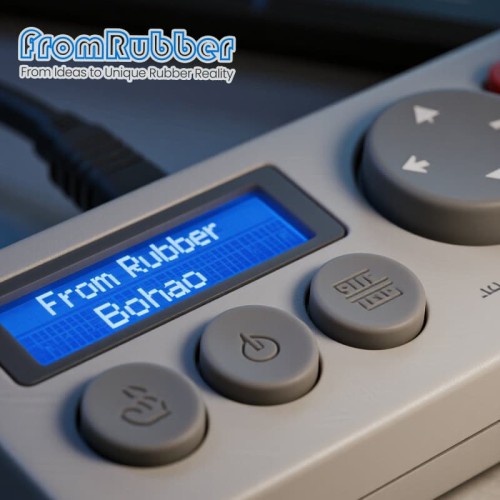


Customized Raised/Recessed Character Silicone Keypad Buttons
Item specifics
- Design
- Follow 3D Drawing Or Physical Object
- Process
- Molding
- Feature
- Chemical Resistant
- MOQ
- 3000pcs
- Application
- industrial, medical & automotive applications
Review
Description
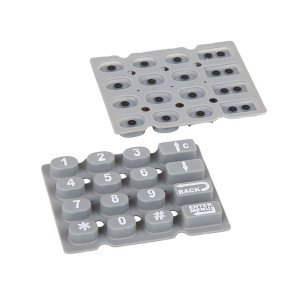
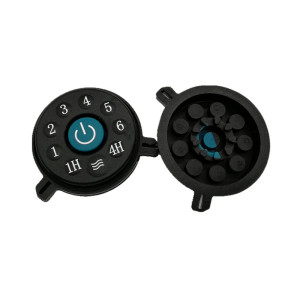
A raised character stands proud of the key surface and can be read by a gloved finger in the dark. A recessed character sits below the surface and is protected from everything that rubs against the panel - at the cost of being harder to clean and harder to see at an angle. Both are moulded, both are durable, and they fail in opposite ways. That makes the decision a use-case question: is the key pressed by a bare finger in daylight, or by a glove in a dark plant room? Is the panel wiped with solvent daily, or handled with oily hands? The answers point to one geometry, and the geometry then sets the tool. The relief catches light and casts a shadow, so the character reads at a distance and under a fingertip. It is the right choice for equipment used in low light, or where the operator looks away from the panel while pressing. The cost is exposure. The top of the character is the highest point on the key, so it is the first place to abrade, and a key that is pressed and wiped thousands of times will eventually flatten. Two rules protect it: relief height no more than about half the stroke width, so the character does not round over, and a small radius on the top edge so abrasion polishes rather than tears. Engraved into the key surface, the character is below the wear plane: cloth, fingers and gloves slide over it rather than across it. That makes it the more durable option on a panel that is cleaned aggressively, and the better one where the key top is used as a wear surface. The cost is hygiene and contrast. A recess collects dust, oil and cleaning residue, which is a problem on any panel with a cleaning protocol; and the shadow that makes it legible in daylight can disappear in low light. Filling the recess with a contrasting colour solves the contrast, at the price of a second operation and a cavity that can still hold dirt. Mixing is legitimate and common: raised numerals on the keys, flush-printed function text on the panel around them. The tool has to be designed for both from the start. Gloves? Raised. A gloved fingertip reads relief and cannot read print. Cleaned daily with solvent? Recessed, or flush with a laser legend. A raised edge gives the cloth something to catch. Dense text? Flush. Below a certain stroke width, moulded relief stops being readable, whatever the height. Touch-operated in the dark? Raised, and consider a different key height for the most-used key so it can be found without looking. The legibility rules for relief depth against reading distance are set out under embossed 3D labels. Where the key also needs a dome and a backlight, see tactile keypads. Yes, within reason: a raised main legend with a recessed secondary function is common. Each feature is a separate mould detail, so the tool needs room for both and the character spacing has to allow it. It follows from stroke width rather than from a fixed height. A wide stroke supports a taller relief; a thin one rounds over and loses legibility. Send the font and the finished size and the height follows. Only if it must be read in low light or at an angle. In good light the recess reads by shadow, which is why many industrial panels leave it unfilled. Moulded geometry survives because there is nothing to remove. Printed ink is the vulnerable option; laser etching sits between the two and depends on the pigment system. Stroke width, character height and relief depth are one decision, and the font sets the limit. Send the artwork at 1:1 with the finished key size, and we will propose the character geometry and the tool detail behind it.Raised or recessed characters: the choice follows from how the key is used, not from the artwork
Raised characters read by touch, and wear at the top
What a raised legend gives and costs
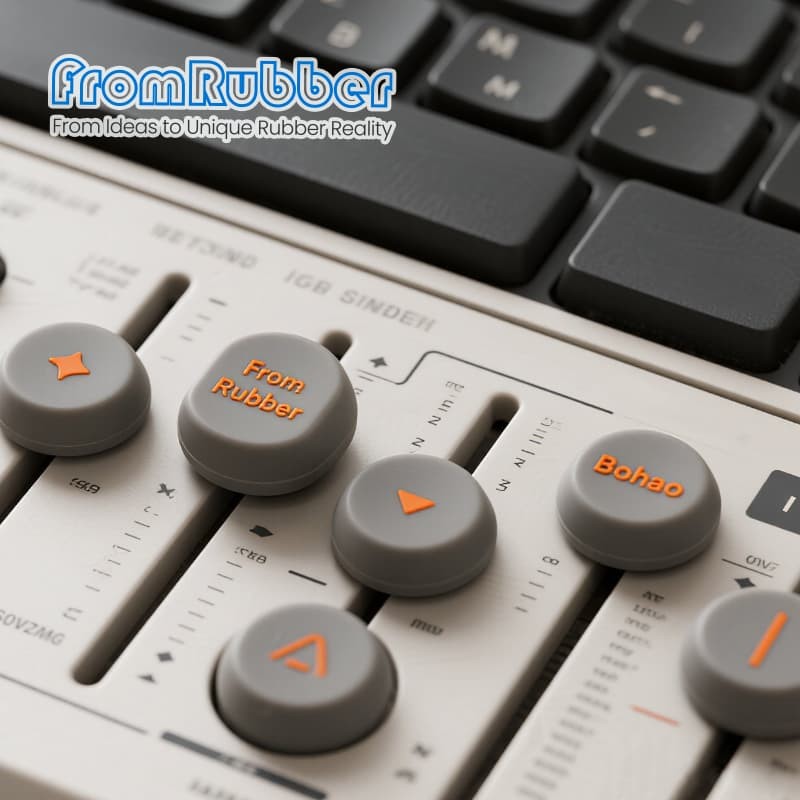
Recessed characters are protected, and they trap
What a recessed legend gives and costs
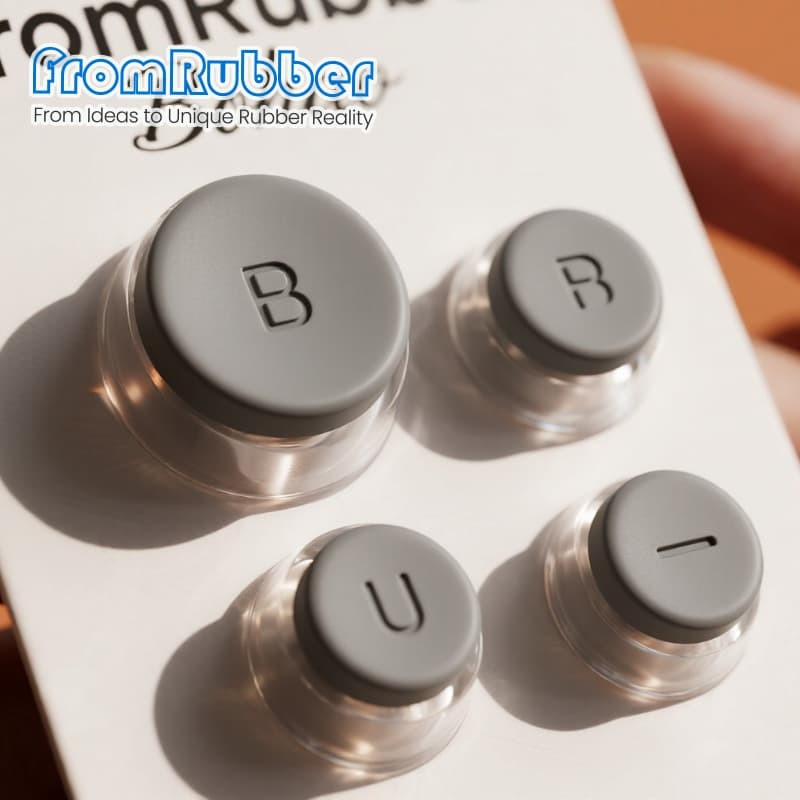
Three options, side by side
Choosing by use case
Four questions that decide it
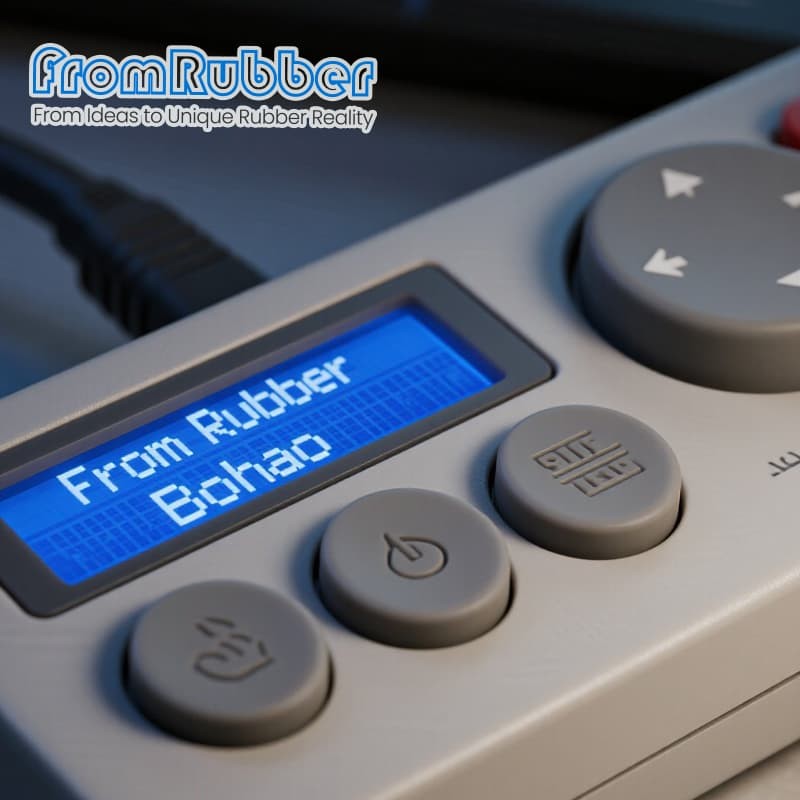
Specification on this series
Questions from panel designers
Can one key carry both raised and recessed characters?
How tall can a raised character be?
Does a recessed legend need colour fill?
Which survives laser cleaning?
Send the font at final size