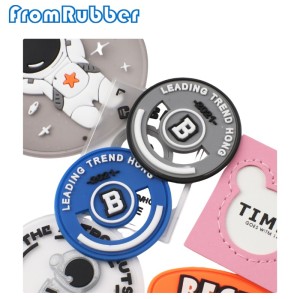
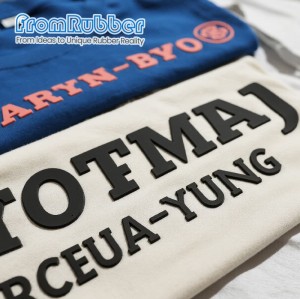
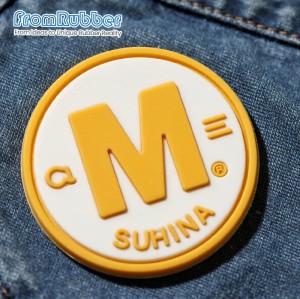
0.5-1.0 mm Heat Transfer Rubber Patches
A thin patch follows the garment and survives stretch, which is what knitwear and performance fabric need.


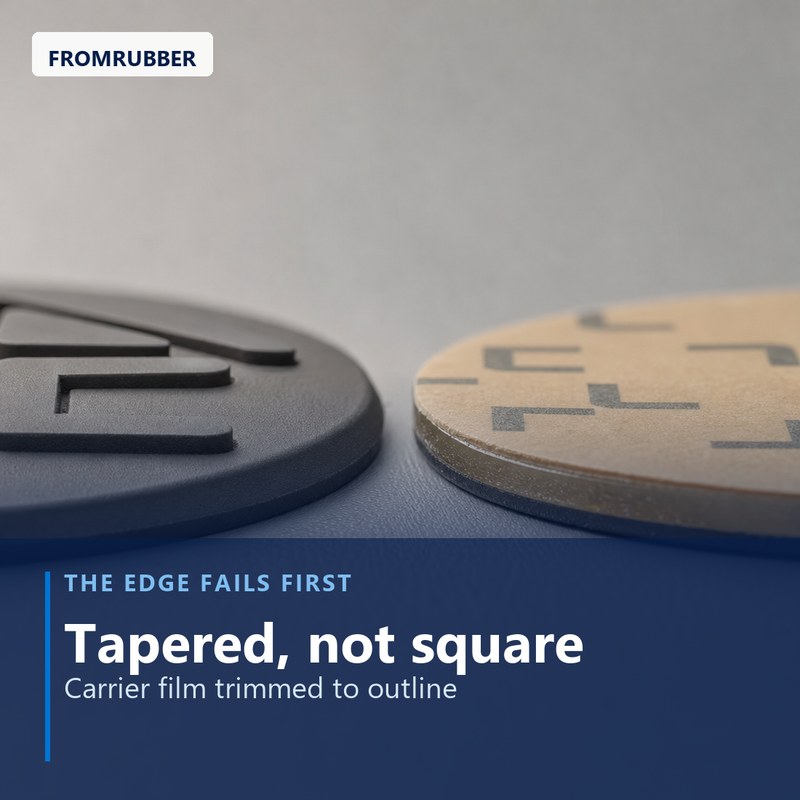
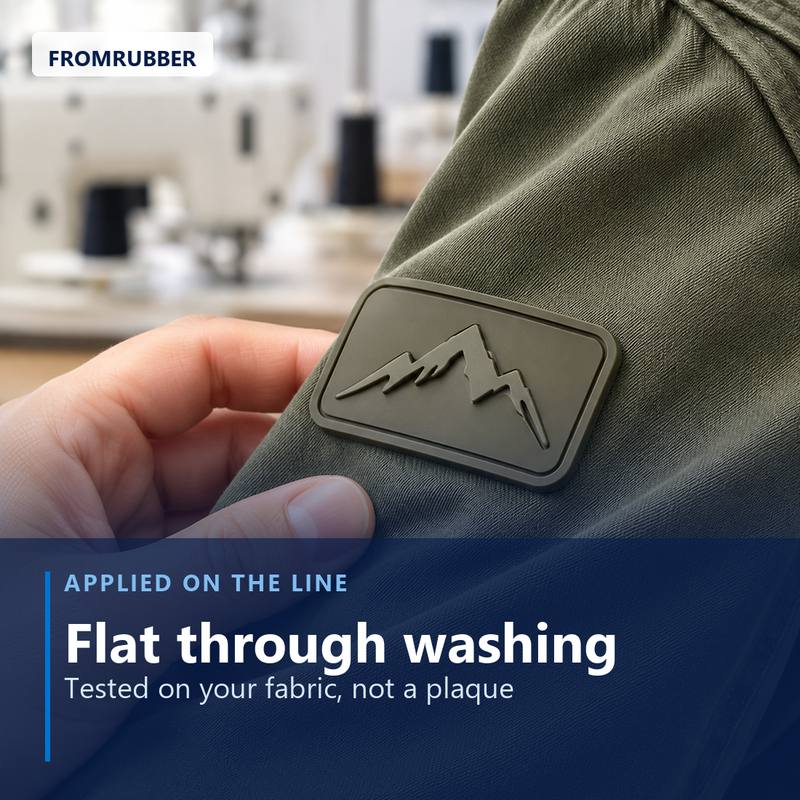
A heat transfer rubber patch is a molded silicone or PVC badge with a hot-melt adhesive layer, applied by press rather than by sewing. Thickness, edge geometry and the adhesive window decide whether the patch lies flat and stays flat through washing. A thin patch follows the garment and survives stretch, which is what knitwear and performance fabric need. Raised lettering and sculpted shapes need wall thickness behind them. Thicker patches read stronger but resist drape. The edge is the first place a patch lifts. Cutting method and edge profile are chosen together with the fabric. Thickness is usually quoted as a single number, but on a heat transfer patch it is at least three: the base web, the relief height, and the edge section. A patch can be 1.0 mm at the base and 2.2 mm at the lettering, and it is the edge section that decides whether a corner lifts after ten washes. Fabric decides the rest. A heavy fleece hides a thick patch and supports it; a lightweight jersey does not, and a stiff 2 mm badge on a soft knit will curl at the perimeter long before the adhesive fails. The practical approach is to match patch stiffness to fabric weight, then tune the relief for the visual effect the brand wants. Knit stretches and recovers, so the patch has to move with it. Woven and bonded fabric allow a firmer patch with a sharper edge. Every extra tenth of a millimeter in relief adds visual depth and subtracts flexibility. Relief is designed against the logo, not against a target thickness. A tapered or rounded edge spreads peel stress. A square, full-thickness edge concentrates it at the corner, which is where lifting starts. Typical build options for apparel branding. Final values depend on fabric, artwork and the adhesive selected for the press line. Press parameters are established by test on the actual fabric, not copied from a generic label. A patch that passes on cotton can fail on a coated synthetic at the same setting. Adhesive windows are established by trial on the real substrate. The adhesive is the least visible part of the product and the most common cause of a complaint. A hot-melt layer has a narrow band where it flows enough to wet the fabric but does not yet degrade; below it the patch peels, above it the patch sinks and the edge bleeds. Carrier film does two jobs: it holds the multi-part patch together before pressing and it protects the surface during the press. Film thickness and release behavior are specified with the patch, so a buyer changing pressing equipment does not silently change the result. The full patch range sits under our <a href="https://www.fromrubber.com/products2140752/Custom-Heat-Transfer-Patches.htm">heat transfer patches</a> category. A press trial on production fabric, at three temperatures, produces a window rather than a single setting. That window goes to the sewing floor. Film thickness, matte or gloss finish and release force are agreed with the patch, and the film is trimmed to the patch outline. Wash temperature, ironing and tumble-dry instructions have to match what the patch was actually tested against, or the label becomes the failure record. The goal of the process is a patch that behaves the same on the hundredth garment as on the first sample. Relief plan, color count, edge profile and minimum stroke are checked against the intended fabric weight. A physical patch is pressed onto production fabric and washed, so adhesion is judged on the real substrate. Molding or casting runs to the approved construction, with color matched to the approved sample. Adhesive and carrier film are applied, patches are cut to shape and packed in the orientation the press line needs. Yes, with a thin construction and a rounded edge. A patch that is too stiff will lift at the perimeter on a fabric that stretches more than the patch does, whatever the adhesive. That is a test result, not a promise. We press and wash the actual fabric and report the outcome, and the care label is written to that result rather than to a generic claim. Yes. The same molded patch can be produced with a sew channel or a stitched border when a brand wants mechanical fastening instead of, or in addition to, adhesive. Send the artwork, fabric sample and target wash performance. We will return a construction proposal, a press window and a care-label recommendation. Related capabilities: Heat transfer patch range · Custom rubber patches · Screen printing
Heat Transfer Rubber Patches for Clothing: Thickness, Edge Cut and Backing
0.5-1.0 mm Heat Transfer Rubber Patches
1.5 mm 3D Rubber Patches for Relief
Laser-Cut or Die-Cut Patch Edges
Specifying Thickness Against Fabric and Drape
Knit Versus Woven Substrates
Relief Height and Drape
Edge Thickness and Curl
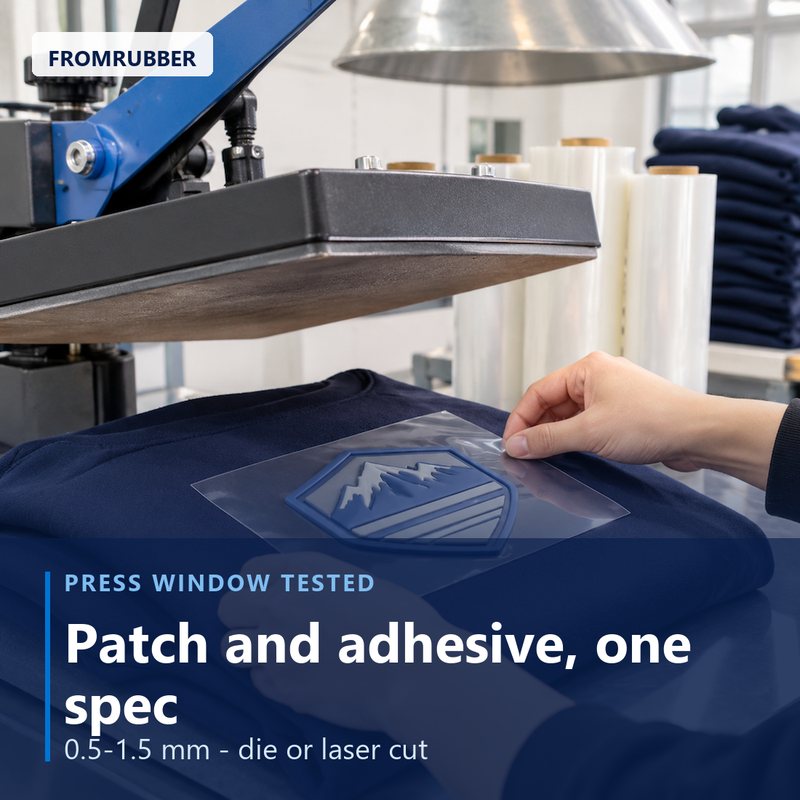
Heat Transfer Rubber Patch Specification Envelope
Material Silicone rubber or PVC, selected per application Thickness 0.5 mm flat, 1.0 mm standard, 1.5 mm and above for molded relief Backing Hot-melt adhesive with carrier film for press application Edge Laser cut or die cut, square or rounded profile Relief Flat, embossed or 3D molded lettering Color Molded color, color fill or printed detail depending on artwork Application Press temperature, time and pressure set with the adhesive supplier for the fabric Care Care instruction matched to the tested application window
Pressed on your fabric, not a plaque
Press Window, Carrier Film and What Goes on the Care Label
Establish the Window on the Real Fabric
Carrier Film and Release
Care Label Consistency
From Artwork to a Press-Ready Patch
Artwork and Construction Review
Sample and Press Trial
Tool and Production
Cut, Back and Pack
Heat Transfer Rubber Patch Questions Brands Ask
Can a heat transfer patch be used on stretch fabric?
How many washes should a patch survive?
Do you supply patches with a sew-on option?
Developing a Heat Transfer Patch for a Garment Program?