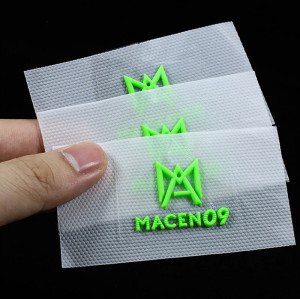
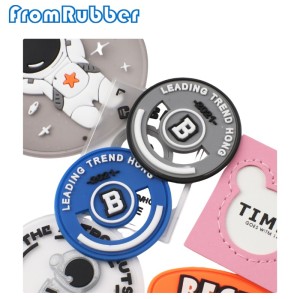
Creative Decoration Non-fading Rich Color Stylish Silicone Patches
Creative Decoration Non-fading Rich Color Stylish Silicone Patches
Model
BH-silicone label
Item specifics
Design
Follow 3D Drawing Or Physical Object
Process
Molding
Feature
Non-fading Rich Color Stylish
MOQ
1000pcs
Application
hats, tote bags, coats, and other apparel
Review
Description
Moulded silicone patches · apparel decoration
A silicone patch loses its colour at the edge first
Buyers ask for a patch that will not fade, and then approve a sample by looking at the middle of it. In the field, colour loss starts at the perimeter: the edge lifts, abrades against cuffs and bag straps, and the first thing to go is the thin material at the boundary.
We mould decorative silicone patches for hats, tote bags, coats and apparel, with the colour built into the part and the edge geometry specified for the attachment method. Those two decisions, not the pigment brand, decide whether the patch still looks new after a season.
Through-colour base with separately moulded colour details
Edge geometry matched to sew-on or heat-transfer attachment
Raised detail moulded, micro type printed
MOQ 1,000 pcs per design
Where colour actually goes
Four failure paths account for most “it faded” complaints. None of them is solved by choosing a better pigment alone.
01
Perimeter abrasion
The edge is the thinnest section and the part that rubs against everything. A feathered edge on a heat-transfer patch abrades through in weeks; a rounded, slightly thicker edge on a sew-on patch does not.
Design answer: edge section specified per attachment method, with the colour running through the full edge rather than sitting on it.
02
Print on raised detail
Printed colour on top of a raised figure is a coating on a peak. Every contact removes a little of it, and the loss shows as a pale highlight on exactly the part the design is built around.
Design answer: raised figures are moulded in their own colour. Print is kept on flat lands where a wipe does not reach it first.
03
Migration and surface bloom
Oils and softeners can migrate to the surface over time, and a light patch stored against a dark garment can pick up colour while a dark patch can leave a mark on a light one.
Design answer: compound and cure specified for low migration, plus an interleaf in packing for light colours. Storage guidance goes on the carton, not in a manual nobody reads.
04
Heat and light in transit
A container in summer reaches temperatures that accelerate any surface chemistry. A patch that passed a wash test can still arrive looking dull.
Design answer: through-colour construction, matte rather than gloss surface, and packing that keeps patches flat and separated.
The attachment method decides service life
This is the choice most often made last and regretted first. It changes the edge, the back coating and the price.
Method
Suits
What it demands of the patch
Where it fails
Sew-on
Caps, bags, heavy coats, workwear
Raised edge with a stitch margin; a base thick enough to hold thread
Needle holes along the stitch line on thin patches; deformation on curved caps
Heat transfer
T-shirts, jerseys, light wovens, promotional runs
Hot-melt adhesive coating and a thin, feathered edge
Edge lifting on stretch fabric and on coated or water-repellent surfaces
Sew-on plus adhesive
Outdoor gear, thick knits, high-wear positioning
Stitch margin plus a tack coat to stop the patch moving before sewing
Adhesive residue bleeding at the stitch line if the coat is too heavy
Adhesive only
Sampling, retail display, non-laundered items
Flat back, pressure-sensitive film
Laundering and dry cleaning; not a production method for garments
Ask before approving art: which wash cycle and which fabric the patch will live on. A design that works on a canvas tote can be the wrong edge for a stretch jersey.
Small type is a moulding question, not a font question
A ring of lettering around a patch looks simple in vector and is the hardest part to mould. Narrow strokes need a cavity that fills before the material cures, and a stroke that is too narrow will round over or fail to fill at the deepest point.
Three practical routes, in order of durability:
Moulded and raised — the lettering is a physical wall, colour runs through it, and it survives abrasion. Needs a stroke the tool can cut and fill.
Moulded and recessed — letters sit below the surface, so the rim protects them. Reads best on a patch that will be handled constantly.
Printed on a flat land — the only way to hold very fine type, at the cost of a surface that wears sooner.
Send the vector and we will tell you which strokes have to change. Adjusting the artwork before tooling costs a file edit; adjusting it afterwards costs a tool.
Edge, colour and detail together
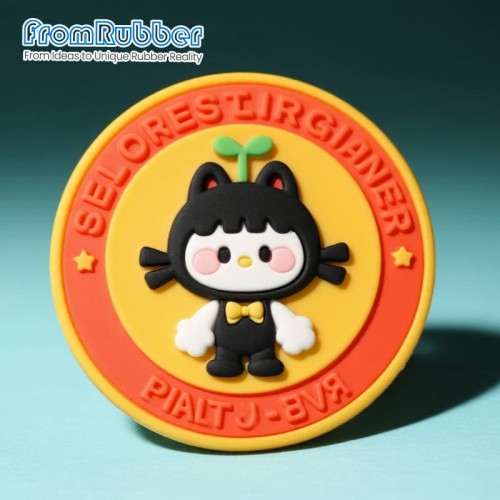
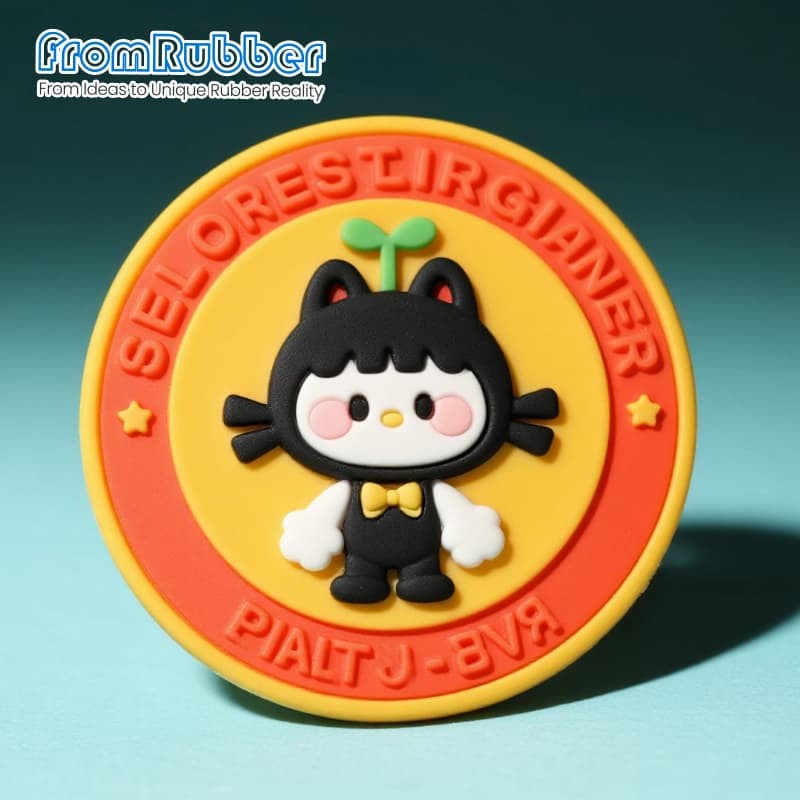
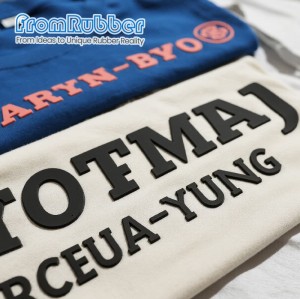
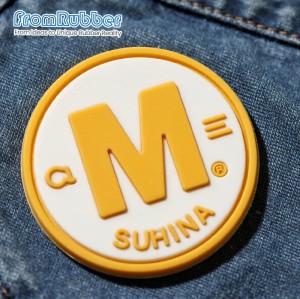
Three production patches. Look at the rim: it is where the colour and the attachment meet.
Buyer questions on colour, washing and storage
Will the patch fade after repeated washing?
The colour is in the material, so washing does not remove it the way it removes a surface dye. What washing does attack is the attachment and the edge: a feathered heat-transfer edge lifts, and once lifted it abrades. Specify the wash cycle and the fabric with the order, and choose the edge for that cycle rather than for the sample photo.
Can it go in a tumble dryer?
Heat-transfer adhesive is the limiting factor, not the silicone. A hot dryer softens the bond and the patch can lift at a corner. We recommend low heat and turning the garment inside out; if your care label promises tumble drying, say so before the adhesive is specified.
Can a white patch stain a light garment in storage?
Migration is possible when a patch is pressed against fabric for a long period in heat. We specify low-migration compounds and pack with an interleaf, but the safest answer is to store patched garments flat, cool and dry, and not to stack heavy loads on them in a warm warehouse.
How many colours can one patch carry?
As many as the artwork has separate areas, within the tool’s cavity count. Each moulded colour is its own piece, so the practical limit is set by assembly, not by colour chemistry. Send the art with the colour breaks marked and we will return a cavity plan and the cost step for each colour.
Send the artwork and the care label
The care label tells us more than the drawing does: wash temperature, tumble drying, fabric weight. You get an edge and attachment proposal matched to it, a cavity plan per colour, and a sample before production tooling.