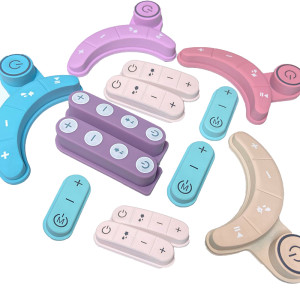
FromRubber Custom Silicone Rubber Backlight Keypad For Electric Wheelchair
Item specifics
- Design
- Follow 3D Drawing Or Physical Object
- Printing
- Silk Screen Printing
- Feature
- Backlight
- MOQ
- 1000pcs
- Application
- Electric Wheelchair
Review
Description
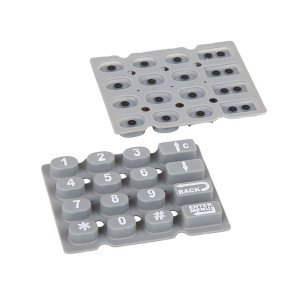
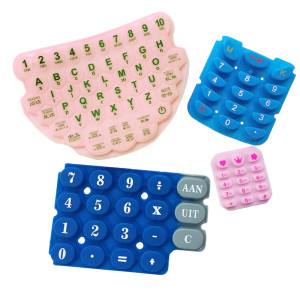
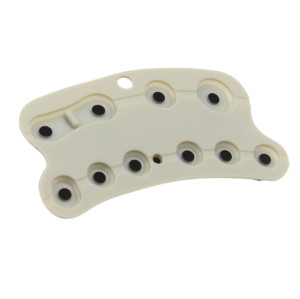
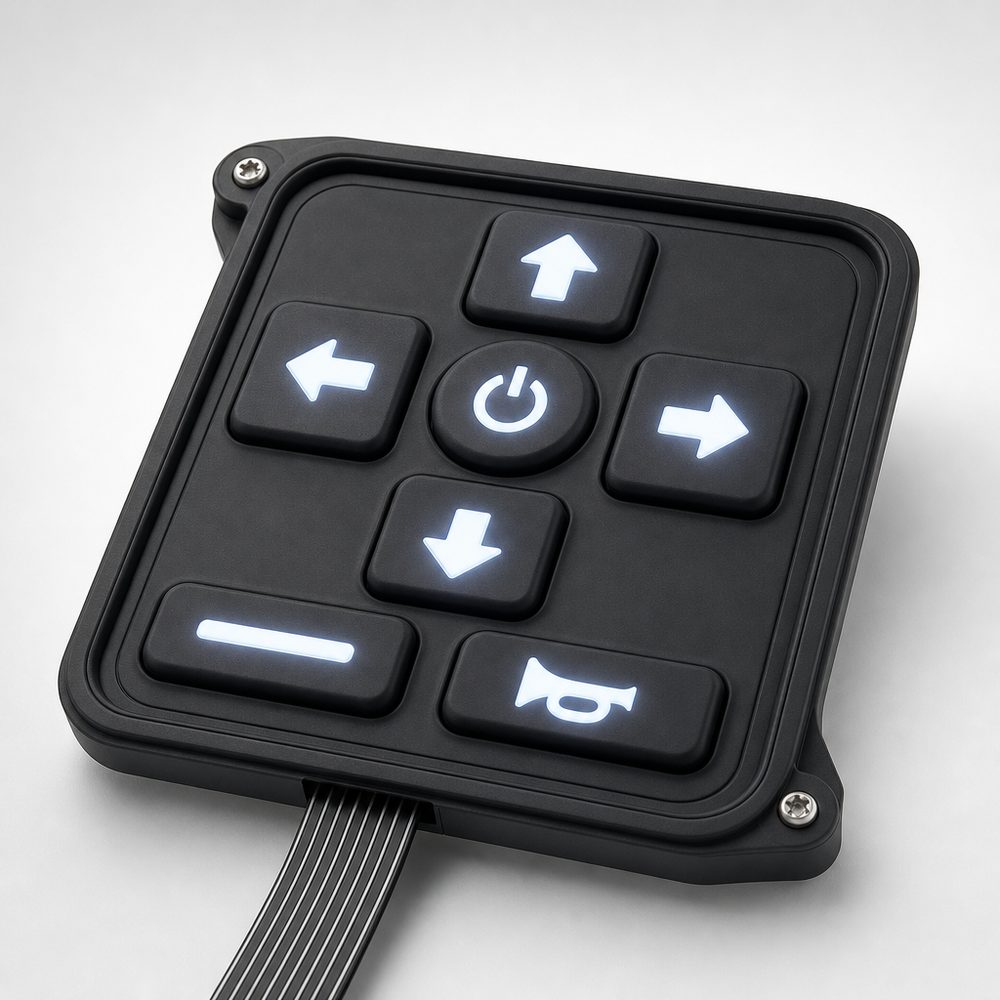
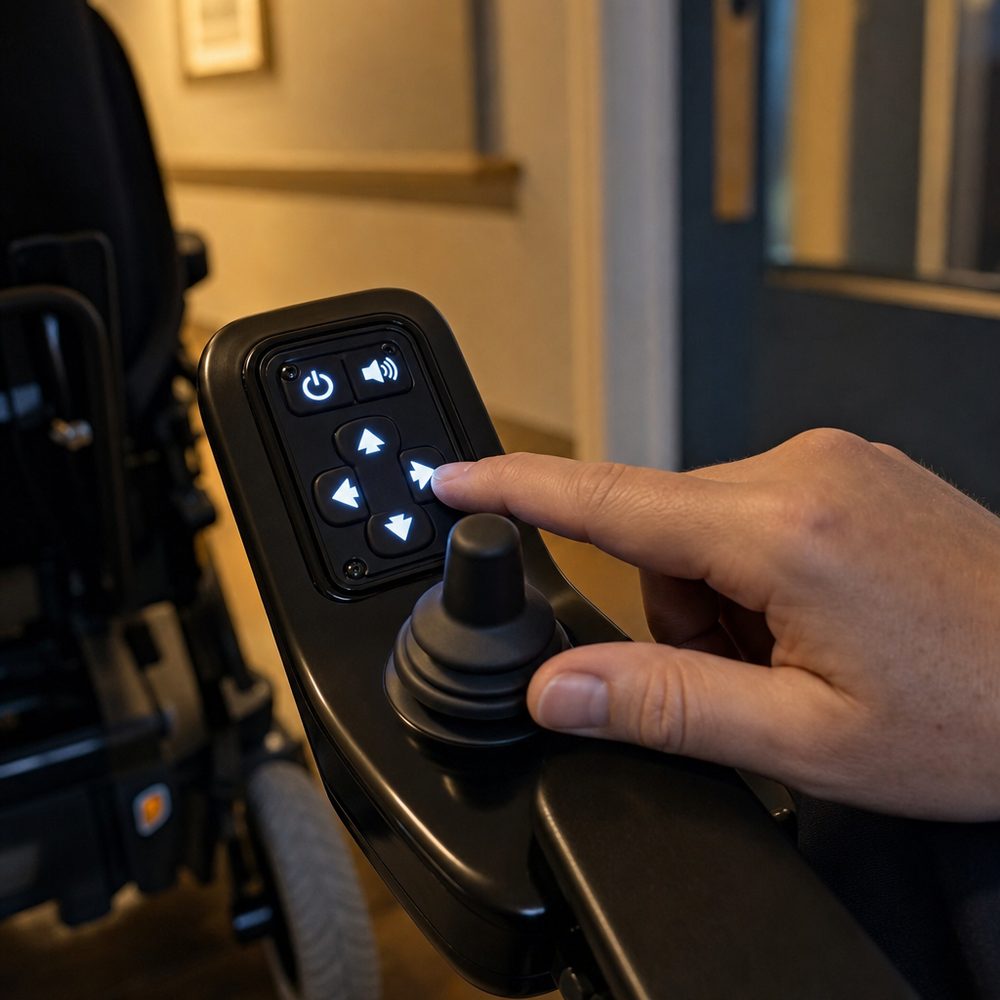
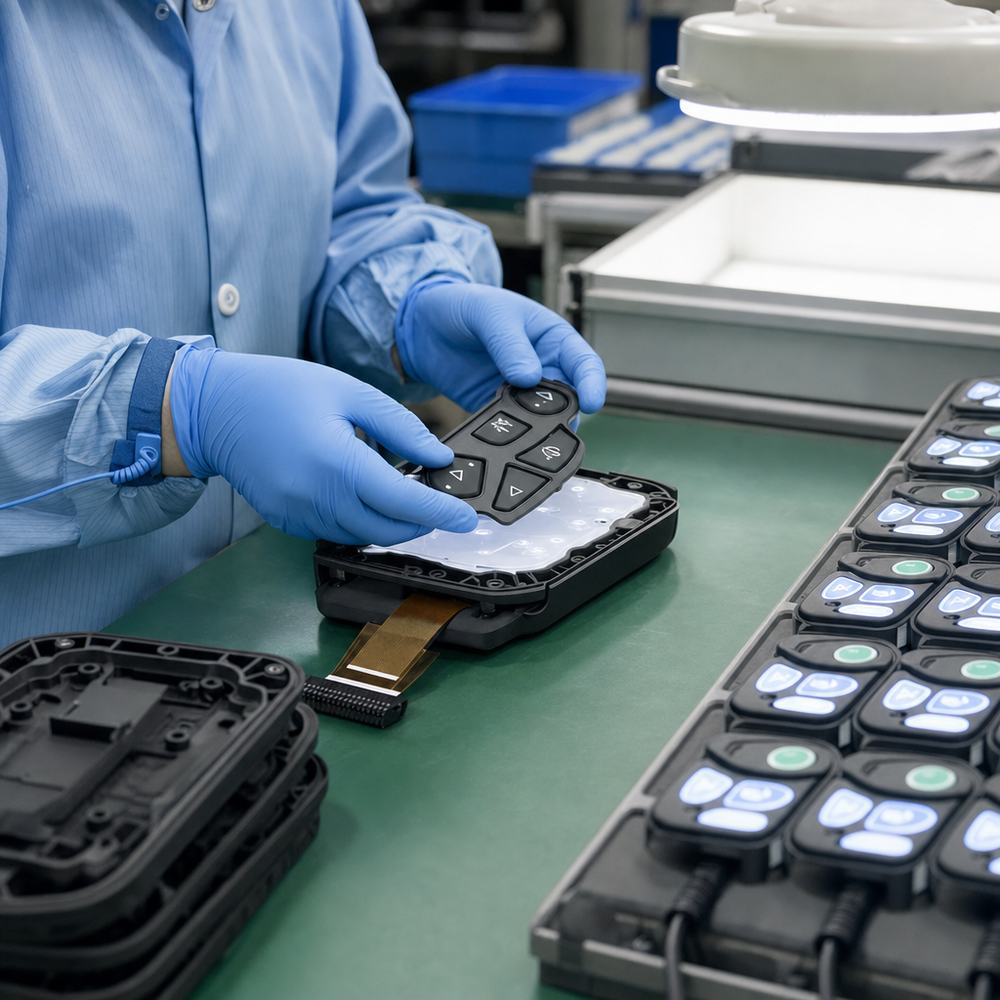
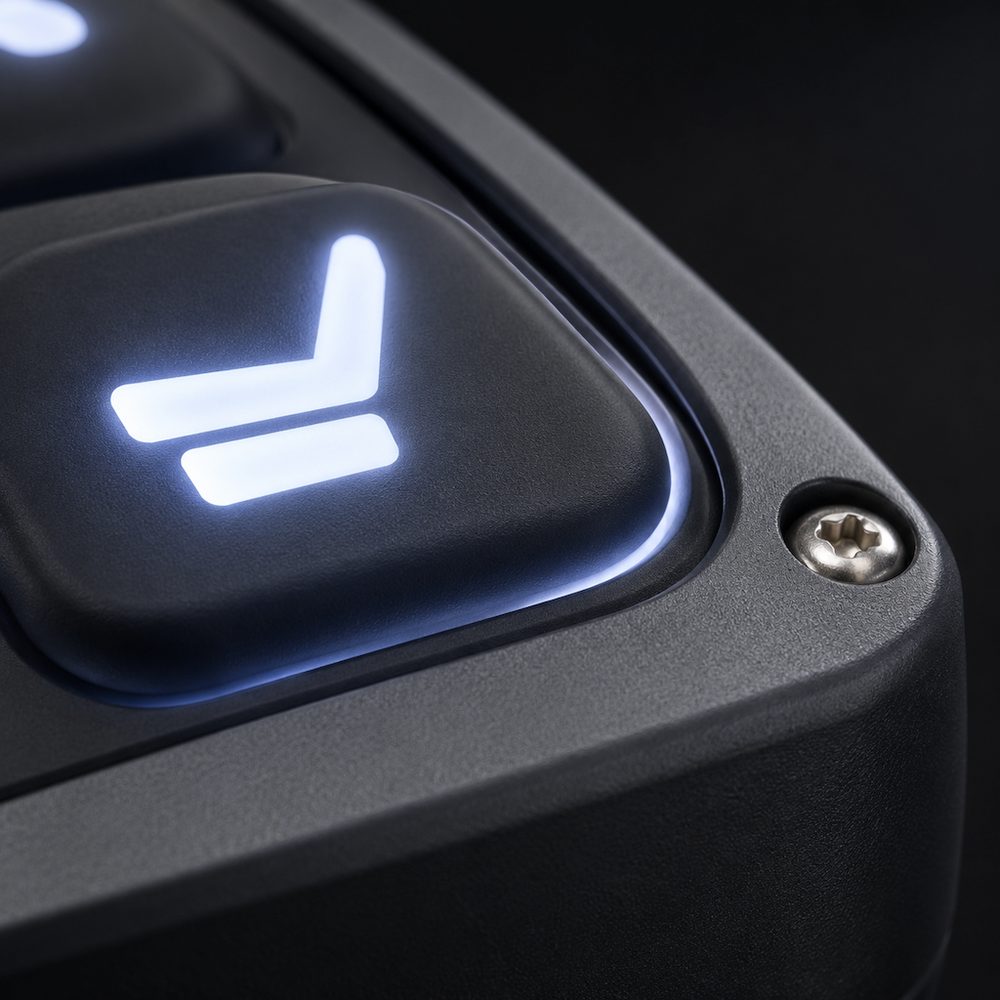
A wheelchair control keypad has an unusual combination of requirements: it must be readable in the dark by a user with reduced vision, operable by someone with limited dexterity, and cleanable with disinfectant several times a day. Those three requirements pull in different directions - large bright keys are easy to hit but hard to seal, and aggressive cleaning attacks the very legends that make the keys readable. Getting the sequence right matters. Optics and key geometry are decided together, because a larger key face changes the light path over it, and the cleaning requirement is confirmed before the legend construction is fixed. Backlight on a mobility controller is an accessibility feature. It is judged by whether a user can find a key at night without reading it, not by how bright the panel looks. A dimmed backlight with high legend contrast reads better than a bright panel with low contrast, and it does not destroy night vision. Two-layer legends with a light-transmitting core give high contrast at low current, which also extends the power budget and reduces glare on the user's hands. Large keys sit close together, so light from one key easily reaches the next. An opaque barrier at every key edge is essential, and on a controller with grouped functions the barrier should also define the groups visually. Bleed on a large key field looks like a fault rather than a design choice. The panel is used at night and indoors. A single brightness level is usually too bright at night and too dim in a lit room. Two levels, or a light sensor, is a small cost that materially improves usability - and it has to be specified with the LED circuit, not added later. The envelope below is a starting point for a mobility controller keypad. Accessibility requirements and the cleaning protocol set the final values. Ranges describe a typical design envelope. Final key size, force and sealing are agreed against the controller housing and the care environment's cleaning protocol. Mobility equipment is cleaned far more often than consumer electronics, and it operates next to a motor drive that generates electrical noise. Alcohol and quaternary ammonium wipes are standard in care settings. Silicone resists both, but the legend and any clear coat are attacked first. A two-layer legend with no surface coating is the most durable answer, and it removes the failure mode entirely rather than slowing it. Where disinfection is frequent, that is the specification to insist on. Controllers see spills, rain and cleaning spray. The seal has to cover the key field perimeter and the cable entry, and the key web has to keep sealing at full travel. A splash rating that was validated on a new part needs re-checking after cleaning cycles, because a swollen or chalked surface seals differently. Motor drives produce noise that can couple into the keypad's wiring and cause phantom presses or flickering backlight. Twisted pairs, a single-point ground and physical separation from the drive cables are the practical controls. The switch contact film also matters: bounce length changes with moisture, so the debounce must be agreed with the resistance range. Target size, force and feedback have to suit users with reduced grip strength and reduced sensation, and that is a different brief from a general-purpose keypad. Keys need to be large enough to hit with a thumb or a knuckle and separated enough that a tremor does not press two at once. A raised boundary between keys gives tactile guidance without needing a wider gap, which matters on a compact controller. Force should be low enough for a weak grip but high enough to prevent accidental presses, and the tactile snap should be distinct because visual confirmation may not be available. A clear snap also gives confirmation to a user with reduced sensation in the fingertips. Designing for older and disabled users changes priorities in ways that are documented in age-friendly wheelchair keypad design, which covers the wider interface decisions around wheelchair keypads. The backlight and cleaning requirements in this page are complementary to that work rather than a repeat of it. Wipe with alcohol or quaternary ammonium disinfectant as the care protocol requires. A two-layer legend with no surface coating is the construction that survives this repeatedly; printed legends and clear coats degrade first. Usually noise from the motor drive coupling into the LED wiring. Twisted pairs, a single-point ground and routing away from the drive cables solve most cases. It is an electrical layout issue rather than a keypad defect. Yes, within limits. Lower force and a larger top face help, but force cannot be reduced so far that a resting hand triggers a function. The force curve is agreed against the way the controller is held. Send the controller layout, the accessibility requirements and the cleaning agents used in service. We will review key size, force curve, legend construction and backlight. Related: age-friendly wheelchair keypad design and backlighting methods. FromRubber moulds backlit silicone keypads for mobility and medical-adjacent OEM programmes. We do not sell retail.Silicone Backlight Keypad for Electric Wheelchairs: Readable at Night, Survivable in Cleaning
Backlight for Low Vision and Night Use
Legend Contrast Under Dim Light
Light Bleed Between Large Keys
Dimming and Glare
Specification Envelope for a Wheelchair Control Keypad
Parameter Typical envelope Why it drives the result Material VMQ silicone, 40-60 Shore A Durable under repeated disinfection Key size Large target with raised separation Usable with limited dexterity or a tremor Actuation force Low for weak grip, high enough to avoid false presses Balance between access and accidental activation Legend Two-layer, no surface coating Survives disinfectant wiping Backlight Two levels or sensor dimming Readable at night without glare Seal Perimeter seal plus sealed cable entry Spills, rain and cleaning spray EMC Twisted pair, single-point ground Motor drive noise causes phantom presses Disinfectant, Splash and Motor Noise
Disinfectant and Cleaning Agents
Splash and Ingres
EMC Near a Motor Drive
Key Geometry for Limited Dexterity
Target Size and Separation
Force and Tactile Confirmation
Age-Friendly Design Practice
Wheelchair Keypad Questions
How should a mobility keypad be cleaned?
Why does the backlight flicker when the chair moves?
Can the keys be made easier to press?
Send the Controller Layout and the Cleaning Protocol