Custom Silicone Button Customization with OEM ODM Options
- Model
- BH-silicone button
Item specifics
- Product Name
- Silicone Buttons
- Hardness
- 30A-80A
- Color
- Custom
- Process
- compress+printing+laser etching+packing
- Quantity
- According to your needs, 1pc is also available
- Application
- Mechanical equipment
- Features
- Durable, waterproof, good feel
- Package
- On request
Review
Description
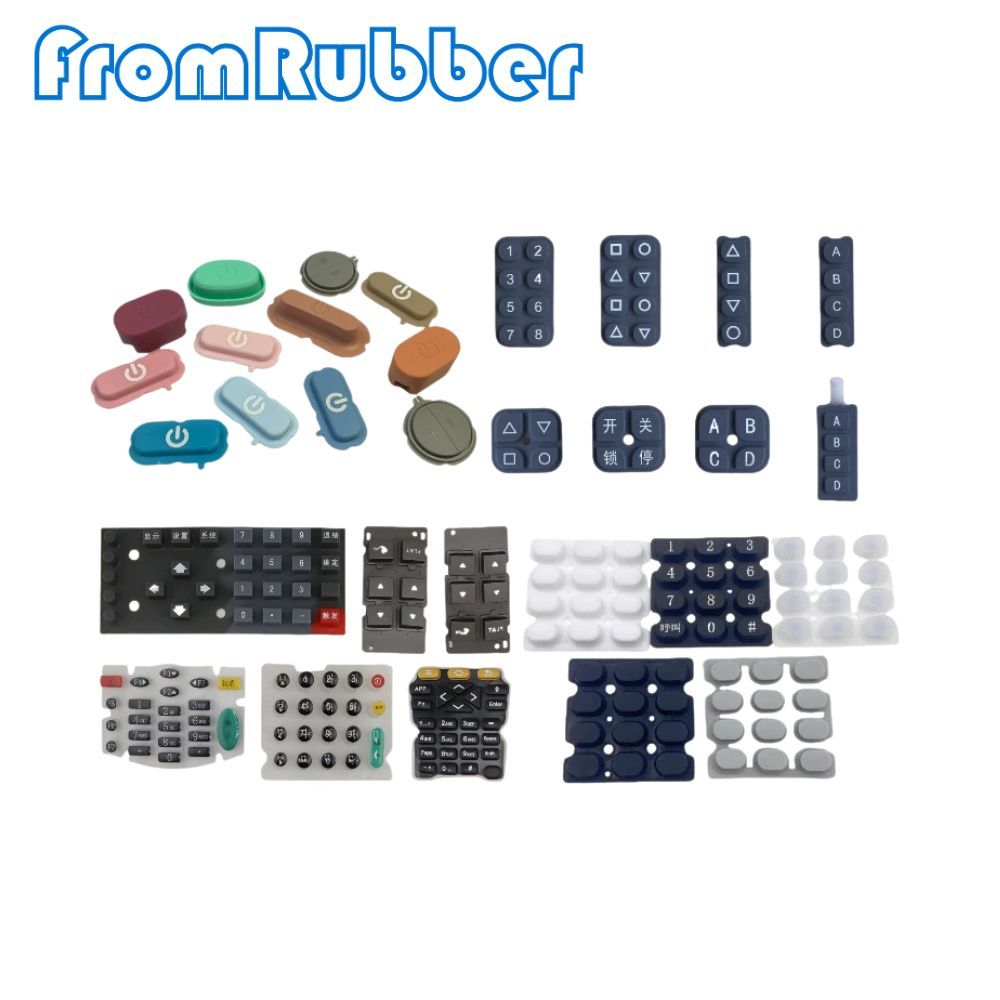
Tactile interface design Tactile feel is set by three variables that have to be chosen together: hardness, dome geometry and the gap the button travels. Fix the artwork first and the tool gets re-cut; fix the feel first and the artwork almost always still fits inside it. The most common specification mistake is treating durometer as the feel knob. A 40 Shore A button on a stiff dome feels harder than a 60 Shore A button on a soft one, because what the finger reads is the force curve, not the material. Hardness changes the bottom-out feel and the sealing force; the dome changes the snap. Within the 30A–80A range we run, the low end suits sealed interfaces that need to conform to a housing and the high end suits small keys that must not deform under a thumb. Neither end makes a button feel crisp on its own. A silicone button snaps because the dome buckles. The ratio between dome height and web thickness sets how sharply it buckles, and the gap between the button and the PCB sets how far the finger travels before it does. Shorten the travel and the key reads crisper but becomes less tolerant of housing tolerances; lengthen it and the key feels mushy but forgives a badly moulded housing. This is why we ask for the housing and the PCB, not just the artwork. The keypad is a spring in a mechanical system, and the system includes the parts around it. Pad print is fast and cheap and sits on the surface. UV print gives a sharper edge and better opacity. Laser etching cuts into the compound, so the legend cannot rub off but reads lower in contrast. Embossing puts the symbol in the tool — the most durable route and the least flexible, because a legend change is a tool change. The choice usually follows the cleaning regime. A medical or industrial panel wiped with solvent daily needs an etched or embossed legend. A consumer remote with a five-year life is fine with a well-cured print. How much force a control should actually take is set out in selecting tactile force for control panels, and what happens when the wall goes below a few tenths of a millimetre in ultra-thin keypad tear strength. A silicone keypad can be the seal, but only if the flange, the housing groove and the screw torque are designed for it. A keypad that passes an IP67 test on a machined sample can still leak in production if the housing is moulded with a different flatness — the mechanism is covered in lab pass versus field pass. Prototype quantities from a single piece are possible where the geometry suits an existing tool or a soft tool; production runs on steel. Decoration is not a cosmetic decision alone — etched legends, embossed symbols and backlight windows all change the tool, so the artwork review happens before the cut, not after. Feel is a property of the assembly. Send the housing cavity and the board outline with the force you want at the finger and the reply is a dome and hardness proposal — prototype quantities are possible before a production tool is cut. Dongguan Bohao Electronic Technology Co., Ltd. IATF 16949:2016 / ISO 9001:2015 certified. Values are typical for the compound or platform described; the approved drawing and sample govern production.
Custom silicone buttons are designed from the finger backwards
Hardness is not feel
The dome, the web and the travel
Variable What we can set What it changes Hardness 30A–80A Bottom-out feel, sealing force, actuation effort Dome height and web Designed per key Snap sharpness versus travel length Legend route Pad print, UV print, emboss, laser etch Contrast and wear life Backlight Translucent compound plus LED Light bleed between keys, legend clarity Surface finish Smooth, matte, glossy, anti-slip Grip and how the part reads in the hand Sealing Flange and housing dependent Whether the assembly reaches IP67, not the keypad alone Legends that survive the application
Two adjacent problems, already written up
Sealing is an assembly claim
Tooling and quantity
What we need to quote
What comes back
Send the housing and the PCB, not just the artwork
fromrubber.com
+86 18926836960