Sealed Instrument Keymat Front Panel
A molded perimeter lip and a compressed gasket face replace a separate seal, so the panel has one fewer assembly step and one fewer leak path.


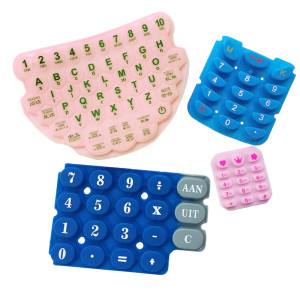
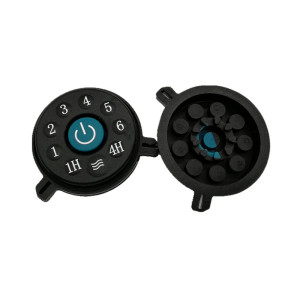
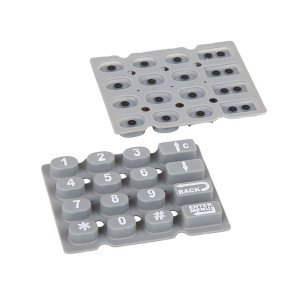
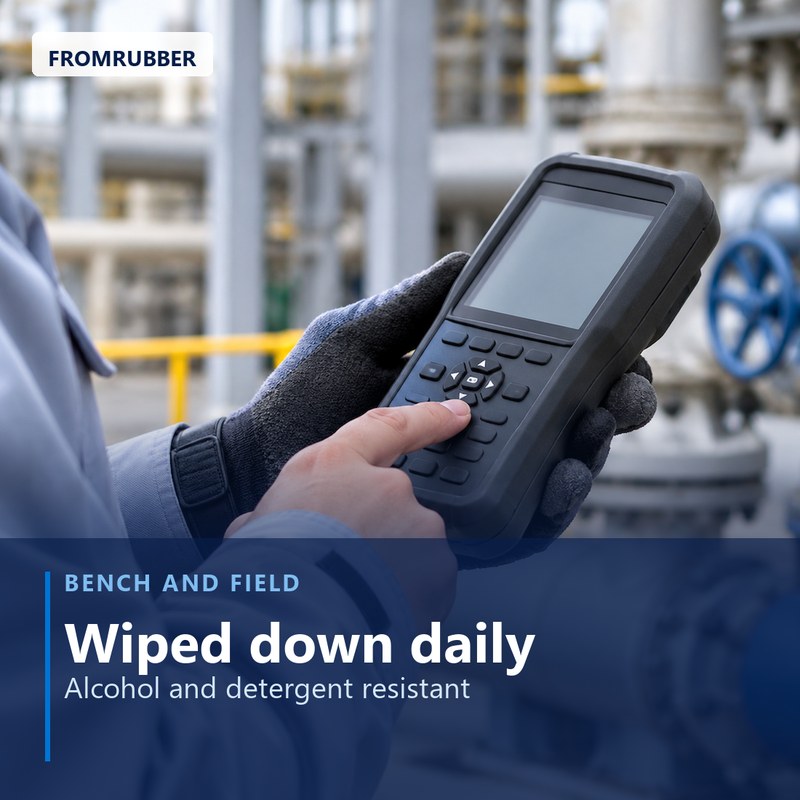
A keymat for an instrument or a meter is a sealed interface, not just a set of buttons. It has to keep dust and cleaning fluid out of the enclosure, keep its legends readable for years, and keep the same feel across a temperature range the bench instrument actually sees. A molded perimeter lip and a compressed gasket face replace a separate seal, so the panel has one fewer assembly step and one fewer leak path. Printed legends get a protective coat; laser-etched legends remove material instead of adding it, which is why they do not rub away. Instruments are wiped with alcohol, detergent and sometimes solvent. Silicone resists most of that, but the legend layer and the seal face are what actually fail. An instrument enclosure is usually rated as a system, and the keypad is the largest opening in it. A key that feels perfect but leaks at the panel edge will fail the enclosure test, and the fix is rarely a better button: it is a wider seal land, a molded compression lip and a controlled clamp force from the front panel. The second failure mode is legend wear at the most-pressed key. Operators press the same four keys thousands of times, often with a thumb and sometimes with a tool. Legend durability is therefore a printing and coating question, decided before the artwork is finalised rather than after a field complaint. The seal requires a flat land wide enough to compress evenly. A narrow land with high clamp force distorts the panel and opens a gap elsewhere. Screen print with a protective coat suits most panels; laser etching produces a permanent legend in a contrasting surface layer. Silicone keeps its elasticity across a wide window, but the ink, the adhesive and the enclosure materials narrow the practical range. Typical configuration for bench instruments, panel meters and handheld test gear. Ingress level is a system result, agreed with the enclosure. Ingress protection is verified on the assembled enclosure, not on the keymat alone. We design the seal and support the enclosure test rather than claim a rating for a part in isolation. The keypad is the largest opening in the enclosure. Most instrument projects replace an existing keymat rather than design a new instrument. That means reverse-engineering a part that has been in service, including the small features that were never drawn: the relief around a screw boss, the slight dome offset that stops a key rubbing the bezel. Measuring a worn part is not enough, because a used keymat has taken a compression set. We measure a new or low-hour sample where one exists, and otherwise reconstruct from the panel and the PCB. The <a href="https://www.fromrubber.com/products2132317/Meter-Instrument-Keypad.htm">instrument keypad</a> range covers both replacement and new-design work. Domes, seal lands and locating features are measured on an unworn sample, then checked against the panel and PCB. Screw reliefs, bezel clearance and clamp features are designed around the existing enclosure rather than assumed. Legend positions are set from the panel openings, not from the artwork file, so keys do not read off-centre. The inputs differ, but the sequence that produces a working keymat does not. A panel drawing, the contact layout and any existing keymat define the starting geometry. The keymat is modelled against the panel, including seal land, domes and legend positions. A prototype is fitted to the real enclosure to check feel, sealing contact and legend alignment. Production tooling follows the approved prototype, with legend printing and coating to the approved standard. Usually, if we have a low-hour sample or a complete drawing set. A worn sample has taken a compression set, so measurements are corrected against the panel and the PCB rather than copied directly. Silicone resists alcohol and most detergents. Aggressive solvents will attack the legend coating before the rubber, so tell us what the instrument is cleaned with and the legend system is specified accordingly. Yes. Instrument programs are often low volume with high mix, and tooling is planned so a small first batch can be followed by repeat runs without new steel. Send the front panel drawing, PCB contact layout and a sample if one exists. We will return a geometry proposal, a legend plan and a tooling quote. Related capabilities: Instrument keypads · Custom silicone keypads · Laser etching
Silicone Keymats for Instruments and Meters: Sealing, Legends and Cleaning
Sealed Instrument Keymat Front Panel
Keymat Legends That Survive Cleaning
Bench Chemistry and the Keymat Surface
Why the Seal, Not the Button, Decides Instrument Reliability
Seal Land and Clamp Force
Legend Method and Wear
Temperature Range in Service

Instrument Keymat Specification Envelope
Material Silicone rubber, black, grey or custom color Construction One-piece keymat with molded domes and seal lip Contact Carbon pill, conductive ink or metal dome Legends Screen print with protective coat, or laser etched Sealing Perimeter lip and gasket land molded in Temperature Grade selected for the instrument service window Chemical exposure Alcohol and detergent wipe resistance confirmed on the finished part Assembly Locating pins, clamp features or adhesive frame
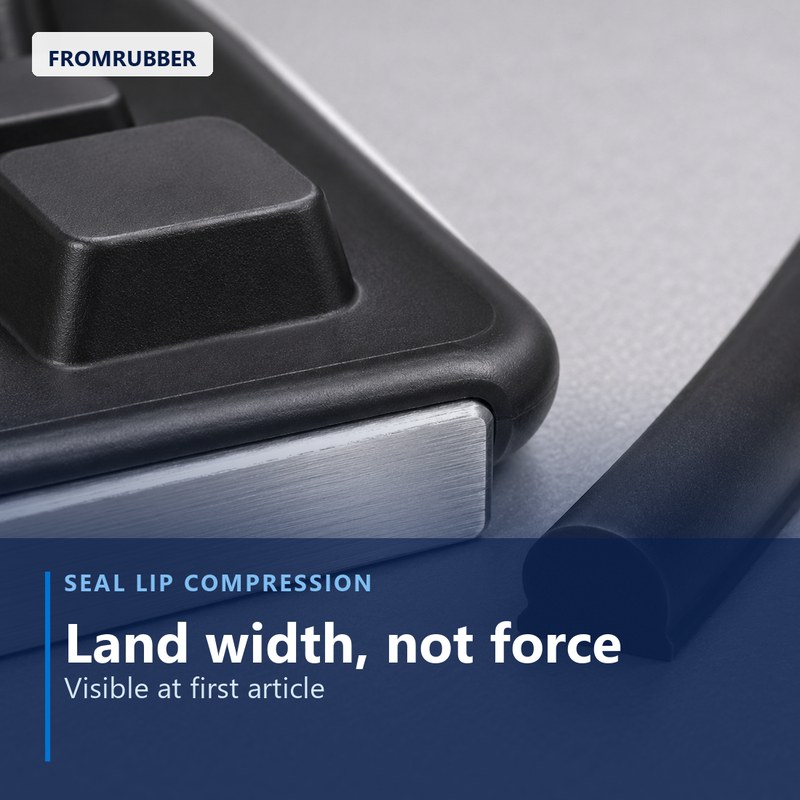
Seal and legend, one part
Matching a Keymat to an Existing Front Panel
Reverse Engineering From a Sample
Panel Interface Features
Legend Alignment
Replacement or New Build: The Same Four Steps
Collect Panel, PCB and Sample
Rebuild the Model
Prototype and Fit Check
Tool, Mold and Print
Instrument Keymat Questions Buyers Ask
Can you match an existing keymat exactly?
What cleaning agents will the keymat tolerate?
Do you support small production quantities?
Replacing or Developing an Instrument Keymat?