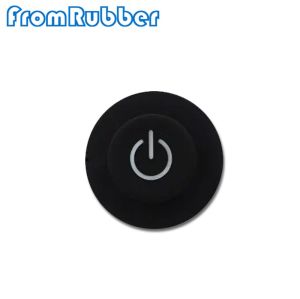
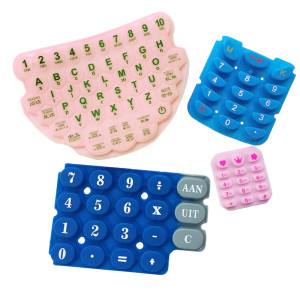
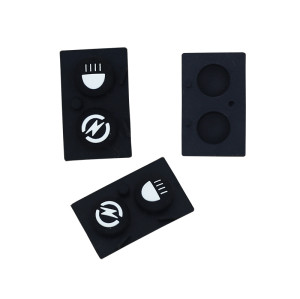
Top Silicone Keypad Manufacturer – ISO Certified, UL94 Flame Retardant
- Model
- BH-keypad OEM
Item specifics
- Design
- Follow 3D Drawing Or Physical Object
- Process
- Molding
- Feature
- ISO Certified, UL94 Flame Retardant
- MOQ
- 3000pcs
- Application
- industrial, medical & automotive applications
Review
Description
Most sourcing decisions rest on two documents: a quality certificate and a flammability rating. Both are useful, and both are routinely misread. A quality certificate says something about how a factory manages its process; a flammability rating says something about how a test specimen behaved. Neither is a statement about the keypad you are about to order. This page sets out what each document covers, and the five questions that separate a factory that moulds keypads from a trading company that resells them. A quality management certificate confirms that the factory has a documented system: procedures, records, internal audit, corrective action. That is genuinely valuable - it predicts consistency between batches and gives you a route to escalate a problem. It does not certify the hardness of your keypad, its force curve or its chemical resistance. Those are product properties, established by drawings, specifications and test reports for your part. The two checks are complementary and neither replaces the other. Read the scope statement on the certificate. A certificate covering "moulding of silicone rubber parts" says nothing about a subcontractor who prints the legends. UL94 rates how a plastic or elastomer specimen burns in a specific laboratory test: the flame is applied for a set time, then removed, and the material is judged on how quickly it extinguishes, whether it drips and whether the drips ignite a cotton layer below. V-0 is the most demanding of the vertical ratings. Three things follow. The rating belongs to a material at a stated thickness, so a thin key wall and a thick housing boss are not necessarily the same rating. It is a material property, not a certificate for the finished keypad. And fillers that improve flame resistance - and colourants that change the compound - can change the result, which is why a substitution is a re-qualification, not a purchasing decision. Ask where the mould sits and who can move it. A factory that owns its tools can control lead time; a trader who rents capacity cannot. Compression moulding, printing, laser and assembly under one roof means one party is accountable for the tolerance chain. Split across four vendors, nobody is. Ask for the inspection plan, not a certificate. A factory that can name the dimensions it checks and the sampling rate has a process; one that says "100% inspection" usually means a visual glance. Change control is the difference between a supplier and a vendor. Ask for it in writing, including sub-tier changes such as ink or adhesive. A retained sample plus a colour standard is the cheapest defence against batch drift. Ask how long they are kept and where. The certificates held by this factory, including the quality and environmental scopes, can be downloaded from the certificate page. What the factory does, and since when, is on the company page. Mains-powered equipment near a user's hand, appliances that sit under a cabinet, and anything installed in a public building where a fire specification is written into the contract. In all three, the keypad is a small part of a larger approval, and its rating has to be shown in the context the approval requires. Where it does not matter: battery-powered handhelds with a low-energy circuit, and panels that are separated from any ignition source by a metal enclosure. Specifying a flame-retardant compound there adds cost and usually restricts colour. The engineering background on flame-retardant keypads is in the UL94 V-0 keypad guide. How a marking process is chosen is covered under chemical resistant equipment keypads. No. It is a filter, not a decision. Add a first-article report on your part, a factory visit or video audit, and a written change-control clause. It applies to the material, at a stated thickness. The legend ink, the adhesive and the circuit are separate materials with their own behaviour, and the assembly as a whole is not rated by that test. Usually not. Additives and fillers restrict the palette, and some colours need more loading to reach the rating. Ask for the colour range that has been qualified, not the range in the colour card. Key layout, material and hardness, legend method, force target, ingress requirement, annual quantity and the approval documents you will need. With those six, quotations become comparable. Certificates answer a company question; a first-article report answers a product question. Send your keypad drawing with the approval documents you need, and the quotation will come back with the tooling ownership and the inspection plan stated.How to qualify a silicone keypad manufacturer, and what ISO and UL94 actually prove
What a quality certificate covers - and what it does not
Process, not product

What UL94 V-0 actually means
A specimen test with a thickness

Five questions that separate a factory from a trader
One
Who owns the tool?
Two
Is moulding in-house?
Three
Who inspects, and against what?
Four
What happens on a material change?
Five
Do they retain first-article samples?
Where a flame rating actually matters
Three product types, three reasons
Specification as a supplier
Questions from sourcing and engineering teams
Is a certificate enough to approve a supplier?
Does UL94 V-0 apply to the whole keypad?
Can a flame-retardant compound be any colour?
What should an RFQ contain?
Ask for the documents, then ask for the drawing review