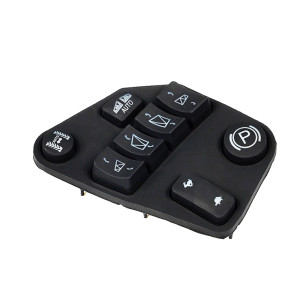
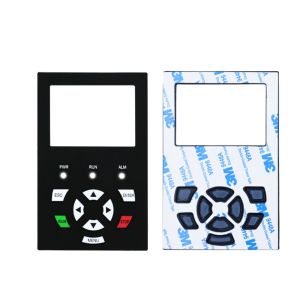
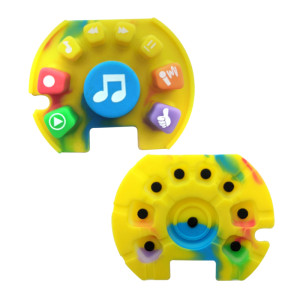
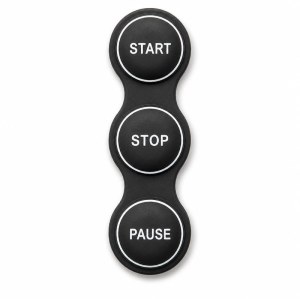
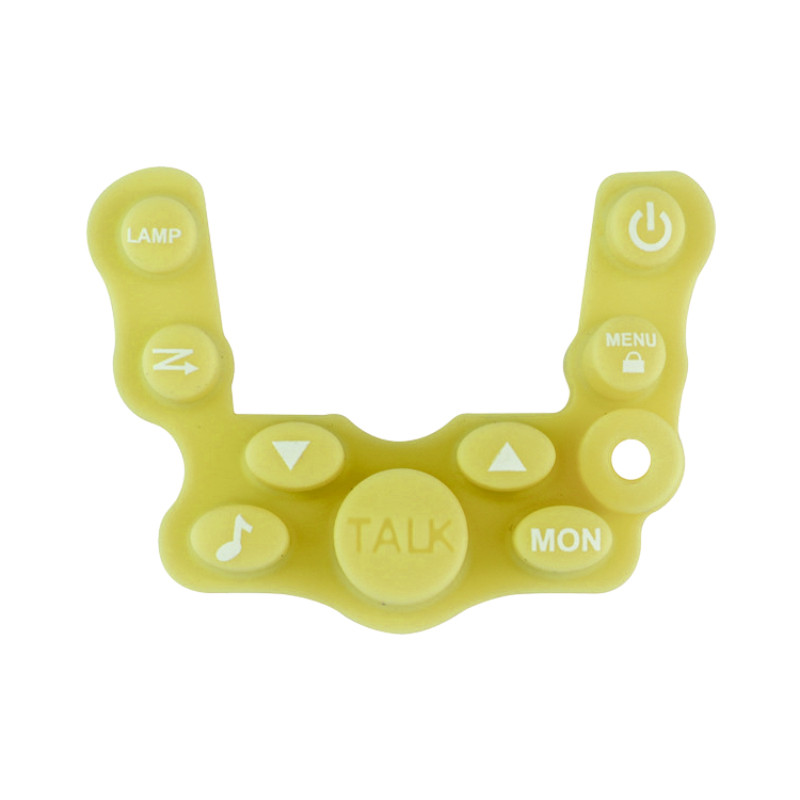
Manufacturer Design BPA Free Rubber Keypad Button for Kids' Walkie-talkie
Item specifics
- Design
- Follow 3D Drawing Or Physical Object
- Printing
- Silk Screen Printing
- Feature
- Clear and Bright Characters
- MOQ
- 1000pcs
- Application
- According to Your Need
Review
Description
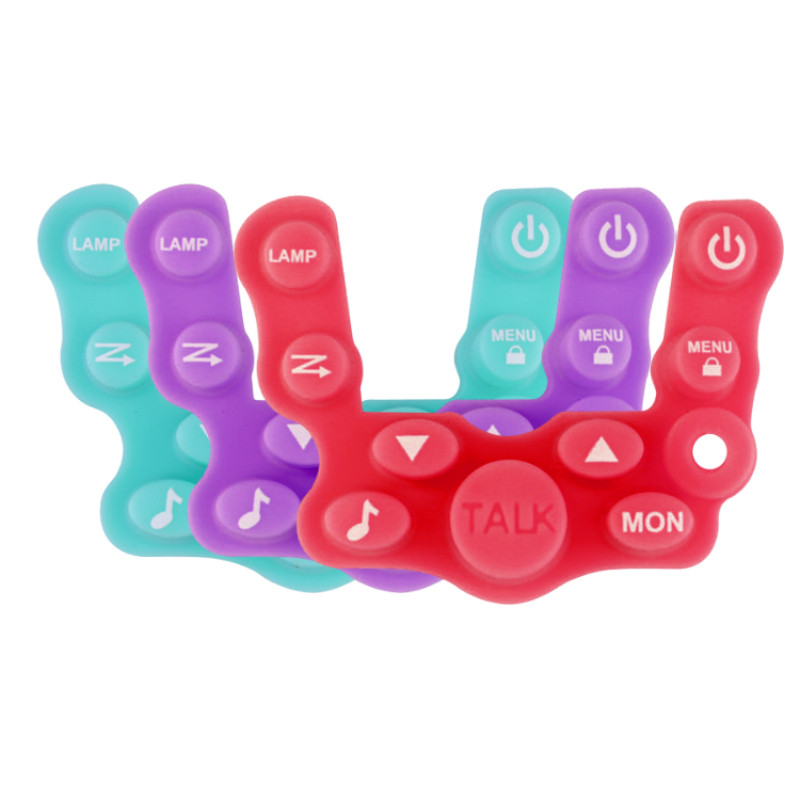
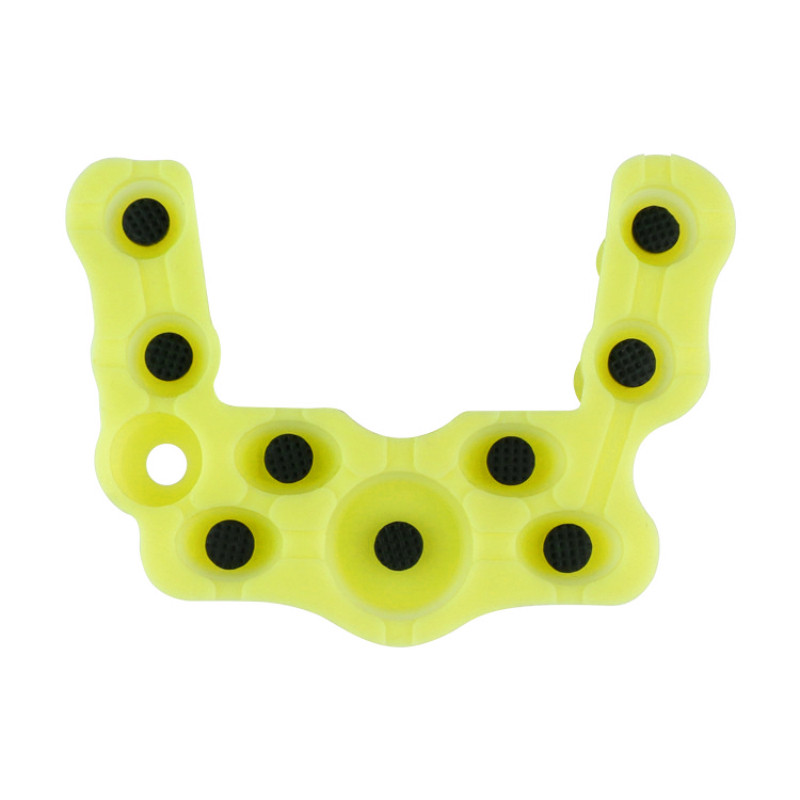
A children's walkie-talkie keypad is reviewed twice: once by the brand's engineering team and once by whoever signs the toy-safety file. The rubber button is the part a child presses, chews, pulls and drops into water, so it becomes the focal point of that second review. This page sets out how the material declaration, the mechanical retention and the sealing are specified so both reviews close without rework. The questions are predictable. Is the material free of bisphenol A? Does the compound contain plasticisers that fall under phthalate restrictions? Are the pigments heavy-metal compliant? The answers have to come from the compound supplier as a declaration tied to the actual batch, not from a general statement that silicone is inert. Silicone is a good starting point because it needs no plasticiser to be flexible, which removes one whole class of restricted substances from the discussion. That advantage disappears if the compound is coloured with a pigment that has not been declared or if an adhesive is used to bond the keypad into the housing. The declaration has to cover every material in the assembly, not just the rubber. A toy keypad is pulled, not just pressed. The retention feature has to hold the keypad into the housing when a child grips a key and pulls, and the key itself has to resist being torn from the web. Both are geometry problems that show up in the same test: a pull test on a single key while the keypad is clamped as it would be in the housing. Thin webs are the usual failure. A web thin enough to give a light actuation force is also the first place to tear, so toy designs often accept a firmer key in exchange for a heavier web. Where a light touch is required for small hands, the better answer is a larger key area rather than a thinner web. The realistic ingress threat for a children's radio is not immersion; it is a wet hand, a spilled drink and a pocket full of sand. Sand is the harder problem because it works into the gap between the keypad skirt and the housing and then abrades the seal every time a key is pressed. A molded skirt with a lip that wipes the housing surface as it is pressed handles sand better than a flat gasket, because the lip clears the particle instead of trapping it. A recessed keypad, where the keys sit below the housing surface, also reduces the chance of a key being levered sideways by a fingernail or a toy. A toy programme usually runs for several seasons, which means several production lots of the same colour. Colour drift between lots is one of the most common complaints on a children's product, and it is prevented by holding a moulded master plaque and checking each lot against it under a defined light source rather than by comparing to a pigment code. Traceability matters for the same reason. If a material declaration is questioned after shipment, the answer has to be tied to a lot number and a compound batch. Keeping that link from compound to moulding to carton is a factory process, and it is worth confirming at the audit stage rather than after a claim. Material declarations and test standards are agreed at RFQ for the destination market. Values below describe the scope of the part family and are fixed per project on the drawing. BPA-free silicone is used for this part family, and the declaration is issued per compound batch so it can be filed with the product's compliance records. The declaration also covers pigments so the whole moulding is in scope. The applicable standard set depends on the destination market and the product classification, and it is agreed at RFQ so the test plan matches the file the brand has to submit. The part is designed to support that testing rather than to substitute for it. It can, but adhesive adds a material to the declaration and a failure mode to the assembly. A mechanical retention lip is preferred where the housing geometry allows, because it keeps the material scope to silicone and plastic. A moulded colour master is retained from the approved lot and each production lot is checked against it under a defined light source. This catches drift that a pigment code alone would not. Share the keypad drawing, the housing interface and the destination market. The review returns the material scope, retention and sealing design, colour control plan and the declaration package needed for the toy-safety file.BPA-Free Rubber Keypad Button for Kids' Walkie-Talkies: Designing for Toy-Safety Review
What Toy-Safety Reviewers Ask About a Rubber Keypad
BPA, phthalates and heavy metals
Bite, Pull and Tear: Designing for a Child's Grip
Wall thickness and key retention
Sealing a Kids' Walkie-Talkie Keypad
Splash, sweat and sand

Documentation and Consistency Across Batches
Colour matching and lot traceability
Kids' Toy Keypad Specification Fields
Toy Keypad Questions From Brand and Compliance Teams
Is the silicone BPA free?
Which safety standards can the part be tested against?
Can the keypad be bonded into the housing?
How is colour consistency handled across seasons?
Send the Toy Housing and the Target Market