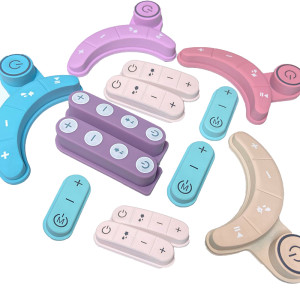
Waterproof Silicone Keypad – UV Resistant, ESD-Safe, for Harsh Environments
Item specifics
- Design
- Follow 3D Drawing Or Physical Object
- Process
- Molding
- Feature
- Easy to clean,reusable
- MOQ
- 3000pcs
- Application
- Industrial equipment, instruments and meters
Review
Description
Each requirement is straightforward alone. Sealing wants a soft, well-compressed panel. UV stability wants pigments that do not chalk, which usually means light colours or a protective additive. ESD control wants a conductive or dissipative filler, which most often means carbon - dark, and absorbing. Put the three on one keypad and the material choice narrows sharply. Understanding why it narrows is what lets a programme pick the right compromise instead of the most expensive one. An ESD-safe panel does not need to carry current. It needs to bleed static charge away slowly enough that no spark occurs. That is the opposite of a conductive keypad, where a carbon pill is meant to close a circuit. The property lives at the surface and can be delivered two ways: a conductive filler dispersed through the compound, or a surface treatment. A filler is permanent but affects colour and cost; a treatment is cheaper and wears. The specification has to say which one, because they age differently. Ultraviolet light attacks pigments and the polymer surface. Light colours show chalking and yellowing first, because there is no dark background to hide the change; deep colours drift, but more slowly and less visibly. Carbon-black compounds are naturally UV-resistant and naturally black. So an ESD panel that must also be, say, white is the hardest combination on this page. The routes are a light-coloured conductive additive, a coated surface, or a design that puts the ESD function on a different part of the product. For a panel that is both wiped daily and colour-critical, the separate-path option is often the only one that satisfies all three requirements without a material compromise. Sealing is a mechanical decision and stays the same whichever compound is chosen: a continuous perimeter bond on a flat land, a defined tail exit, and a compression that survives temperature cycling. What changes is the surface the seal has to hold on - a surface-treated panel is harder to bond than a filled one, and that has to be checked before tooling. Outdoor installation adds one more variable: the panel expands and contracts more than the housing, so the bond line takes a peel load every day. That is a design margin question, not a material one. How static behaviour is achieved and why it is often underestimated is covered in antistatic agents and ESD, and the difference between conductive and antistatic compounds in conductive versus anti-static silicone. The ESD range is listed under ESD-safe silicone keypads. It prevents the panel from accumulating and discharging a charge into the product when touched. It is not a shield for the circuit; that is a housing and grounding question. It is the hardest combination, because the additives that help one usually hurt the other. Ask for a qualified combination and a test on the actual colour, not a datasheet for the base compound. A filled compound, yes; a surface treatment, only until the treatment is abraded. If the panel is wiped with solvent, specify the filled route or a replaceable path. No, and that matters: black pigment is not the same as conductive carbon. Ask which one is in the compound before assuming the panel has ESD properties. Colour, ESD performance and sealing cannot all be maximised at once. Say which one is fixed by the product, and we will propose the combination and the test that proves it.Waterproof, UV-stable and ESD-safe at once: three requirements that pull against each other
ESD-safe is a surface property, and it is not conductivity
Dissipative, not conductive

UV stability and colour are the same conversation
Why light colours are harder
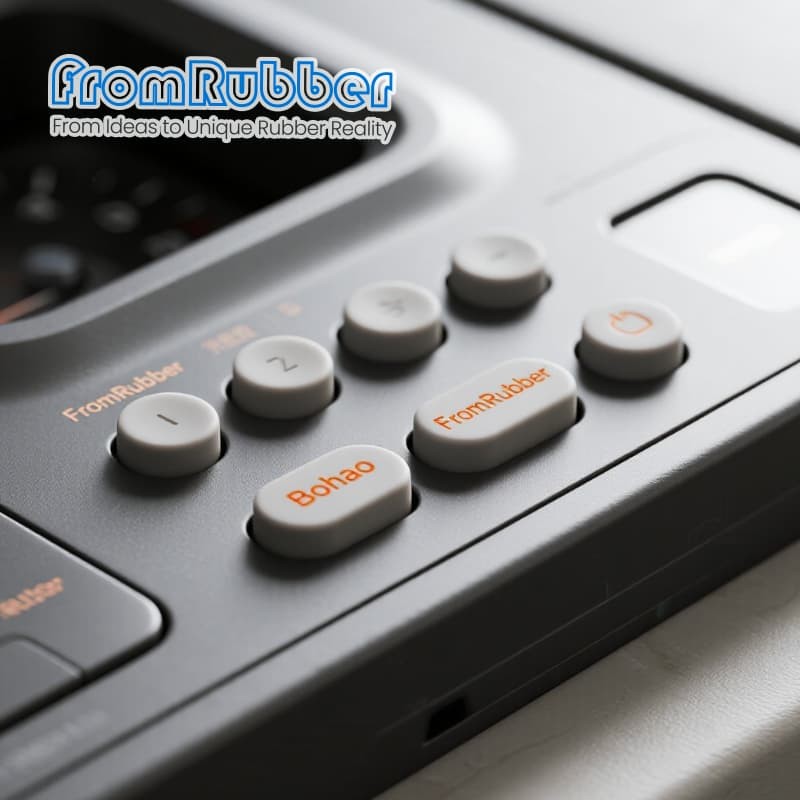
The compromise, laid out
Waterproofing does not change, but sealing does
Where the three meet

Specify the three separately
Questions from outdoor and electronics teams
Does an ESD-safe keypad protect the electronics inside?
Can a white ESD keypad be UV-stable?
Does the ESD performance survive cleaning?
Is a black panel always carbon-loaded?
Tell us which of the three cannot move