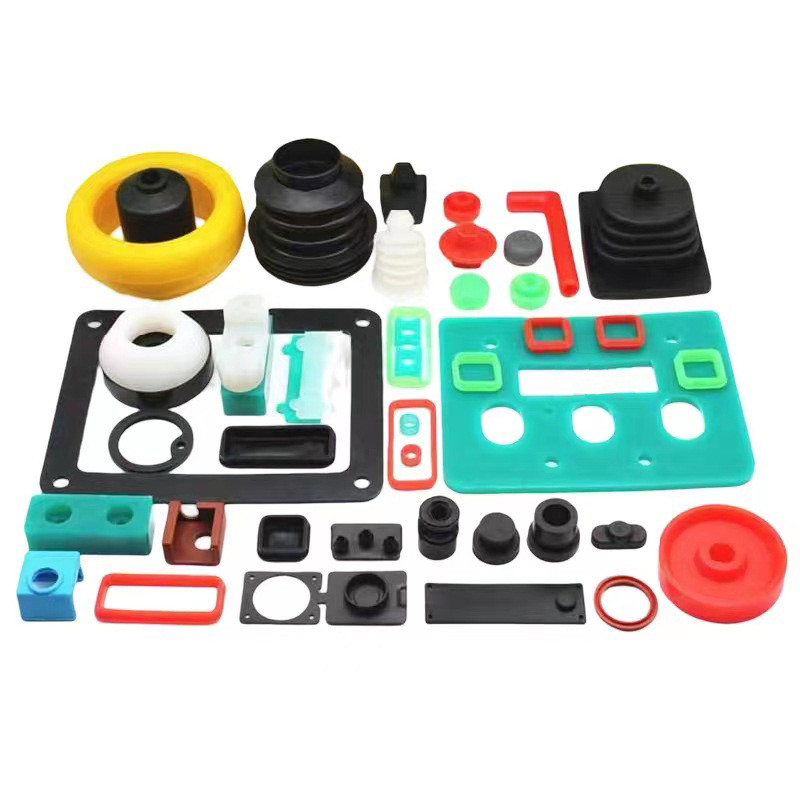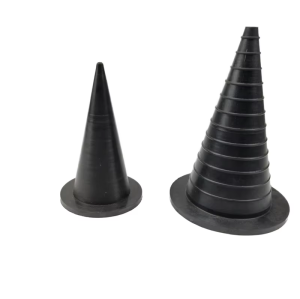
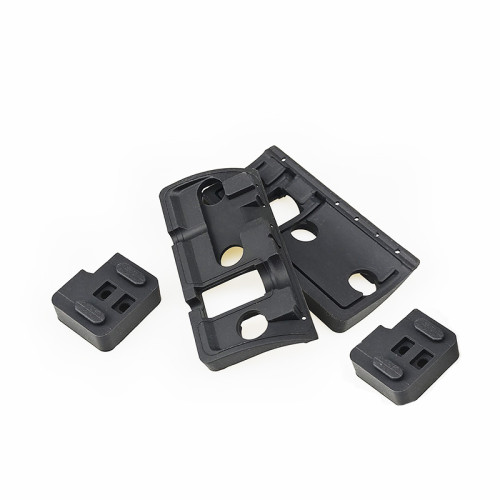
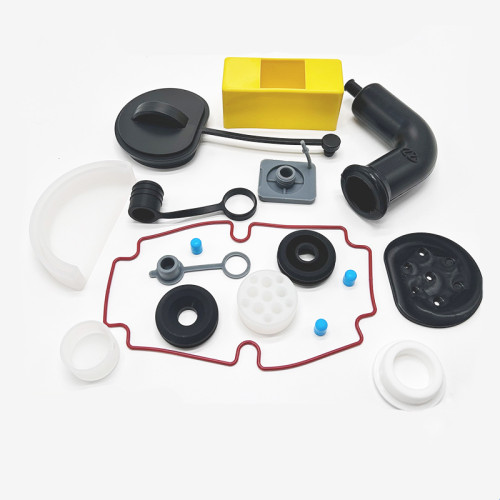
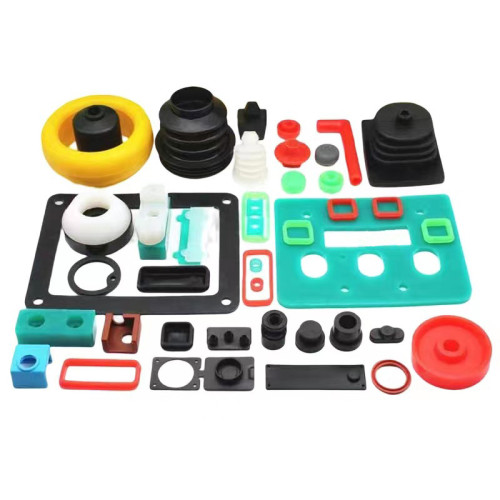
Auto Advanced Brake Rubber Parts for Superior Safety
- Model
- BH-auto11
Item specifics
- Product Name
- Car Rubber Parts
- Material
- Rubber Silicone
- Color
- Black,Custom
- Shape
- Customise
- Appliciation
- Auto Advanced Brake
- Features
- Superior Safety
- Sales Method
- Product custom
- Consultation Email
- Suey@fromrubber.com
Review
Description
Automotive Safety / Brake Systems Advanced brake rubber parts are chosen by fluid first and temperature second. A compound that is excellent in air will swell, soften or harden in glycol-ether brake fluid, and a swollen seal shows up as a long pedal rather than a visible leak. Glycol-ether fluid is the reason EPDM dominates brake hydraulics: it tolerates the fluid that attacks most other elastomers. Every other decision on this page follows from that one fact. Four failure patterns cover most brake-rubber warranty returns, and none of them is solved by a harder compound. The wrong elastomer in glycol fluid swells or softens; pedal travel grows and the seal can extrude into the bore. EPDM is specified because it tolerates the fluid, not because it is the hardest material available. A caliper or wheel-cylinder seal that takes a set loses residual pressure. Low-set EPDM grades and correct squeeze, typically 15-25%, protect pedal feel when the brake is hot. Slide-pin and dust boots flex thousands of times in road spray. The usual failure is ozone cracking at the root of the convolution, not at the sealing lip. A seal cut by a sharp bore edge leaks immediately and gets blamed on the compound. Chamfers, insertion tooling and fluid-compatible assembly lubricant belong in the drawing review. Position, duty and material are agreed against the fluid specification and the temperature at that point. Nothing here replaces the vehicle manufacturer's own release requirement. The brake family is narrow on purpose: a compound that is merely similar is a safety risk, not an economy. Glycol-fluid compatible, good heat and ozone resistance, and low compression set in the right grade. Most production brake seals are EPDM for exactly this combination. Better compression set and heat resistance than sulphur-cured grades, chosen where residual pressure and hot pedal feel matter more than cost. Diaphragms and boots that must hold pressure while flexing; the fabric limits growth and extends flex life under vacuum or pressure. NBR and general-purpose silicone in glycol circuits. Silicone brake fluid is a different fluid family and needs seals validated for that fluid, never a straight swap on the same hardware. Squeeze and thickness decisions are explained in silicone gasket thickness and its effect on compression and service life. Brake parts are validated on the assembled system, not on a coupon. Fluid immersion, pressure cycling, temperature cycling and dimensional checks are agreed before the first article, and the acceptance limits come from the program rather than from the supplier. We mold under IATF 16949 and ISO 9001 quality systems with ISO 14001 environmental management. Brake batches are checked for hardness, compression set, key dimensions and visual defects, with cavity identity retained, because one bad cavity in a safety part is not a sampling question. The fluid specification comes with the drawing. Without it, the review cannot start. Where the part sits, which fluid family the system uses, and the temperature at that point. We confirm elastomer, hardness and squeeze against pressure and temperature, and flag hardware features that would damage the seal at assembly. Samples from a single-cavity tool for fit and for the fluid and pressure tests the program requires. Multi-cavity tool, first article, batch test records and retained samples for the life of the part. Direct answers on material choice and validation. EPDM is the standard for glycol-ether brake fluid, which covers DOT 3, DOT 4 and DOT 5.1, because it tolerates the fluid. Nitrile and general-purpose silicone are not substitutes in that circuit. For dust boots and external protection, sometimes, where heat and ozone matter more than fluid contact. Not for seals that sit in glycol fluid; that is an EPDM duty. Heat, squeeze and time. Lower squeeze and a low-compression-set grade slow it down; a seal that has taken a set shows up as a long pedal when the brake is hot. Batches are checked for hardness, compression set, dimensions and visual defects with records retained. Program-specific validation is agreed at kick-off and reported with each submission. Tell us where the part sits, which fluid the system uses and the temperature at that point. We reply with the compound, the squeeze and the validation we would run before serial supply.Auto Advanced Brake Rubber Parts for Superior Safety: Fluid Compatibility Comes First
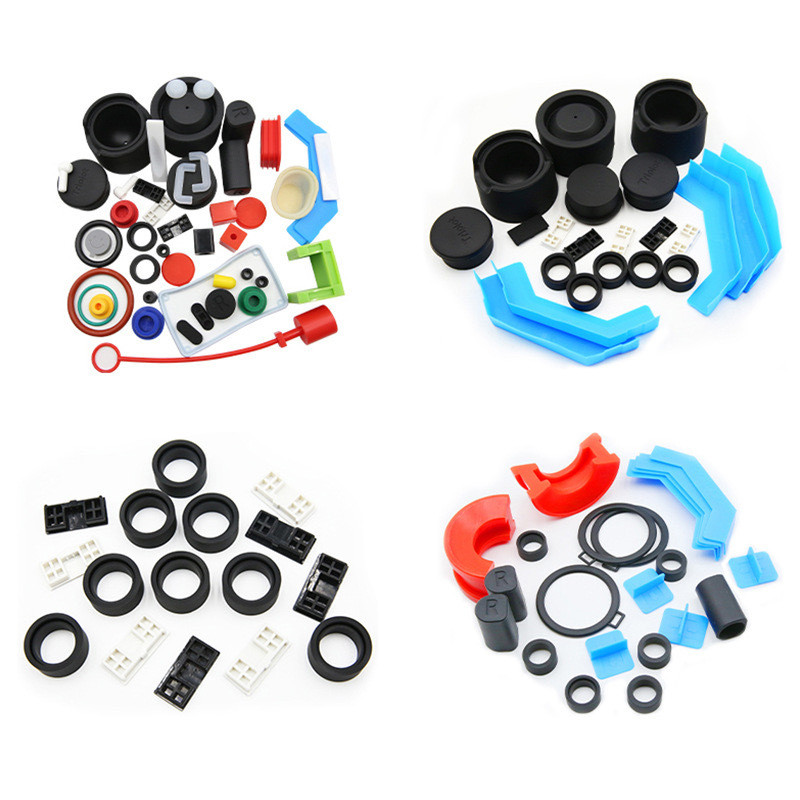
Where Advanced Brake Rubber Parts Fail in Service
Fluid swelling, not wear
Compression set after heat soak
Boot flex and ozone
Assembly damage
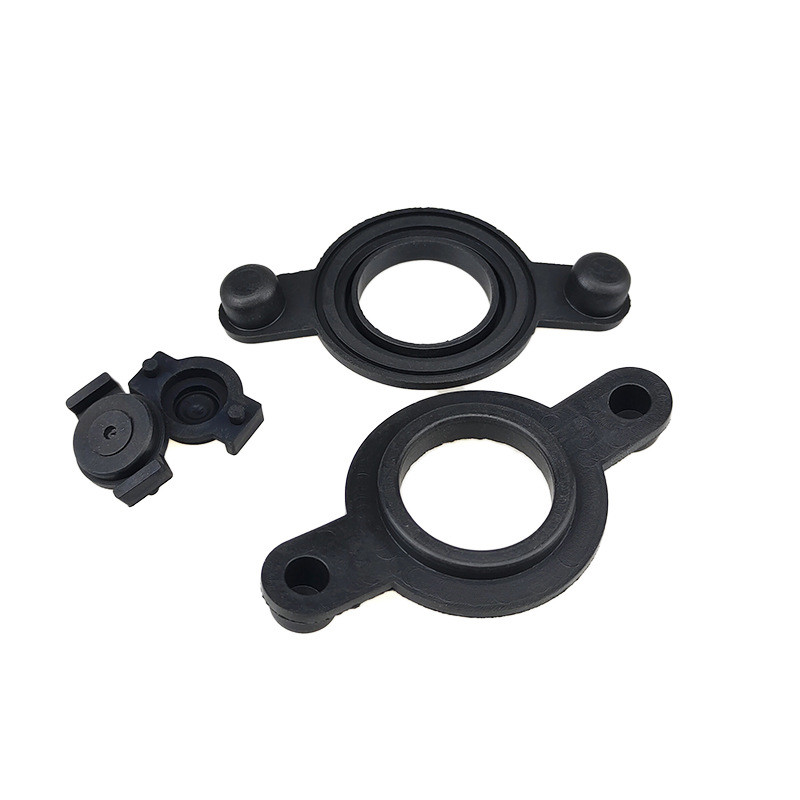
Brake Rubber Parts by Position: Duty and Material
Position Typical part Duty Material note Master cylinder Reservoir diaphragm, piston cups Hold glycol fluid at low compression set EPDM, fluid-specific grade Caliper Piston seal, slide-pin boots Heat at the caliper, dust exclusion, flex life EPDM, high tear strength Wheel cylinder Cups, dust boots Pressure cycling at the wheel end EPDM ABS and modulator Internal seals Rapid pressure cycling, clean fluid paths EPDM, clean-molded Booster and vacuum Diaphragm, valve seals Flex life under vacuum Fabric-reinforced NR or EPDM Chassis and line routing Sleeves, grommets Abrasion, ozone and spray EPDM EPDM and Speciality Compounds for Advanced Brake Rubber Parts
EPDM, the default
Peroxide-cured EPDM
Fabric-reinforced compounds
What must not be substituted
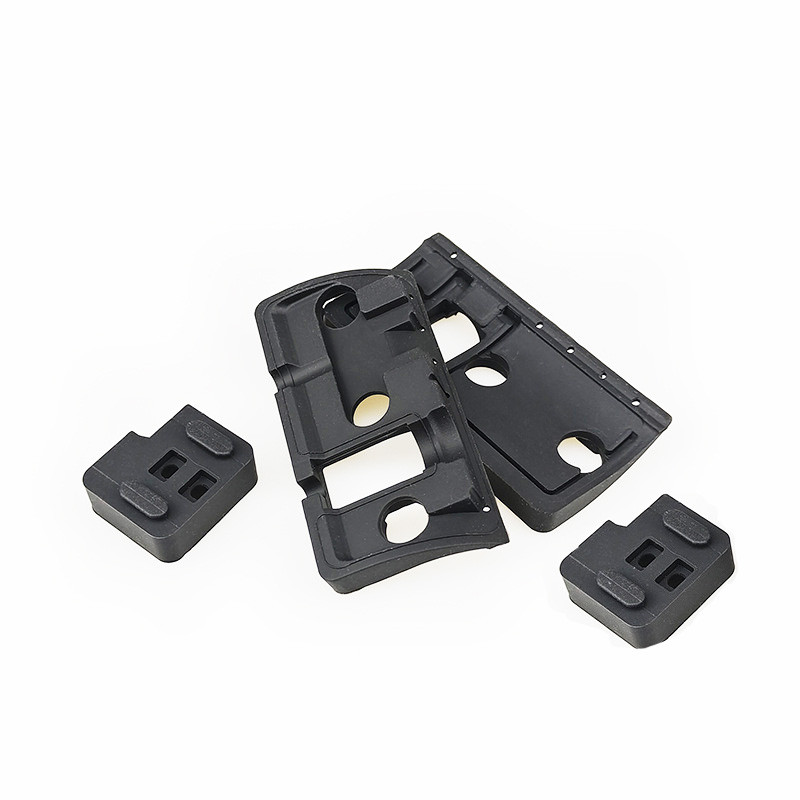
Validation Before a Brake Rubber Part Ships
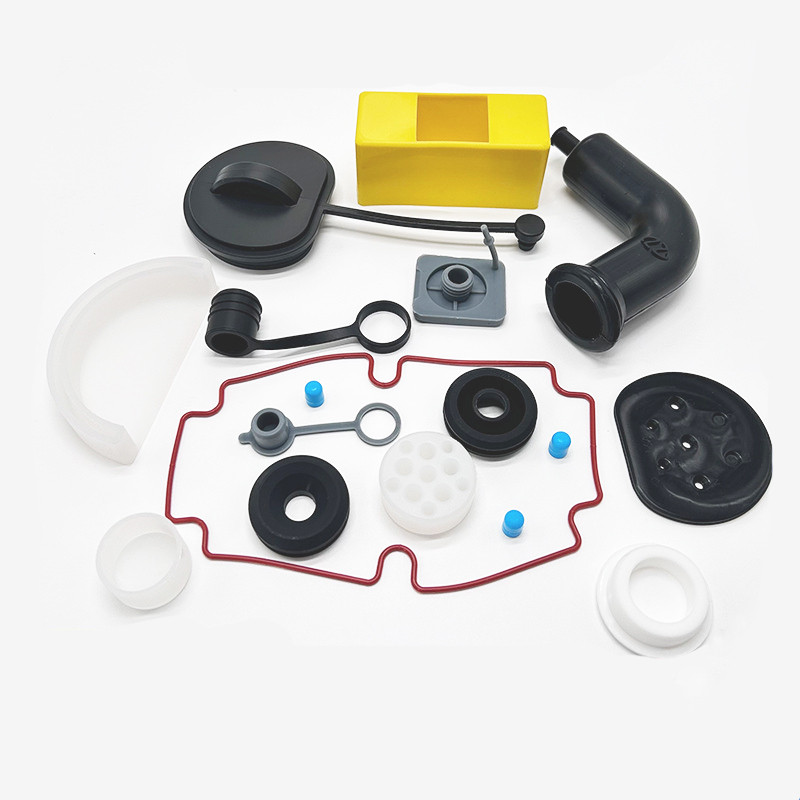
Four Steps From Drawing to a Brake Rubber Part
Send the position and the fluid
Compound and squeeze review
Prototype and system validation
Production with records
Brake Rubber Parts FAQ
Which rubber is used for brake seals?
Can silicone be used for brake parts?
Why do brake seals take a set?
Do you test every batch?
Send the fluid specification and the position