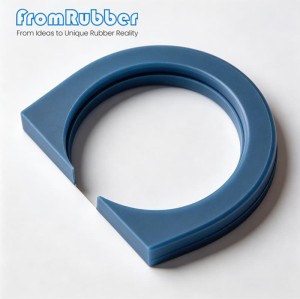
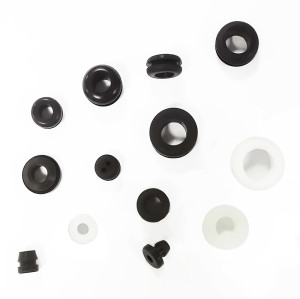
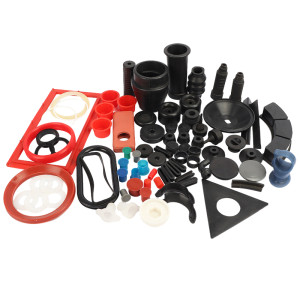
High Tear Strength Silicone Rubber Parts for Reliable Installation
- Model
- BH-seals
Item specifics
- Design
- Follow 3D Drawing Or Physical Object
- Process
- Molding
- Feature
- High Tear Strength,Durable
- MOQ
- 100000pcs
- Application
- Automotive, Marine, and Industrial
Review
Description
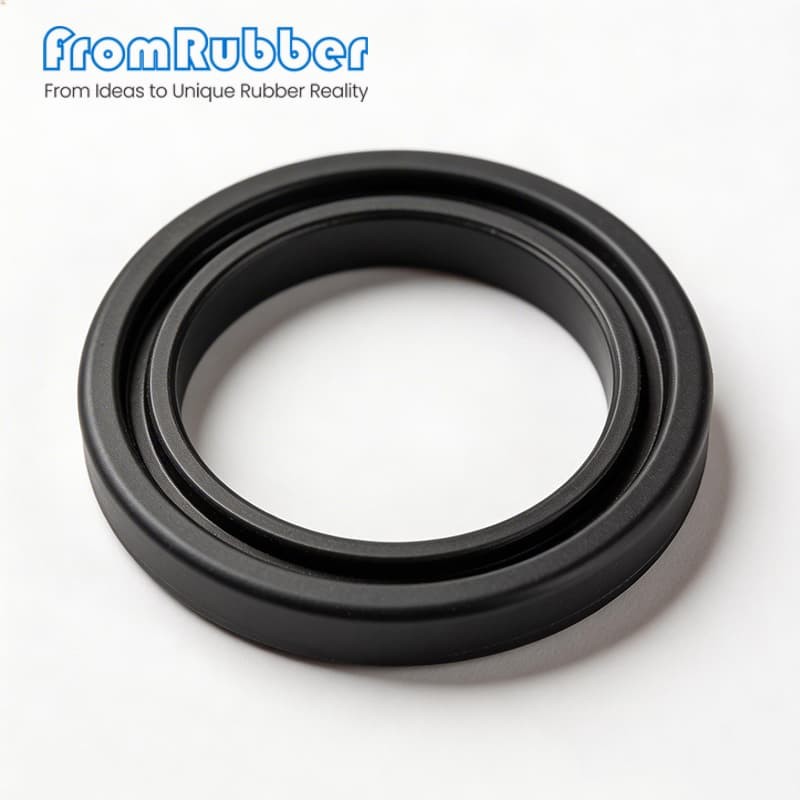
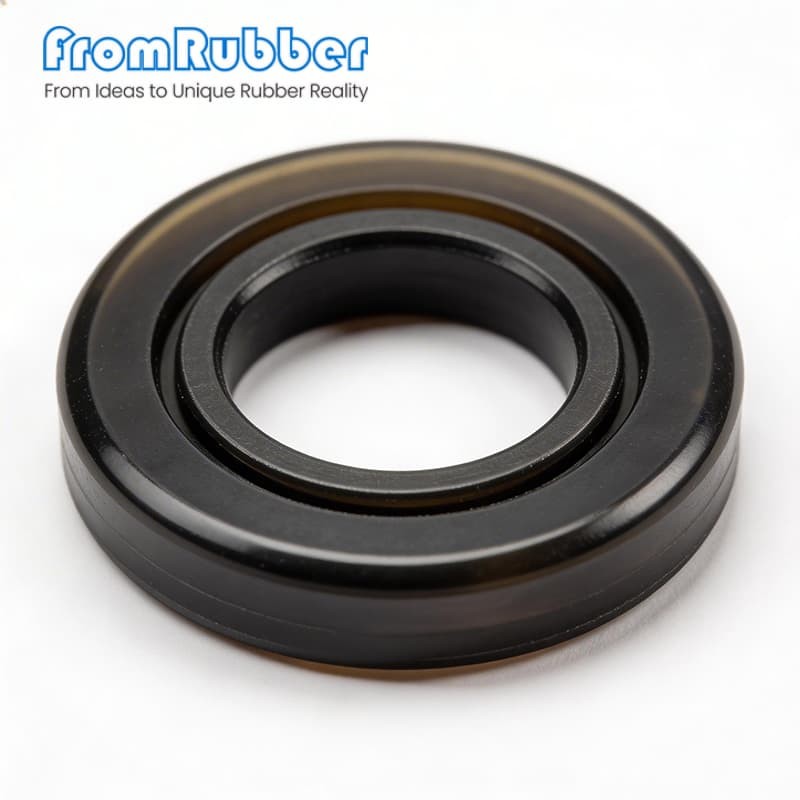
Assembly durability Most torn silicone parts do not fail in the field. They fail on the line, when someone stretches the part over a flange, a connector or a lip. This compound is built for that moment: at least 32 kN/m tear strength to ASTM D624 Die B, 650 % elongation, 60 ±5 Shore A. An 18 kN/m part and a 32 kN/m part look identical on a bench. On a line running a few thousand pieces per shift they do not behave the same at all. The difference shows up as nicks that open into tears at the corner where the operator pulls, and it is usually recorded as an assembly reject rather than a material fault. The compound is a vinyl-stopped silicone with nano-dispersed silica reinforcement, and it measures about 40 % higher than a conventional peroxide-cured silicone of the same hardness. Consistency matters as much as the peak value: lots are released against the same Die B specimen, typically landing between 32 and 35 kN/m. The compound cannot compensate for a drawing that concentrates stress. Before tooling we check four things, and we will redraw them if needed: Tear strength is only useful if it is still there after the part has lived in the application. The retention below is on the same compound, same specimen geometry: Air intake ducts and turbo couplers, valve cover gaskets, coolant seals, diaphragm pump membranes, hatch and access seals, vibration isolators and grommets — parts that are stretched, clamped or pushed over an edge during assembly and then flexed in service. Food-contact and medical grades are available from the same platform, with the same reinforcement. If the part also has to seal against fuel or oil, the tear requirement and the fluid requirement pull in different directions: read the fluid-resistant gasket page before choosing between a reinforced VMQ and a fluorosilicone. Tear failures are usually an assembly question before they are a material question. Send the drawing with a short note on how the part is fitted and we will tell you whether the compound or the geometry needs to change. Dongguan Bohao Electronic Technology Co., Ltd. IATF 16949:2016 / ISO 9001:2015 certified. Values shown are typical for the listed compound or platform; the drawing and the approved sample govern production.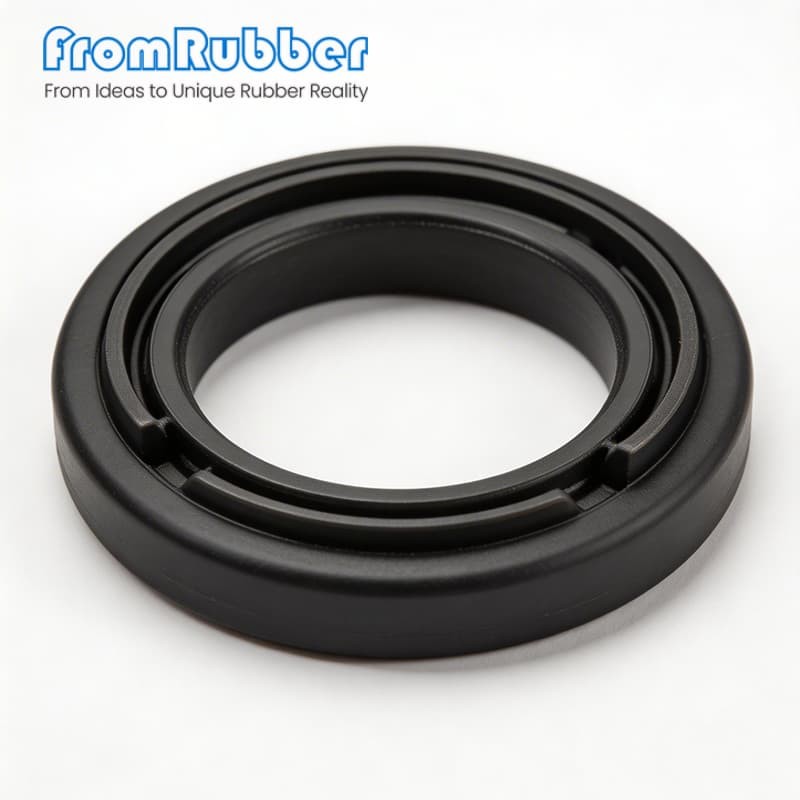
High tear strength silicone parts that survive installation, not only service
Tear strength is an assembly number
How the common grades compare
Material Tear strength (kN/m) Note High-tear silicone (this compound) 32 Typical of production lots, some to 35 Generic peroxide-cured silicone 18 Reference grade for comparison Fluorosilicone, standard 22 Where fuel resistance is also required EPDM, high-tear grade 28 Better water and steam ageing HNBR, high-tear grade 26 Better oil resistance VMQ, typical industry range 15–20 Wide lot-to-lot spread Four design rules that protect the tear value
What survives ageing
Condition Residual tear Retention 1000 h at 150 °C, air 30 kN/m 94 % 1000 h at 200 °C, air 27 kN/m 84 % IRM 903 oil, 500 h at 125 °C 28 kN/m 87 % Fuel C, 70 h at 23 °C 29 kN/m 91 % UV weathering, 1000 h 31 kN/m 97 % Where this compound is specified
From drawing to first article
What we need to quote
What comes back
Send the part and the assembly method
fromrubber.com
+86 18926836960