Automotive Rubber Water-Permeable Ventilation EPDM Corrugated Pipe
Item specifics
- Design
- Follow 3D Drawing Or Physical Object
- Process
- Molding
- Feature
- Water-Permeable Ventilation
- MOQ
- 3000pcs
- Application
- Automotive Rubber
Review
Description
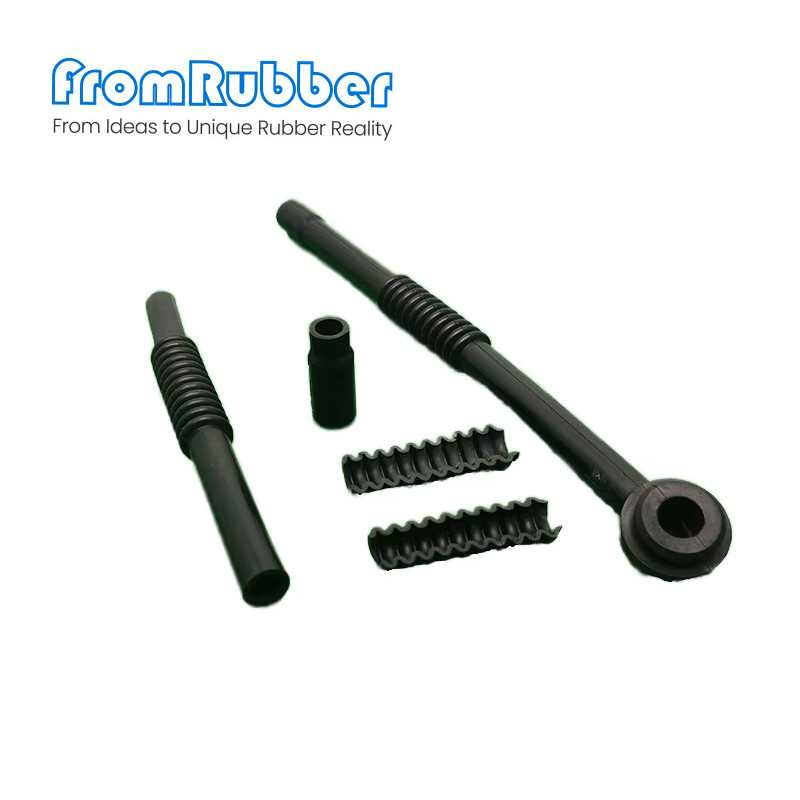
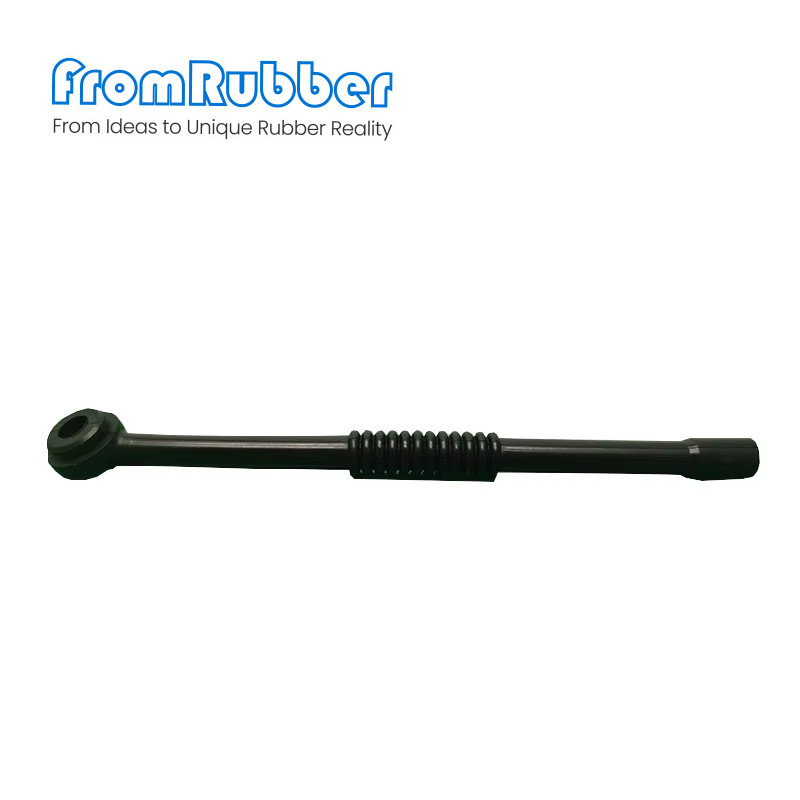
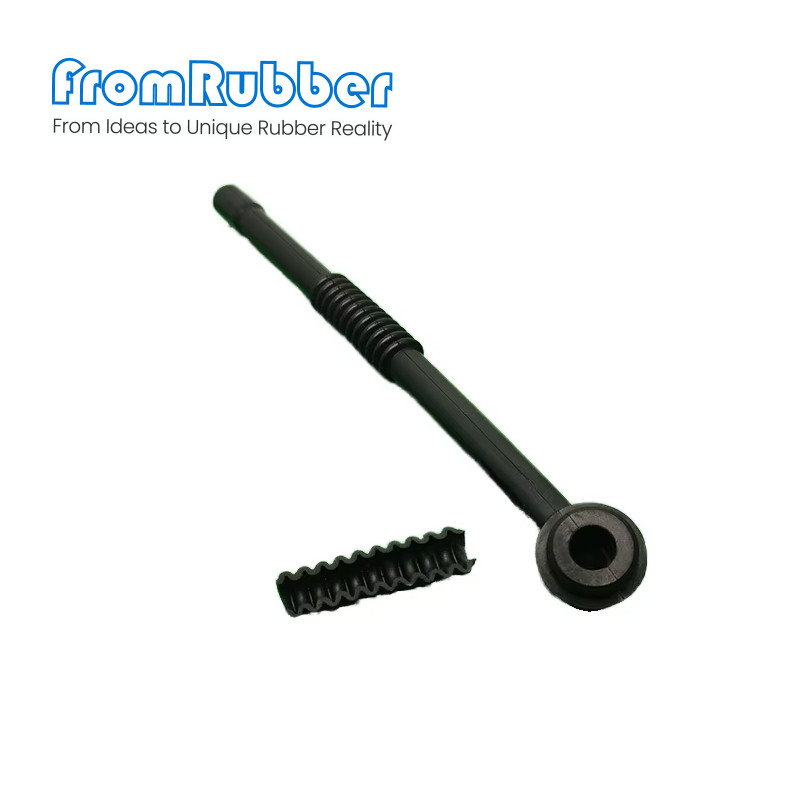
A lamp, a battery pack, a gearbox or a camera housing has to breathe. Sealed completely, it pumps air through its own seals as it heats and cools, and draws moisture in with it. Left open, it fills with water and dust. A vent pipe solves that by being a deliberate, tortuous path: air and water vapour pass, liquid water and grit do not. That is a different brief from a hose. It is closer to a filter: the performance that matters is flow resistance, water rejection and the ability to keep both after a million vibration cycles. Equalise pressure without letting water in, so seals are not loaded by internal pressure. Vent vapour so condensation does not accumulate inside the housing, especially after a cold start. Reject liquid through a labyrinth path, a low point, a one-way feature or a membrane at the end. Survive movement between the component and the body, which is what the corrugations are for - and what makes the pipe a fatigue part rather than a static one. Deep corrugations with a short pitch bend easily around a tight routing but add flow resistance, because the air has to travel over a rippled wall. Shallower corrugations flow better and bend worse. The route decides which matters: a long straight run tolerates a stiffer pipe, a tight S-bend does not. Two failure modes follow from getting it wrong. A pipe that is too stiff pulls on its end fittings as the engine moves and eventually cracks at the clamp. A pipe that is too soft collapses under vacuum and stops venting exactly when the pressure differential is highest. Continuous radiant heat plus soak after shutdown. EPDM tolerates it; the end fittings and the clamp load are what usually give way. Corona around electrical equipment attacks unsaturated rubbers. EPDM is chosen for exactly this reason rather than for temperature alone. Splash and vapour both reach the pipe in service. Resistance belongs in the compound specification, not in a general claim. Engine rock, body flex and thermal growth all load the run. The routing has to allow movement without putting the bend radius below the design minimum. Why EPDM rather than silicone in this position is covered in EPDM versus silicone; the short answer is ozone and water resistance rather than peak temperature. Internal and external diameter at the fittings, the installed route including the minimum bend radius, the flow the vent has to pass at the working pressure difference, the temperature and fluid exposure, and the end-fitting type and insertion depth. Add the test that matters most: a water-ingress test at the installed orientation. A vent pipe that passes a bench flow test can still fill with water if its low point sits below the fitting. Corrugated EPDM pipe as a category is listed under EPDM corrugated pipe, and the ventilation variant under water-permeable ventilation pipe. Because temperature cycling will pump it anyway, through the seals you were relying on, and the moisture arrives uncontrolled. A vent gives that exchange a path you have designed and can test. Only where the route cannot reliably reject liquid - a downward-facing end, a labyrinth or a low point may be enough. A membrane gives certainty and adds a component, a cost and a blockage risk. By installing the pipe in its real route, at its real angle, and spraying or immersing the end. Testing a straight sample on a bench answers a different question. Yes, and it removes an assembly step and a leak path. It also fixes the orientation, so the drawing has to define the clocking of each end. Corrugation pitch, stiffness and end fittings all follow from how the pipe is installed. Send the routing with the clamp positions and the component it vents, and we will propose a pipe and a test plan.A vehicle vent pipe is a controlled leak, and that is the whole design brief
What the pipe has to do at the same time
Four functions, one part
Corrugation is a compromise between flexibility and flow
Pitch, depth and collapse
The underhood environment is the test specification
Heat
Ozone
Oil and fuel vapour
Movement
What to specify on the drawing
Five items that decide the part
Specification on this series
Questions from automotive engineers
Why not just seal the housing completely?
Does the pipe need a membrane?
How is water rejection tested?
Can the pipe be supplied with the fittings moulded on?
Send the route, not just the diameter