Precision Silicone Washers for Sensitive Equipment
Item specifics
- Product name
- Silicone Washers
- material
- Silicone Rubber
- Color
- Black/white/custom
- Size
- base on your design
- Certification
- ISO9001/ISO14001
- Application
- All Industry of Sensitive Equipment
Review
Description
Isolation and sealing In sensitive equipment a washer usually does two jobs at once: it seals, and it isolates. That is why the specification is rarely “a silicone washer” — it is thickness tolerance, flatness, compression set and surface cleanliness, in roughly that order of cost. On a 1 mm washer, a 0.1 mm thickness spread moves the stack height of everything bolted above it. In a connector, a sensor window or a lens carrier, that is the difference between a sealed joint and a rattle. Thin silicone sections are harder to hold than thick ones, which is why precision washers are priced by the tolerance band and the flatness callout rather than by weight. Flatness matters for the same reason: a washer that dishes sits on its outer edge, seals on a line instead of a face, and takes a permanent set over the first thermal cycle. We control both at first-article stage, then monitor thickness on a sampling plan through the run. What each durometer range does to conformability, compression set and torque retention is covered in the silicone washer hardness guide. This page stays on geometry and cleanliness, which is where precision parts usually fail. Silicone is non-reactive and hypoallergenic, which is why it is specified around diagnostic equipment, pumps, sensors and food-processing machinery. Two things matter in practice: the compound has to be a grade that can be post-cured to remove volatiles, and the parts have to be packed so they arrive clean. Food-contact grades are available on request; biocompatibility testing is a project-specific exercise and we supply the material documentation your test house will ask for. For optical assemblies, outgassing is the failure that shows up as fogging weeks after assembly rather than at inspection — worth raising at the drawing stage, because the answer is a different cure, not a different shape. Where two similar sizes sit on the same line, moulding them in different colours removes an assembly error that inspection will not catch. Colour is a compound change, not a paint, so it does not affect the sealing face or add a transfer risk. Laser marking and moulded identification codes are also available where traceability is required. Precision is a tolerance conversation, not a material one. Send the drawing with the thickness and flatness callouts and we will confirm what the process can hold before a tool is cut. Dongguan Bohao Electronic Technology Co., Ltd. IATF 16949:2016 / ISO 9001:2015 certified. Values shown are typical for the listed compound or platform; the drawing and the approved sample govern production.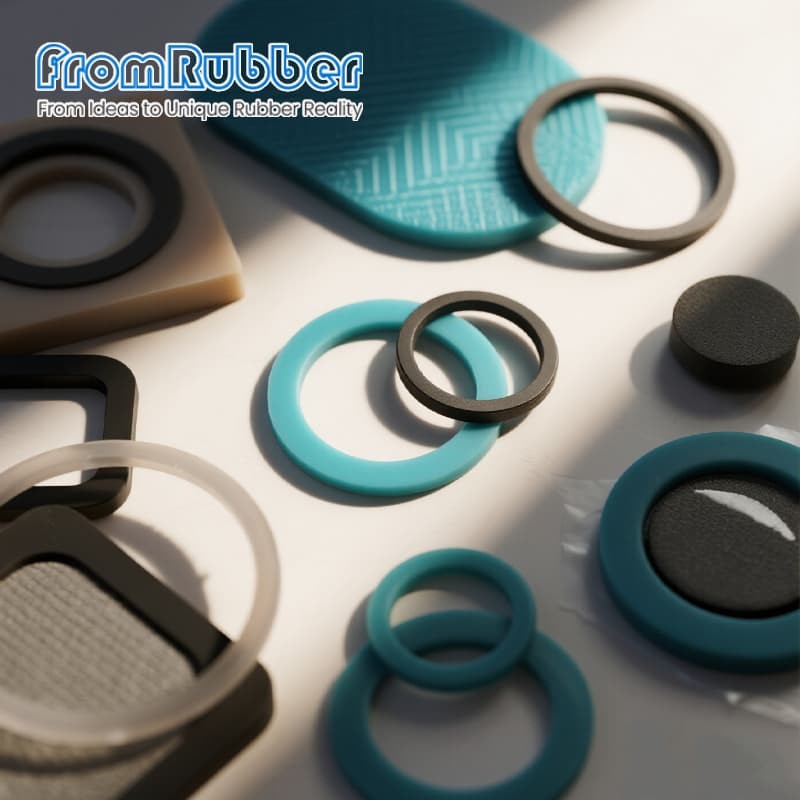
Precision silicone washers where the tolerance matters more than the hardness
The tolerance, not the durometer, is what you pay for
What the washer is isolating
Requirement Why it matters here How it is handled Electrical isolation Prevents a ground loop or a short through a fastener Insulating compound, full-face coverage, no metallic filler Thermal separation Stops heat moving between a hot part and a temperature-sensitive one Standard compound blocks heat; a conductive grade is a different material and must be specified as such Vibration Stops a PCB or a lens carrier fretting against its mount Compression set and recovery set the damping behaviour Chemical contact Cleaning agents, IPA, sterilisation cycles Compound selected against the cleaning list, not against the service fluid Non-marking No transfer onto an optical or cosmetic surface Post-cured compound, clean-room handling, no release agent on the sealing face Hardness selection is written up separately
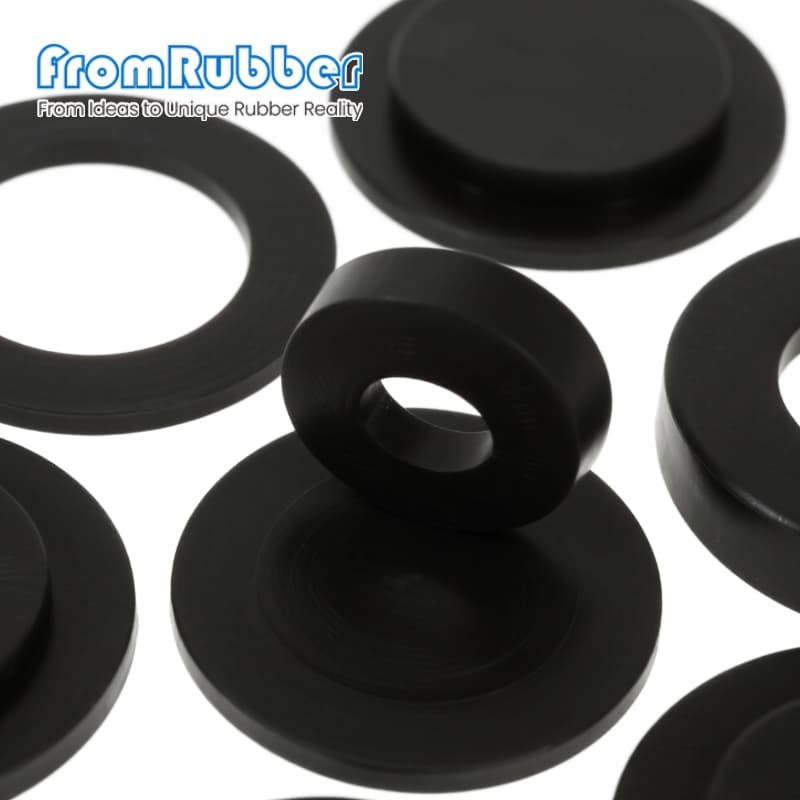
Medical, food and optical programmes
Colour as a poka-yoke
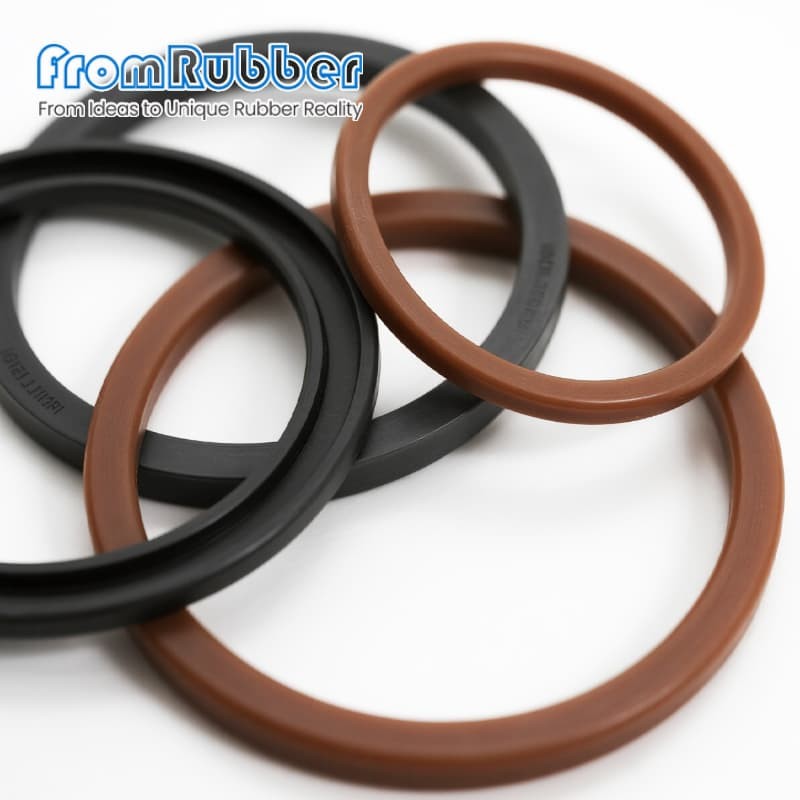
What we need to quote
What comes back
Send the drawing with the tolerance band
fromrubber.com
+86 18926836960