Leak-Proof Silicone Gaskets Designed for Oil and Fuel Resistance
- Model
- BH-seals
Item specifics
- Design
- Follow 3D Drawing Or Physical Object
- Process
- Molding
- Feature
- High-performance leak-proof
- MOQ
- 100000pcs
- Application
- Automotive, Marine, and Industrial Sealing
Review
Description
Fluid sealing Standard silicone is a poor choice for hydrocarbon immersion. A fluorosilicone-modified compound is not: under 5 % swell in IRM 903 oil, −60 °C to +230 °C, with aged data in diesel, E85, Fuel C and transmission fluid rather than a single headline number. A gasket that swells 20 % will either extrude out of its groove or crush the flange it was meant to seal, and no amount of torque will fix it. The specification should open with the medium and the temperature at the joint, then pick compound and profile. This compound family is fluorosilicone-modified for exactly that reason: the fluorocarbon side chains block both polar and non-polar fluids while the silicone backbone keeps the flexibility. For continuous oil-pan service, a nitrile gasket is often the better engineering answer, and we will say so. The comparison is set out in silicone versus NBR for oil pans. Fluorosilicone is the exception: it is specified where the joint also has to survive heat, cold start or fuel contact that NBR cannot take. That is the case this compound is designed for. The same compound has been run for 1,000 h in low-sulphur diesel (+3.8 %), E10 gasoline (+5.2 %), jet A-1 (+4.0 %) and phosphate-ester hydraulic oil (+6.5 %). Aged samples in diesel and E85 have been carried to 5,000 h. These are typical values, not a warranty for your fluid — send the medium and we will test against it. Sealing force is a geometry question before it is a material question. Three numbers decide whether this gasket works: the compression ratio at bolt torque, the flange stiffness between bolts, and the width of the sealing land relative to the internal pressure. Send the flange drawing and we will propose the thickness and profile rather than leaving you to pick from a list. Where the flange is uneven or the bolt spacing is wide, a molded profile with a raised sealing bead carries the load better than flat sheet. That geometry is designed in the same DFM review as the compound. We quote against the medium and the joint drawing. Send both and the reply is a compound recommendation plus a test plan, not a catalogue page. Dongguan Bohao Electronic Technology Co., Ltd. IATF 16949:2016 / ISO 9001:2015 certified. Values shown are typical for the listed compound or platform; the drawing and the approved sample govern production.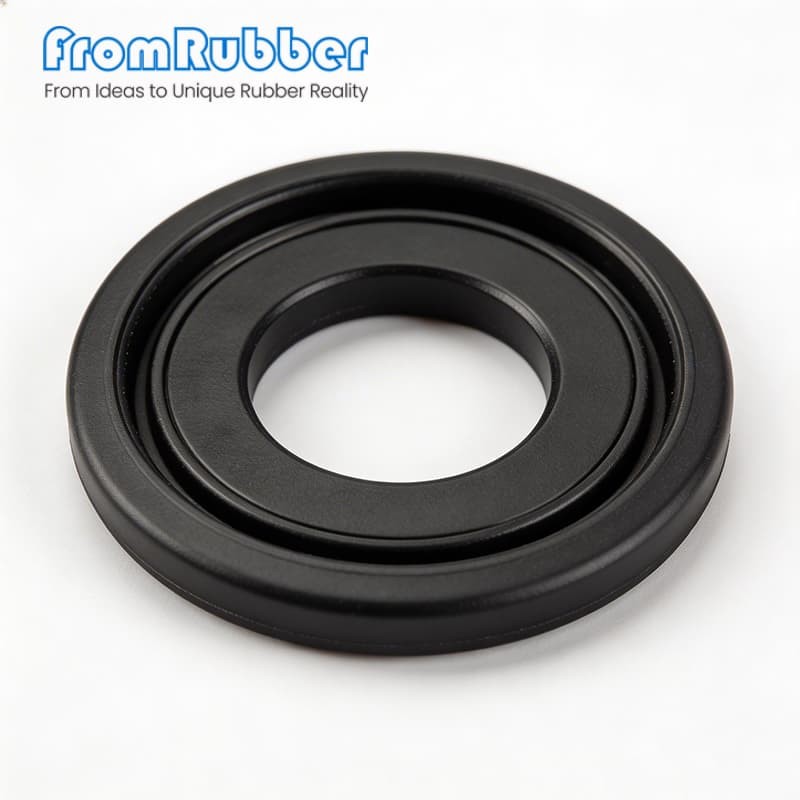
Leak-proof silicone gaskets for oil and fuel service
Start from the fluid, not from the gasket
If the medium is engine oil, read this first
Swell you can plan for
Fluid Condition Volume change Hardness change ASTM #1 oil 1000 h at 150 °C +1.8 % −2 pts IRM 902 oil 500 h at 125 °C +3.2 % −3 pts Fuel C (50/50 iso-octane/toluene) 70 h at 23 °C +6.5 % −5 pts Diesel B20 1000 h at 60 °C +4.1 % −3 pts E85 ethanol 1000 h at 40 °C +7.0 % −6 pts ATF, Dexron VI 500 h at 150 °C +2.5 % −2 pts Four profiles from one compound family
Profile Thickness Hardness Tensile Solid sheet, custom die-cut 0.8–6.4 mm (±0.10) 60 ±5 Shore A 9.2 MPa Reinforced fabric insert 1.2–3.2 mm 75 ±5 Shore A 11.5 MPa O-ring cord stock 2.0–10.0 mm Ø 70 ±5 Shore A 8.8 MPa Molded flange gasket 1.5–5.0 mm 65 ±5 Shore A 9.5 MPa 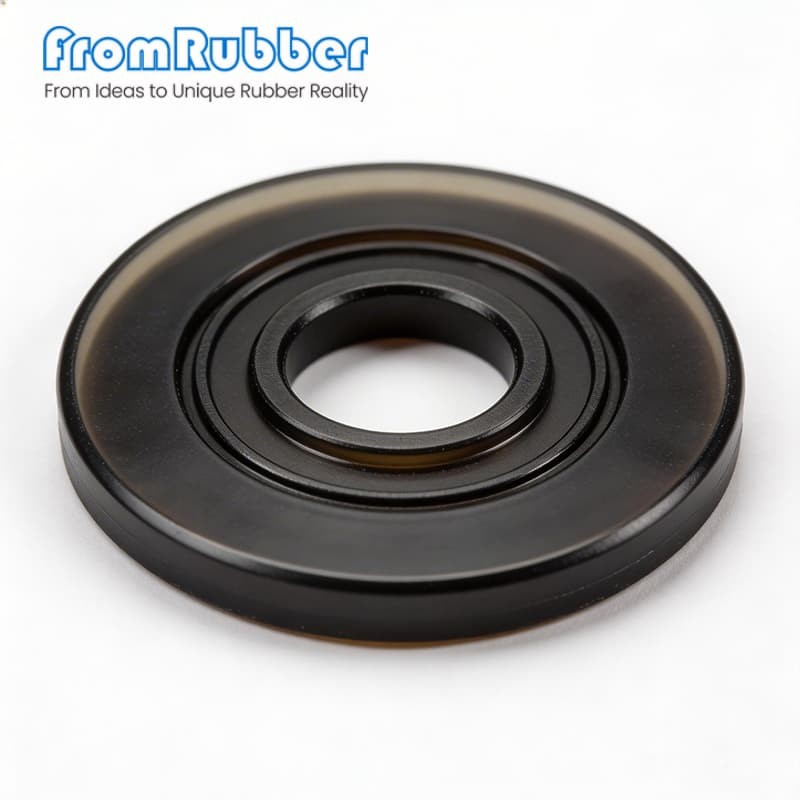
What the joint needs from the design
How a gasket project runs
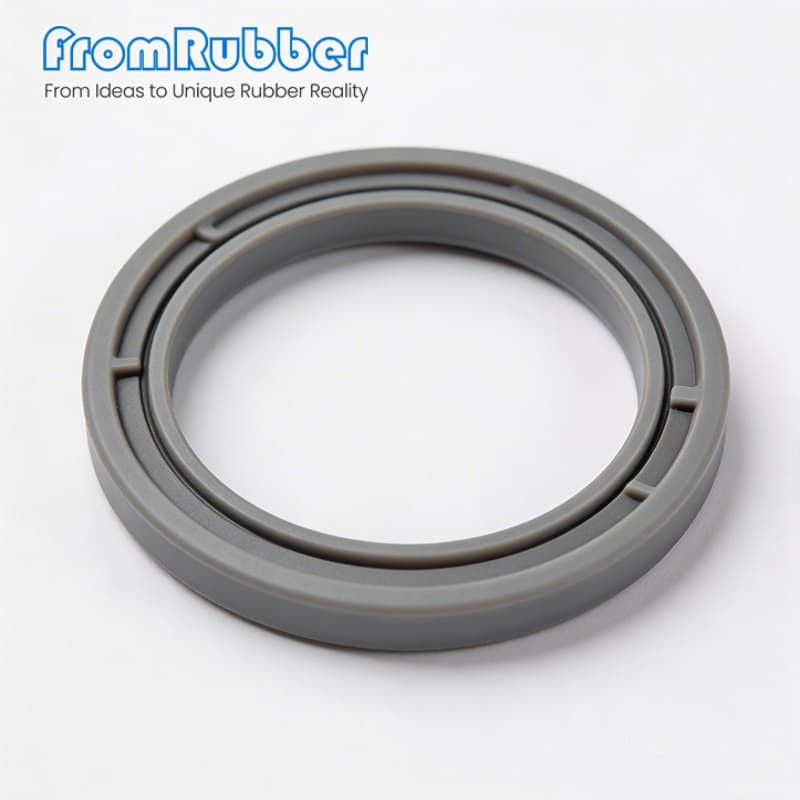
What we need to quote
What comes back
Tell us the fluid and the flange
fromrubber.com
+86 18926836960