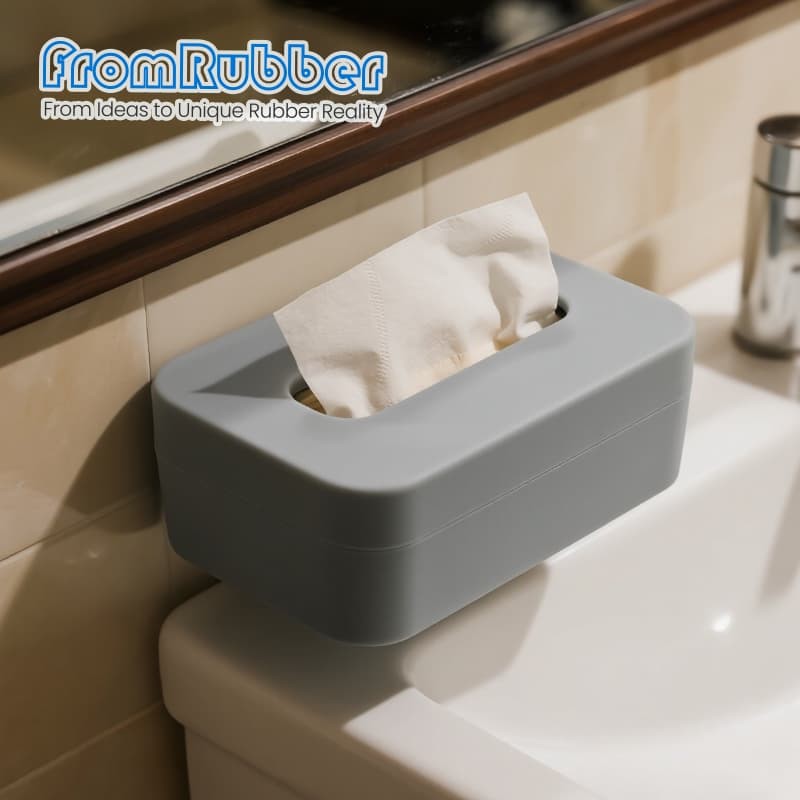
Suction Cup Silicone Tissue Box Holder Toilet Paper Storage for Bathroom
- Model
- BH-tissue holder
Item specifics
- Design
- Follow 3D Drawing Or Physical Object
- Process
- Molding
- Feature
- Easy to clean,reusable
- MOQ
- 3000pcs
- Application
- Bathroom, dining room, toilet
Review
Description
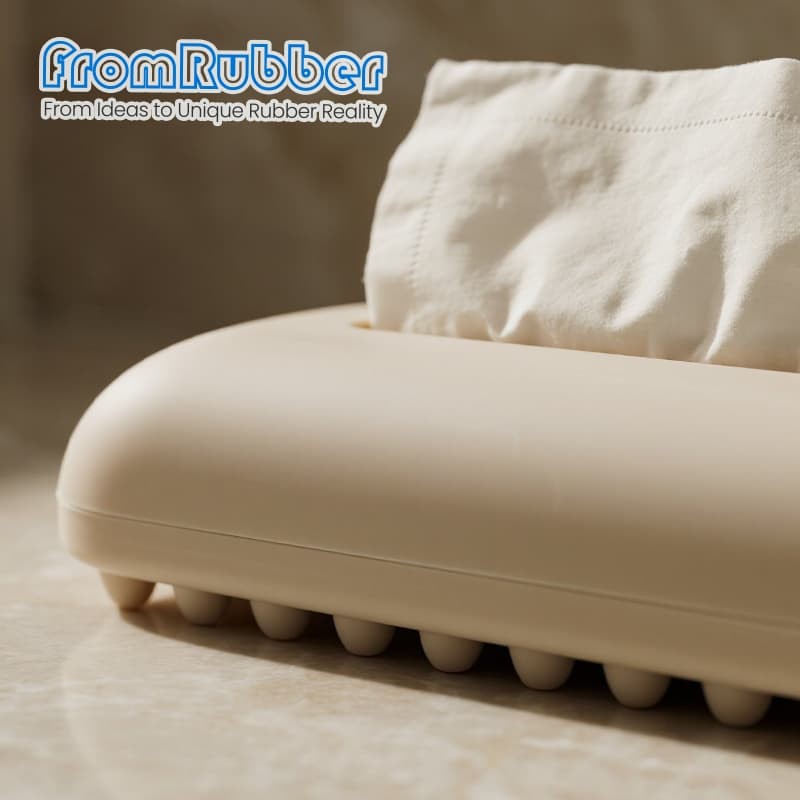
A wall-mounted silicone tissue box holder is held by nothing but air pressure. The cup is pressed flat, the air beneath it is expelled, and atmospheric pressure holds it against the wall. Everything that follows - how long it stays, how much it carries, whether it leaves a mark - depends on the surface, the load across the pad, and the temperature in the room. For a brand sourcing this product, those three variables are the specification. A holder that grips beautifully in a showroom and slides down a tiled wall after a hot shower is not a design detail; it is the return rate. The surface. Suction needs a smooth, non-porous face. Glazed tile and glass work; painted plaster, unfilled travertine and textured plastic do not, because air leaks in through the texture and the vacuum decays. The load. A pad held by vacuum creeps under a constant pull. A tissue box is a small load, but it hangs for years, and a pad that is too small for the moment arm will slowly slide. Temperature and humidity. Warm, humid air softens the cup and raises the leak rate. The bathroom is the worst room in the house for a suction fixing, which is exactly where this product is sold. Pad size against cup count. Two smaller cups fail independently; one large pad holds longer but needs a flat area bigger than a single tile. Real walls have grout lines, and a cup straddling one will leak. A release tab. The product has to come off without a scraper. A moulded tab that lifts the edge breaks the vacuum cleanly instead of levering the cup off with a fingernail. A rigid backing plate. If the cup is soft and the body is soft, the load tilts the assembly and peels one edge. A stiffer plate spreads the load across the pad. Wall protection. Silicone leaves no residue and does not yellow the tile, which is a genuine advantage over an adhesive pad - and worth saying on the packaging. Pantone matching on a moulded part, with the caveat that matte silicone renders colour slightly flatter than a printed card. Approve a physical sample, not a screen proof. Moulded-in logo, debossed mark or a printed pad. Moulded is the most durable and needs to be in the tool from the start; printing can be added later. Retail-ready carton, hang tag or colour box, with the installation instructions that prevent the "it fell off" complaint - surface preparation is the usual cause. Material documentation for the destination market, and a statement on what the product is not suitable for - textured or painted walls - in the manual. A hold test on glazed tile at bathroom temperature and humidity, with a stated load and a stated time. "Sticks securely" is not a test. 3,000 pieces per design for a custom mould, which is where colour and branding become economic. It does not absorb water, it does not support mould growth on its surface the way a porous material can, and it tolerates the mild cleaners used on tiles. It also stays flexible in a warm room, which is what keeps the cup in contact with the wall as the temperature moves. Two practical notes belong in the manual: clean the wall and the cup before first use, because dust is the most common reason a new holder fails; and re-seat the cup periodically, since a slow leak is normal over months and re-pressing restores the vacuum. Other moulded silicone cases and holders are listed under custom silicone cases. A reusable double-sided suction design is described on the suction cup phone mount page. Usually not for long. Paint films are slightly porous and often textured, so the vacuum decays. Say so in the manual and on the packaging; it prevents the majority of returns. It depends on pad area, surface and temperature, so it has to be measured on a real tile rather than quoted as a single number. Specify the load and the hold time you need, then test. Closely, with a physical sample approved under the intended lighting. Moulded silicone reads slightly differently from printed colour, and matte surfaces shift the value. Silicone does not leave adhesive residue, which is its main advantage over a sticky pad. A ring can appear where dirt was trapped under the cup, so the manual should mention cleaning before first use. Pad size, release tab and packaging all follow from where the product is sold and what it hangs on. Send the target market, the preferred colour and the packaging format, and we will return a tooling and sample plan.A suction cup is a load case, not an adhesive
Three ways suction fails
Surface, load, temperature

Design for the wall people actually have
Four details that decide the review
What a retail brand needs from an OEM build
Colour
Branding
Packaging
Compliance
Testing
Volume
Material and cleaning
Why silicone suits the bathroom
Specification on this item
Questions from brand owners and buyers
Will it hold on painted walls?
How much weight can the pad carry?
Can the colour match our brand exactly?
Does it leave a mark on the tile?
Send the wall surface and the retail channel