Silicone Bowl Covers – Stretch Fit for Mixing Bowls, Plates & Leftovers
Item specifics
- Design
- Follow 3D Drawing Or Physical Object
- Printing
- Silk Screen Printing,Laser Etching
- Feature
- Reusable, Heat-Resistant,Stretch
- MOQ
- 1000pcs
- Application
- Bowl
Review
Description
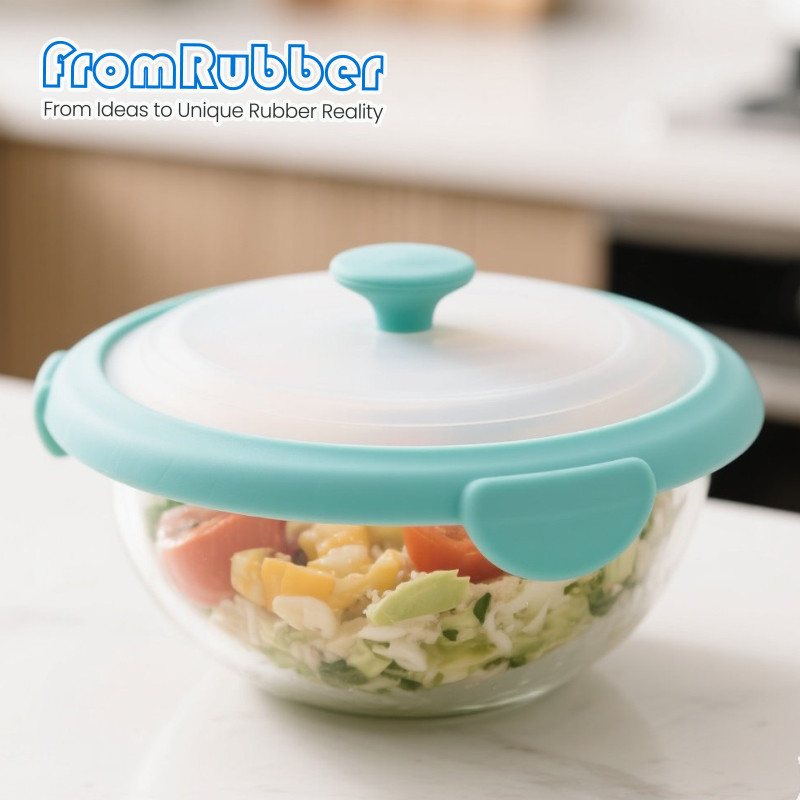
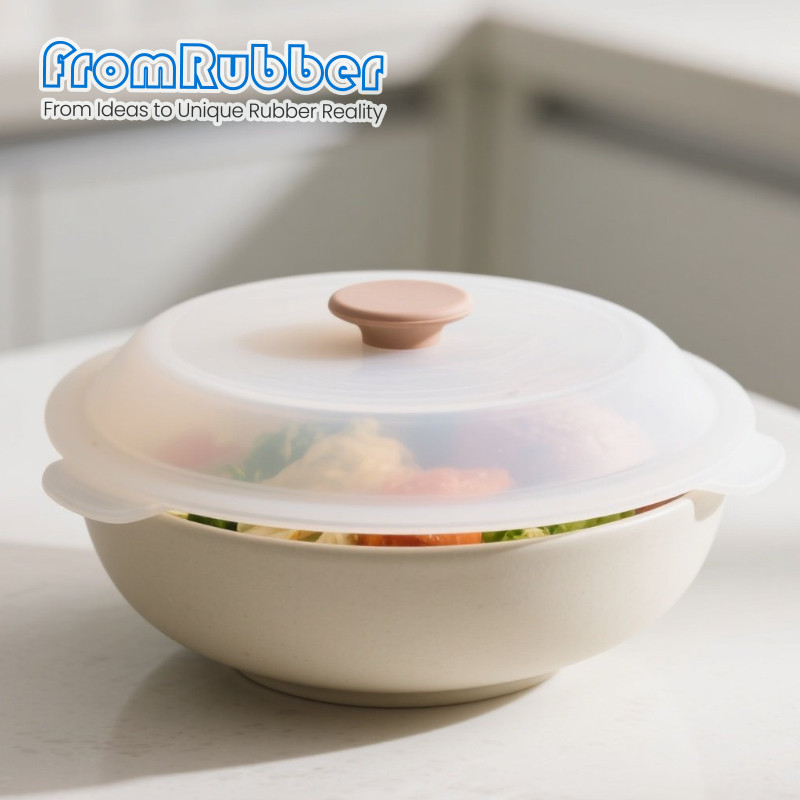
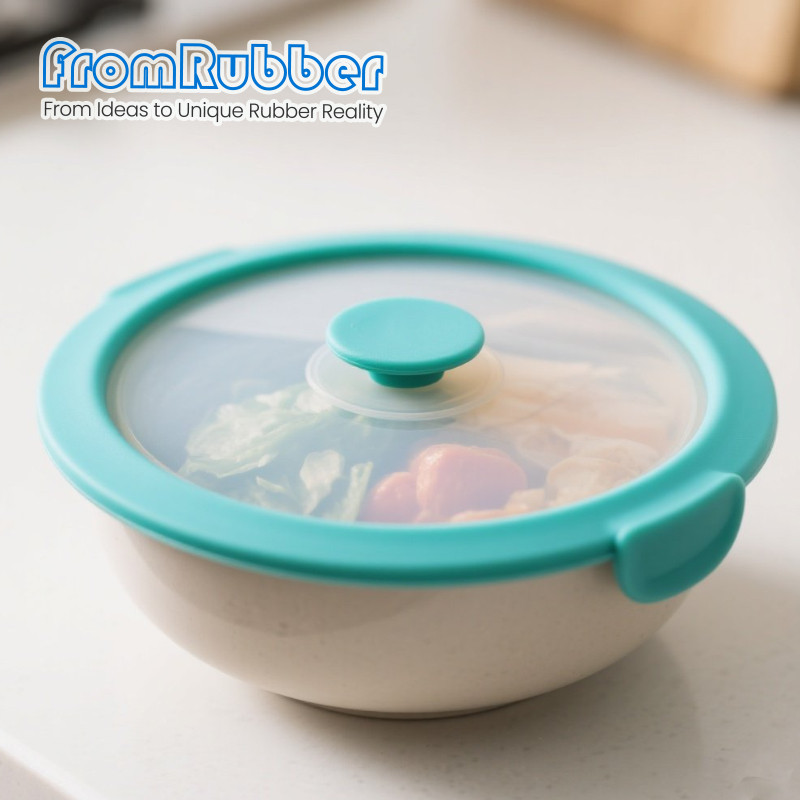
Silicone bowl covers work because they are smaller than the bowl and elastic enough to be pulled over the rim. That single sentence contains three numbers a buyer should insist on: how far the cover stretches, how much force it takes to get it there, and how much of that stretch it recovers after a wash. Get the ratio wrong and it is either impossible to fit or loose enough to slide off. Everything else - colour, logo, packaging - sits on top of that geometry. Stretch. The cover has to reach over the widest rim in its size range without tearing at the edge. That is a material and a section decision, and it sets the size range. Grip. Once fitted, the cover has to hold: the elastic tension pulls the skirt against the rim and that friction is what seals. Too little tension and steam lifts it; too much and the user cannot get it on. Recovery. After a dishwasher cycle the cover has to return most of its shape. A compound that creeps leaves the cover loose, which is exactly the complaint that appears after a few months of use. Thin glass or stainless rims are the easiest: the skirt wraps and the tension is concentrated on a narrow edge. They also show a leak first, because there is no flat land to help. Thick plastic bowls with a rolled lip need a deeper skirt and more stretch. On these, a cover that fits a glass bowl of the same diameter will not go on. Wet or oily rims defeat friction. That is a real use case - a bowl straight from the fridge or a plate with butter on the edge - and it argues for a slightly higher tension rather than a looser fit. Ask which document covers which market, for the compound and for any print. "Food grade" on its own is a phrase, not a document. Microwave and freezer use are normal for this product, and both stress the material differently. State the temperature range the cover is sold for, and test it. Tomato, turmeric and oil leave colour in light compounds. If the range includes pale colours, test the stains the product will actually meet before approving the palette. A BPA-free compound is available on this series, which is the claim most retail buyers ask for first. The durability claims - reusable, heat-resistant, stretch - are the ones that need the test data behind them. Silicone bowl covers are sold in nested sets because one size cannot serve a mixing bowl and a plate. The commercial decision is how many sizes, and how much overlap between them: too much overlap wastes tooling, too little leaves a gap the customer notices. Colour and print are the differentiators - silk screen for solid colour, laser etching for a permanent mark - and the packing format decides whether the set reads as a gift or as a utility item. Other moulded kitchen and household items sit under custom silicone cases. A wall-mounted bathroom item from the same stable is described under the suction cup tissue holder. By the ratio, not by a single diameter. Give us the smallest and largest rim you want to cover, and the size range follows from the stretch the compound can take. The silicone will, but repeated heat and detergent accelerate creep, so the fit loosens over time. If dishwasher use is claimed, specify a recovery test after the cycle count. Silicone tolerates it, and a cover with a small vent or a loose corner is safer than a fully sealed one, because trapped steam has to go somewhere. Say which behaviour the packaging promises. Yes, on the flat top. A raised or moulded logo needs to be in the tool; a printed one can be added later. Neither should sit where the cover flexes most. Stretch ratio, skirt depth and tension all follow from the rims you want to cover. Send the smallest and largest rim diameter with the bowl material, and we will propose a size set and the test that proves the fit."Stretch to fit" is a ratio, and the ratio is the specification
Stretch, grip, recover
Three properties, one part
The rim decides whether it seals
Three rim types, three behaviours
Food contact and heat: the two things to ask for in writing
Material documentation
Heat and cold
Staining
What a kitchen brand actually buys
A set, not a single size
Specification on this series
Questions from retail buyers and brand owners
How do I know which bowl sizes a cover fits?
Will it survive a dishwasher?
Can it go in the microwave?
Do the covers take a logo?
Send the rim sizes, not the bowl photos