Colorful Cartoon Animal Silicone Case – Safe for Kids' Gadgets
Colorful Cartoon Animal Silicone Case – Safe for Kids' Gadgets
Model
BH-silicone case
Item specifics
Design
Follow 3D Drawing Or Physical Object
Process
Molding
Feature
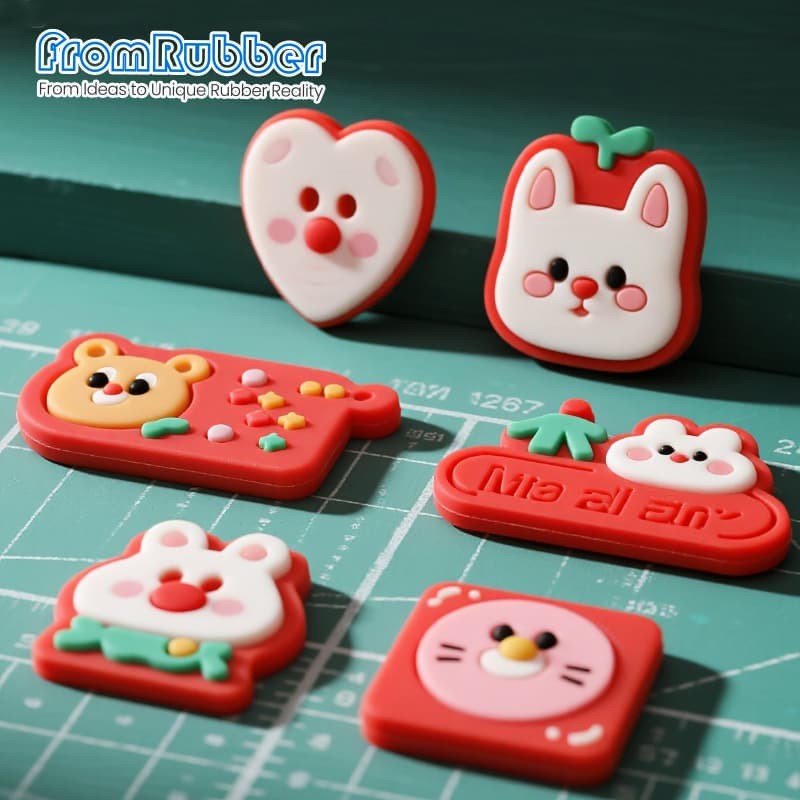
Colorful Cartoon Animal
MOQ
1000pcs
Application
Safe for Kids' Gadgets
Review
Description
Kids’ device cases · hazard-led design
A kid-safe case is defined by what is not attached to it
Children’s products rarely fail review because the silicone was wrong. They fail because a decorative eye was a separate part, because a hard backing plate sat behind a soft cover, or because a moulded edge was left sharp enough to scratch.
We mould cartoon animal cases and moulded decorative components for kids’ device programmes, and we design them around the physical hazards a review will look for: small detachable parts, hard inserts, sharp flash and coatings in mouth-contact areas.
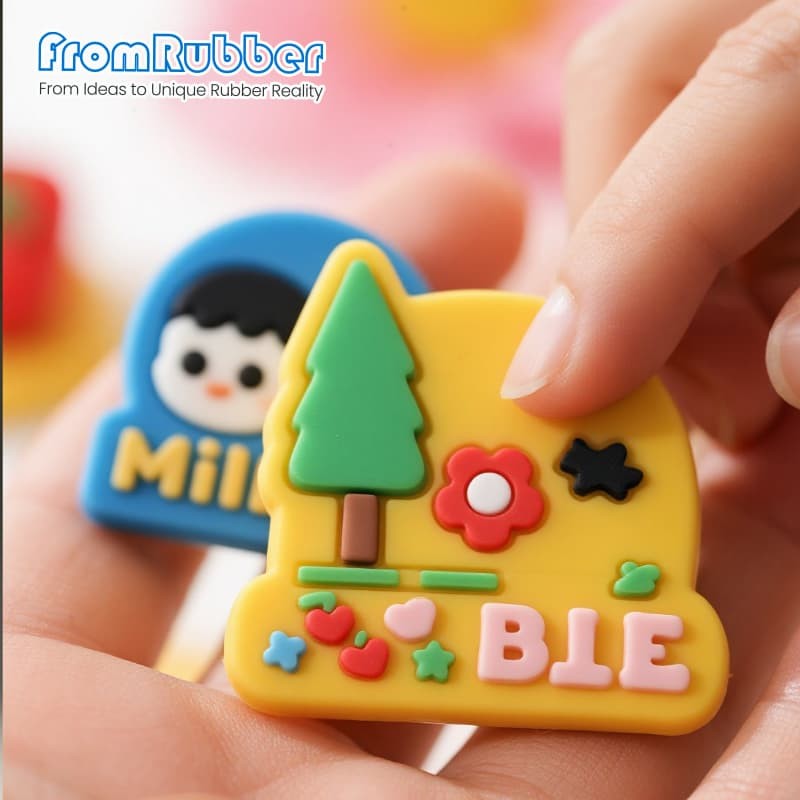
Decoration bonded in the tool, with no glued-on parts
Rounded edges and radii set at the drawing stage
Through-colour in mouth-contact areas instead of paint
MOQ 1,000 pcs per design
Four hazards, and the moulding answer to each
Every point below is a design decision, not an inspection step. If it is designed in, inspection has nothing to catch.
01
Small detachable parts
The classic failure is an eye, nose or charm that is a separate moulded piece pushed into a socket. Under pull, it comes out at exactly the size a small child puts in their mouth.
Design answer: mould the feature into the shell, or bond it during cure so it becomes one part. Where a charm must be separate, treat it as its own product with its own pull test and its own warning.
02
Hard inserts and backing plates
A polycarbonate plate inside a soft cover makes the case feel premium and turns it into a hard object with edges when the cover is removed or chewed.
Design answer: all-silicone construction, with stiffness coming from wall geometry rather than from a second material.
03
Sharp flash and parting lines
Flash at the parting line is the defect children notice first, and the one a reviewer photographs. It comes from tool wear, not from the design.
Design answer: parting line placed on a non-contact face, with a defined deflash step and a visual standard agreed at sample approval.
04
Coatings in mouth-contact areas
Spray coats and printed layers can be abraded or mouthed. On a device a child handles constantly, a coating is a wear surface that eventually exposes a different colour underneath.
Design answer: through-colour compound on any area likely to be handled or mouthed, with print reserved for surfaces a child does not put in their mouth.
Charms and add-ons are separate products
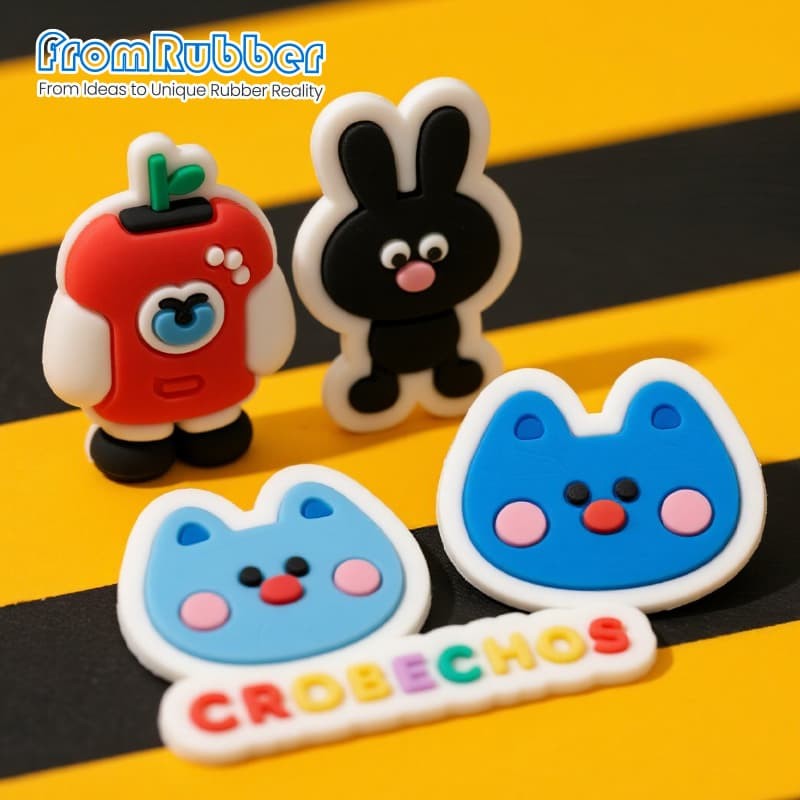
The decorative pieces in a kids’ range — badges, nameplates, clip-on characters — are often quoted with the case and approved with it. That is the wrong unit of approval.
A clip-on piece has its own attachment, its own pull-out risk and its own small-part dimensions. It needs its own specification and its own test, even when it ships in the same box. We will quote it separately and say plainly which part of the assembly the report covers.
This is also where licensed artwork usually enters. The licence has to come from you, in writing, before tooling. We mould to supplied art and do not source characters ourselves.
Documents a kids’ programme needs, and who holds them
Being clear about this early prevents a shipment sitting in a warehouse waiting for a certificate nobody ordered.
Document
Source
When to request
Compound safety data sheet
Compound supplier, passed through us with the batch record
At sample approval
Material declarations (RoHS, REACH where applicable)
Compound supplier, per grade
Before tooling, if your market requires it
Migration or heavy-metal testing
Third-party laboratory, commissioned for your SKU
After the production sample is fixed, because the test follows the exact colour and grade
Small-parts assessment
Your compliance team, on the finished assembly
Once the attachment method is frozen
Colour and appearance standard
Agreed between us, signed against a master sample
At sample approval
Testing follows the final colour and grade. Booking a laboratory before the sample is frozen is the most common way a kids’ programme loses three weeks.
Cleanability is part of the safety case
No dirt traps
Internal corners are radiused and the shell is a single open form, so a wipe reaches every surface a child touches.
Openings that drain
Port and speaker openings are sized so liquid and crumbs do not sit behind a lip. A closed pocket behind a cutout becomes a bacterial trap.
No fabric or fibre
Nothing laminated, flocked or stitched onto the part. Soft textile trim on a kids’ device is a cleaning and a choking problem at once.
Moulded components in a kids’ range
The case and the add-on pieces are quoted as separate items, with separate specifications and separate tests.
What buyers ask before placing a kids’ programme
Are the character features glued on?
No. Features are moulded in the shell or bonded during cure as part of the same part. If a design needs a genuinely separate charm, we quote it as a separate item with its own attachment and its own pull test, and we say so in writing.
Can you supply a case that a toddler might mouth?
We can specify a compound grade and a through-colour construction suited to that use, and supply the supplier declarations that go with the grade. Whether the finished product passes your market’s requirements depends on the whole assembly and on third-party testing, which is commissioned against the final sample rather than assumed from the material.
Can you print licensed characters?
Only from artwork you are licensed to use. Send the licence reference with the art files. We do not hold character licences and will not reproduce third-party characters on our own initiative.
Can we have a name or a school logo moulded in?
Yes, and it is the safer route for personalisation: the lettering is part of the mould, so there is nothing applied on top to wear or peel. Nameplate-style components can also be moulded as separate items if they are meant to be handed out individually.
Planning a kids’ device or school programme?
Send the device model, the age group and the market you sell into. You get a hazard review of the artwork, a construction proposal with no glued parts, and a document list scoped to that market.