Protective Buffer Silicone Case for Medical Oximeter Probe - Medical Rubber Case
Item specifics
- Design
- Follow 3D Drawing Or Physical Object
- Printing
- Silk Screen Printing,Laser Etching
- Feature
- Dustproof
- MOQ
- 1000pcs
- Application
- Medical Oximeter Probe
Review
Description
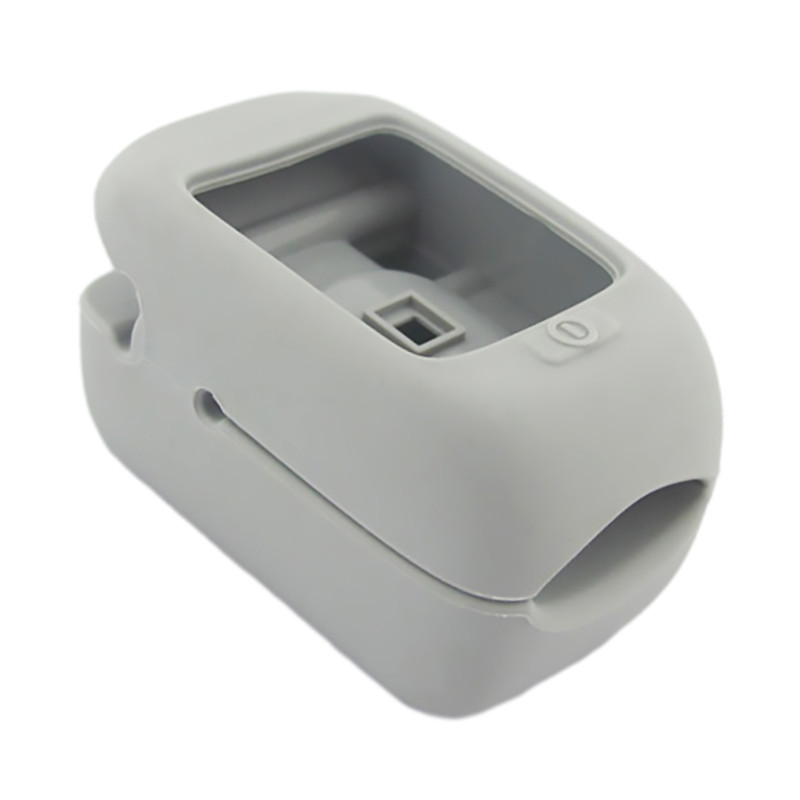
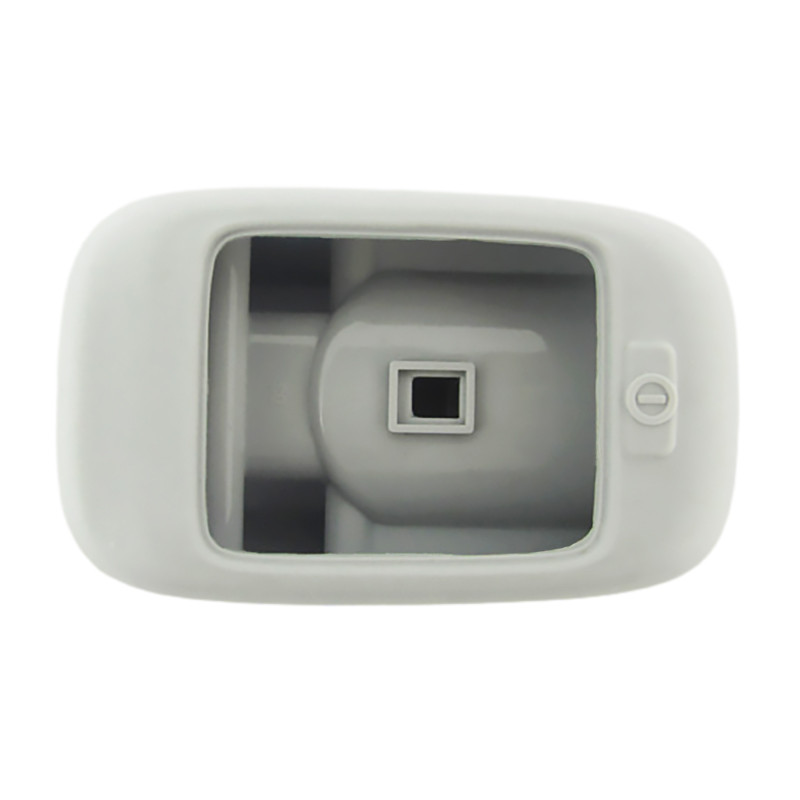
A buffer case on a reusable oximeter probe has two jobs that pull in opposite directions. It has to absorb impact and pinch loads, and it has to leave the optical path and the patient contact area exactly as the sensor design intended. This page covers the three decisions that resolve that conflict: wall thickness, hardness, and the way the case is cleaned between patients. Reusable probes are dropped, clipped onto trolleys and pinched between fingers during a reading. The damage that matters is rarely a broken housing; it is a distorted emitter-detector alignment or a cracked light window, both of which degrade the reading before anyone notices a physical fault. A buffer case earns its place by spreading a point load over a wider area of the housing. The case must not add material across the optical path or thicken the tissue-contact face. That constraint is geometric, not cosmetic: the window has to be open or optically clear, and the case edge around it needs to sit outside the light cone with a defined clearance. Cases designed from a photograph rather than the optical drawing are the usual reason a probe reads correctly with the case off and inconsistently with it on. Impact protection comes from thickness and from a compliant material, but compliance on a small clip-on part also means the case can be rolled off during handling. In practice the workable combination is a moderately soft silicone with a thin wall over the protected zones and a thicker, locally reinforced zone at the corners and the cable exit, rather than a uniform wall around the whole probe. Uniform thickness is easy to draw and hard to justify. It adds bulk where nothing impacts and leaves the vulnerable corner under-protected. Variable wall sections are a tooling decision as much as a design decision, and they have to be reviewed together with the ejection and the demoulding of a thin part. A probe case is wiped between patients, often with several agents over its life. Silicone tolerates alcohol and quaternary ammonium compounds well, but repeated hypochlorite exposure can dull the surface and, on a thin wall, accelerate tearing at the edges. The specification should name the actual agents and the expected wipe frequency, because that combination decides the silicone grade and the surface finish. Surface finish matters more than it appears. A high-gloss moulded surface shows scratches after the first few wipes and looks soiled even when clean; a fine matte texture hides handling marks and gives a more consistent appearance through the product life. The texture also changes how the case grips the probe, so it is a functional choice as well as a visual one. A thin silicone wall flows differently from a thick section. Material has to reach the far end of the cavity before it starts to cure, so gate position and venting are set for flow rather than for convenience of trimming. A gate placed on a visible face leaves a mark that no amount of finishing will fully remove on a matte surface. For low-volume validation, a machined or printed prototype confirms fit but not feel or tear behaviour. The useful prototype is one moulded from the production-intent tool, because the thin-wall behaviour that matters in service is created by the mould, not by the drawing. Wall sections and hardness are fixed per probe model on the approved drawing. Medical documentation is agreed at RFQ according to the customer's regulatory route. A clear molded window is possible where the design needs a closed surface, and it is specified with a transmission target rather than a colour. Where the probe already has its own window, an open aperture with a defined clearance is usually the more robust answer. It is designed for wipe-down protocols, and the silicone grade and texture are selected against the agents and frequency stated in the requirement. Repeated hypochlorite exposure is reviewed specifically because it is harder on thin edges than alcohol. Yes. A physical probe can be measured and modelled, with the optical path and the tissue-contact face treated as fixed reference geometry rather than as dimensions to be optimised. It should not. The case is designed around the optical path and the contact face, and the edge geometry is checked against the light cone so no material is added where the emitter or detector needs clearance. Share the probe model or a physical sample, the optical path envelope and the disinfection agents used. The review returns the wall sections, hardness, window treatment and surface finish, together with the open points to close before tooling.Protective Buffer Silicone Case for Medical Oximeter Probes: Protection Without Blocking the Signal
What a Probe Buffer Case Must Protect, and What It Must Not Change
Cushioning versus the optical window
Wall Thickness and Hardness: The Protection Trade-Off
Reading the trade-off honestly
Cleaning and Disinfection: Matching Silicone to the Protocol
Alcohol, quaternary ammonium and hypochlorite


Tooling a Thin-Wall Case From Prototype to Production
Thin walls need different gate and vent design
Probe Buffer Case Specification Fields
Questions About Silicone Probe Cases
Can the optical window be molded into the case?
Is the case intended to be cleaned between patients?
Can you work from an existing probe rather than CAD?
Does a buffer case change the reading?
Send the Probe Housing and the Cleaning Protocol