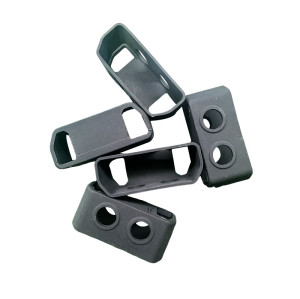
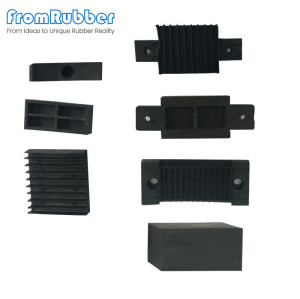
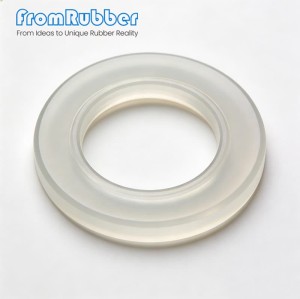
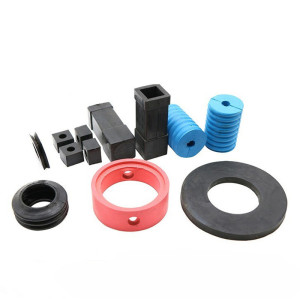
FromRubber Manufacture Sealing Silicone Rubber Seals for Leak Detector
Item specifics
- Design
- Follow 3D Drawing Or Physical Object
- Printing
- Silk Screen Printing,Laser Etching
- Feature
- Dustproof,Sealing
- MOQ
- 1000pcs
- Application
- leak Detector
Review
Description
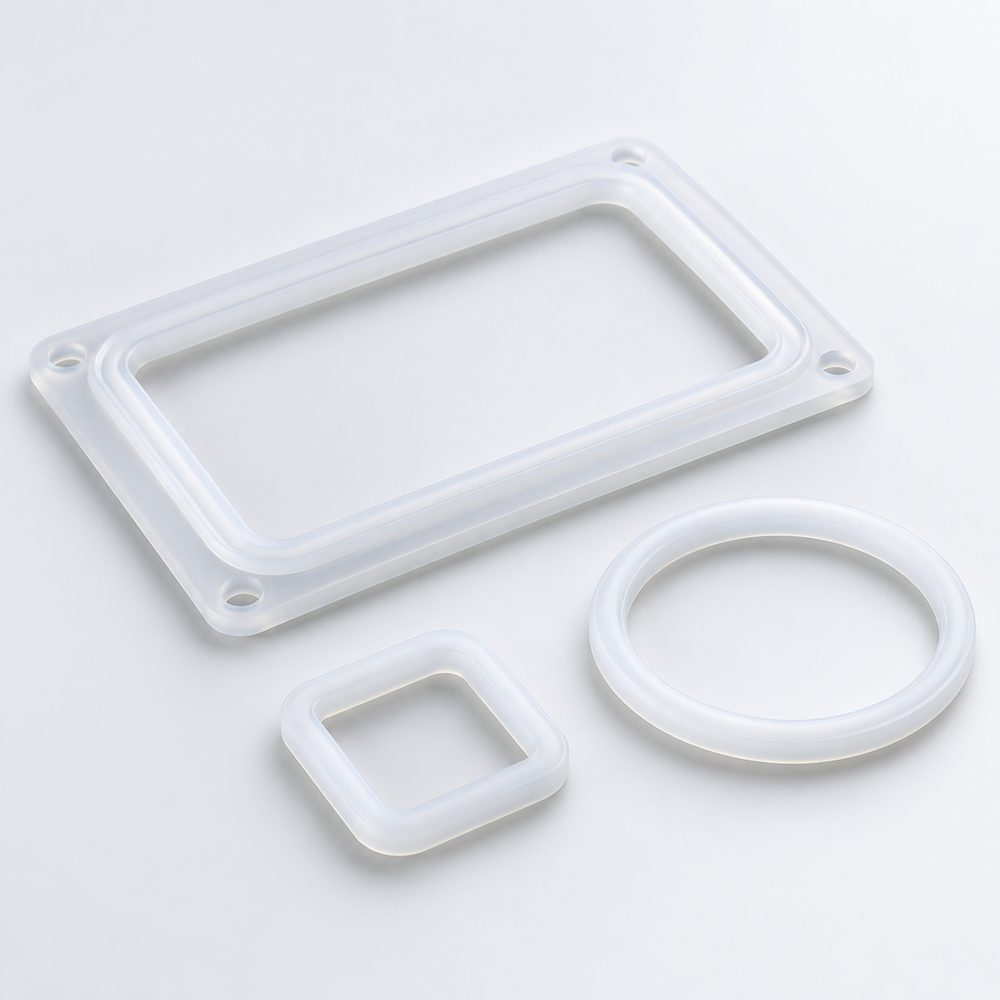
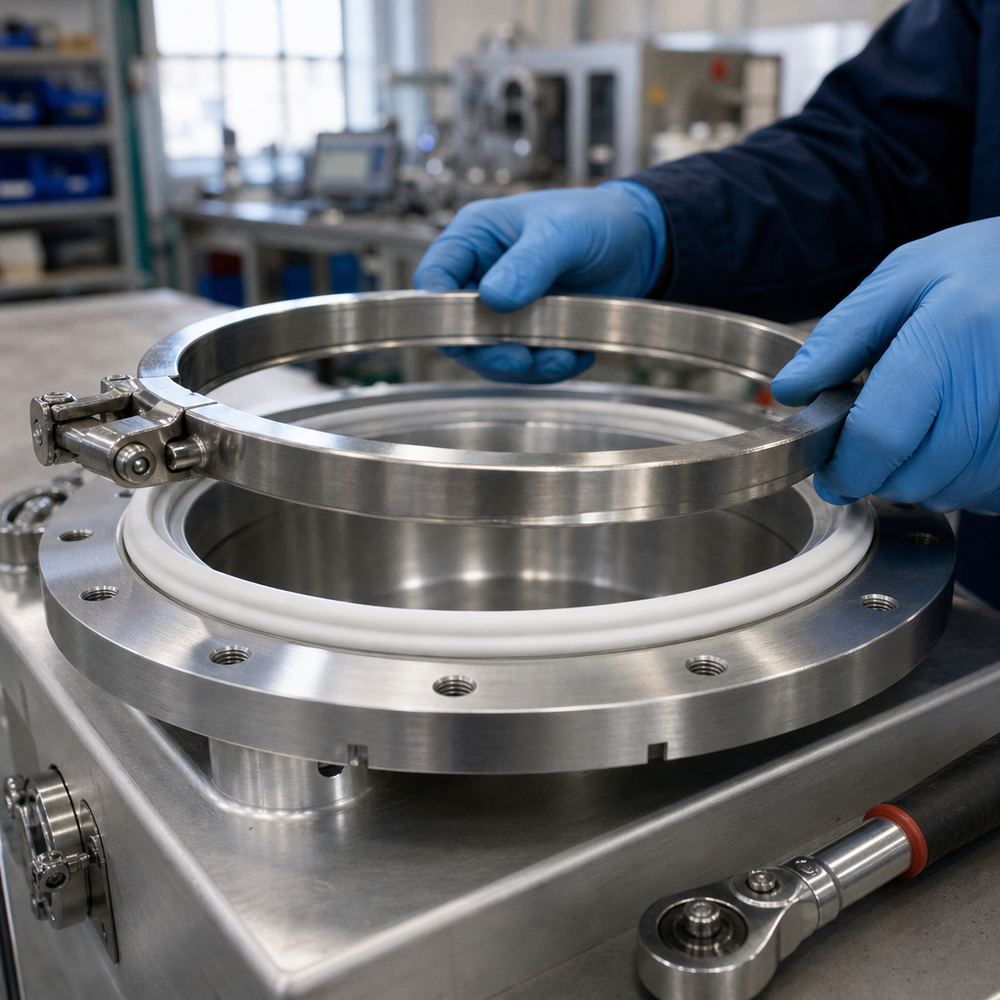
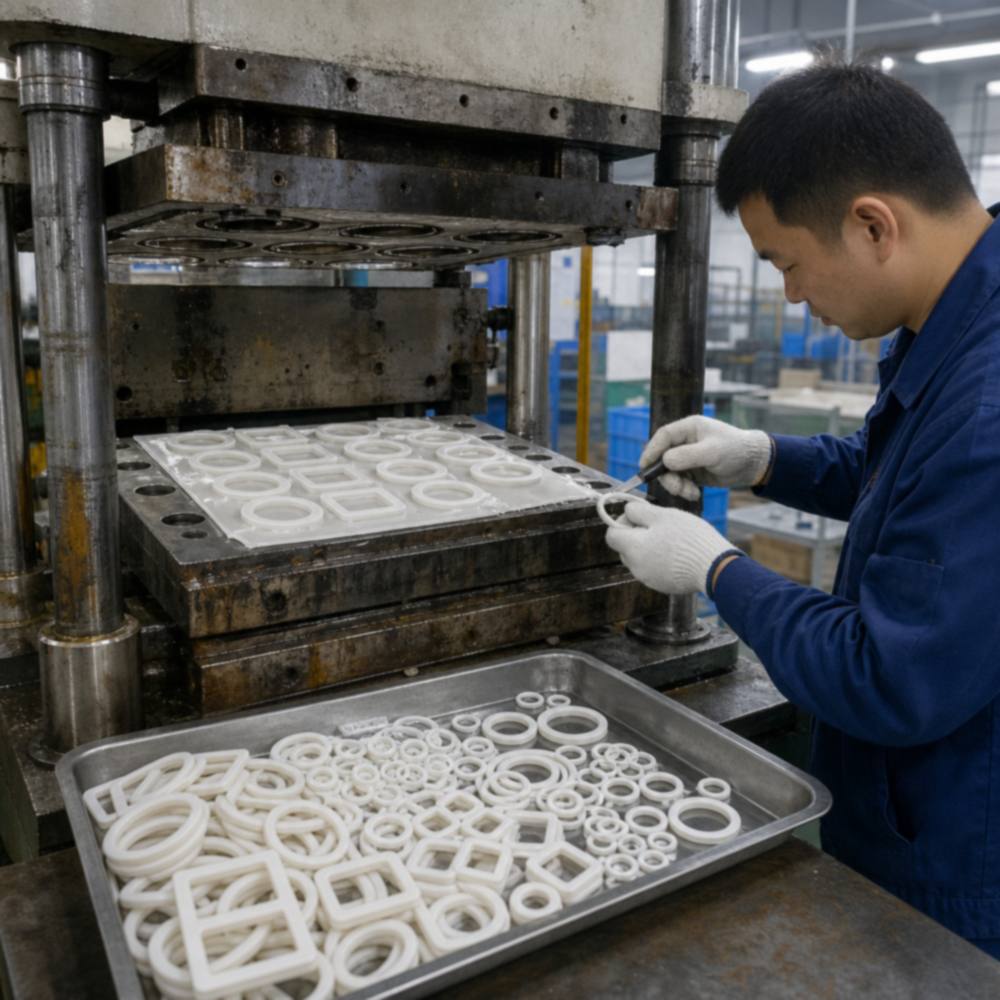
In a leak detector the seal does not only keep dust out. It isolates the reference volume - the test chamber, the sensor cavity or the probe port - so the instrument measures the part under test instead of the fixture around it. A silicone seal with controlled compression set and a correctly filled groove keeps that volume stable through clamp cycles and temperature drift, which is what separates a repeatable reading from a drifting one. That is why the specification for a leak detector silicone seal is written in two languages at once: geometry (groove fill, squeeze, contact width) and material behaviour (compression set, hardness, gas compatibility). A seal that satisfies only one of them will pass a bench check and lose the reading in the field. Three variables dominate in practice, and all three are decided before the tool is cut. Once the mold exists, only material hardness remains adjustable, and hardness alone rarely recovers a badly proportioned groove. A static silicone seal is normally specified at 15-25% squeeze with a groove fill between 70% and 85%. Below that band the seal may not close the leak path at low clamp force; above it the rubber has nowhere to displace, the closing force rises sharply and the housing around the groove starts to bow. The groove volume, not the seal thickness alone, is the number that matters. Every clamp cycle takes a small amount of set out of the material. A 50 Shore A silicone with good compression set resistance will typically recover enough to keep sealing well beyond the cycle count of a manual fixture; a soft, highly filled compound may seal perfectly on day one and leak after a few thousand closures. Ask for compression set data at the actual service temperature, not only at room temperature. Background on how thickness interacts with set is covered in Silicone Gasket Thickness: How Does It Affect Compression. Silicone is a sound default for air and helium testing and for humid chambers. If the detector uses a hydrocarbon tracer or exposes the seal to fuel vapour or aggressive solvents, a fluorosilicone or FKM grade is the safer starting point. Where a washer-style joint is involved rather than a molded profile, the hole-size and thickness effects described in Why Do Silicone Washers Leak Around Screw Connections? apply directly. The table below is the working envelope we use when a customer sends a drawing and a test pressure rather than a finished specification. It is a starting point for the DFM review, not a substitute for the drawing. Figures are the engineering envelope for this component class. Final values are fixed on the approved drawing and confirmed by first-article inspection; where a customer standard or a notified-body requirement applies, that document governs. Most complaints about a leak detector are not sensor complaints. They come from a seal that stopped behaving like a seal while still looking intact. When the seal has taken a set, the joint closes with less contact stress than the design assumed. The instrument then reads a smaller leak than the part actually has, and the fixture passes parts it should reject. This is the most expensive failure mode because it produces no alarm at all. Operators tighten fixtures by feel. A seal that is too soft for the gap will extrude into the clearance, thin out permanently and lose section. A harder compound with a smaller unsupported span is usually the cheaper correction than adding a metal stop. Dust, condensate and residue from the part under test collect on the sealing land. A seal that depends on a very narrow contact line is more sensitive to a single particle than one with a defined contact width. Designing a shallow locating groove, rather than a flat land, gives contamination somewhere to sit away from the seal. Compression moulding remains the right process for a thick-section sealing profile. The decisions that matter are the parting line position, the flash allowance and whether the seal is supplied loose or as part of a sub-assembly with the housing. We work from a 3D file or a physical sample. The DFM step checks that the sealing land has a flat, supported seat, that draft allows clean release without stretching the land, and that the parting line can be placed away from the contact surface. Where the customer has only a groove and a target squeeze, we define the free section height from the groove geometry rather than guessing. Consistency matters more than absolute precision on a sealing profile. Parts are inspected to the drawing with the sealing land as the controlled feature, and the visual standard is written around the land rather than around the whole part. A seal that looks clean but carries flash across the land will fail in service regardless of appearance. Compression set is measured on coupons from the production batch at the service temperature. Functional verification uses a calibrated leak standard or a known-good and known-bad part, because a pressure-decay check on a blind fixture proves very little. If the instrument is used for IP testing, the lab-pass and field-pass distinction in You Submitted the IP67 Report, but It Leaks on Site is worth reading before the validation plan is agreed. Most static sealing seats in a leak detector work in the 40-60 Shore A range. The lower end follows a rough or slightly irregular seat; the upper end suits a machined groove and higher clamp force. The choice is confirmed against the groove geometry, not selected from a catalogue. Usually not. The chamber seal is sized for clamp force and cycle count, while the sensor cavity seal is sized for a stable, small volume and often for lower squeeze. Treating them as one part is a common cause of drift after the fixture is rebuilt. We quote from a drawing or sample plus the test pressure, tracer gas and expected cycle count. Tooling is quoted separately and depends on cavity count and whether a prototype tool is needed for fit checks before production steel. If you are specifying a seal for a leak detector, send the groove drawing, the tracer gas and the clamp method. We will return a DFM note on squeeze, groove fill and parting-line placement before any tooling is quoted. Related reading: thin-wall and undercut seals, and ordering custom silicone seals. FromRubber moulds sealing components for OEM and ODM equipment manufacturers. We do not sell retail.Sealing Silicone Seals for Leak Detectors: The Seal Is Part of the Measurement
Design Variables That Decide Whether the Seal Holds a Reading
Groove Fill and Compression Ratio
Compression Set Versus Cycle Count
Tracer Gas, Condensate and Material Choice
Specification Envelope for a Leak Detector Sealing Seal
Parameter Typical envelope Why it drives the result Material VMQ silicone, 40-60 Shore A Hardness sets contact stress and how much clamp force the housing sees Compression set Target under 25% after 22 h at service temperature Directly controls reading drift over cycle life Squeeze 15-25% of free section height Below 15% risks an open leak path, above 25% overloads the housing Groove fill 70-85% of groove volume Prevents over-fill bowing and under-fill leakage Tolerance ISO 3302-1 class M2 or tighter on the sealing land Contact width is only as repeatable as the profile tolerance Surface No flash crossing the sealing land Flash on the land becomes a leak path after the first clamp Colour Pigmented compound for inspection contrast Traceability inside the test chamber and in service records Field Failure Modes in Leak Detector Seals
False Pass From Seal Memory
Extrusion at High Clamp Force
Contamination Bridging the Sealing Line
How the Seal Is Specified, Tooled and Verified
From Drawing to Molded Profile
Flash, Parting Line and Inspection
Verification That Means Something
Questions Buyers Ask About Leak Detector Seals
What hardness should a leak detector seal use?
Can one seal serve both the test chamber and the sensor cavity?
How is a custom seal quoted?
Send the Groove, Not the Catalogue Number