High-resistance FKM FPM Rubber Parts for Industrial and Automotive Sealing
Model
BH-auto18

Item specifics

Product Name
Rubber Parts
Material
FKM FPM
Color
Black,Custom
Shape
Custom
Stype
Sealing
Application
Industrial and Automotive
Sales Method
Molded Custom
Consultation Email
Suey@fromrubber.com

Review

Description

FKM FPM Rubber Parts: fluorocarbon part selection

FKM Is a Family, Not a Material: Choose the Grade Before the Shape
The same drawing, moulded in two FKM grades, can last five years in one sump and three weeks in another. FKM covers a range of comonomer ratios and three cure chemistries: standard grades for mineral oil and heat, low-temperature grades for cold-start duty, and base-resistant grades for the amine additives in newer lubricants. None of them is universal, and a data sheet headline of 230 C says nothing about swell in your fluid.

Three cure routesDiamine, bisphenol and peroxide, each with a different service limit
Swell firstImmersion to ISO 1817 in the actual fluid, at service temperature
Grade by functionFluid resistance, low temperature and base resistance are different grades
  1. Fluid before temperature. A compound chosen for 230 C will still swell heavily in a ketone, an ester or a glycol brake fluid. Volume swell, hardness change and tensile change after immersion decide whether the part still fits its groove after a month in service, and none of those numbers appear on a temperature rating.
  2. Cure chemistry sets the limit in water and steam. Bisphenol (ionic) cure is the standard route and gives the best heat resistance and compression set. Peroxide cure is the choice in aqueous and electrolyte media, where the ionic system is attacked. Diamine cure is largely historical, but it survives in bonded parts because it bonds to metal well.
  3. Low temperature and base resistance pull in opposite directions. A grade that stays flexible at -40 C gives up part of its fluid resistance, and a base-resistant grade gives up low-temperature flexibility. Where both are required, the honest answer is usually a different material family rather than a harder compromise.
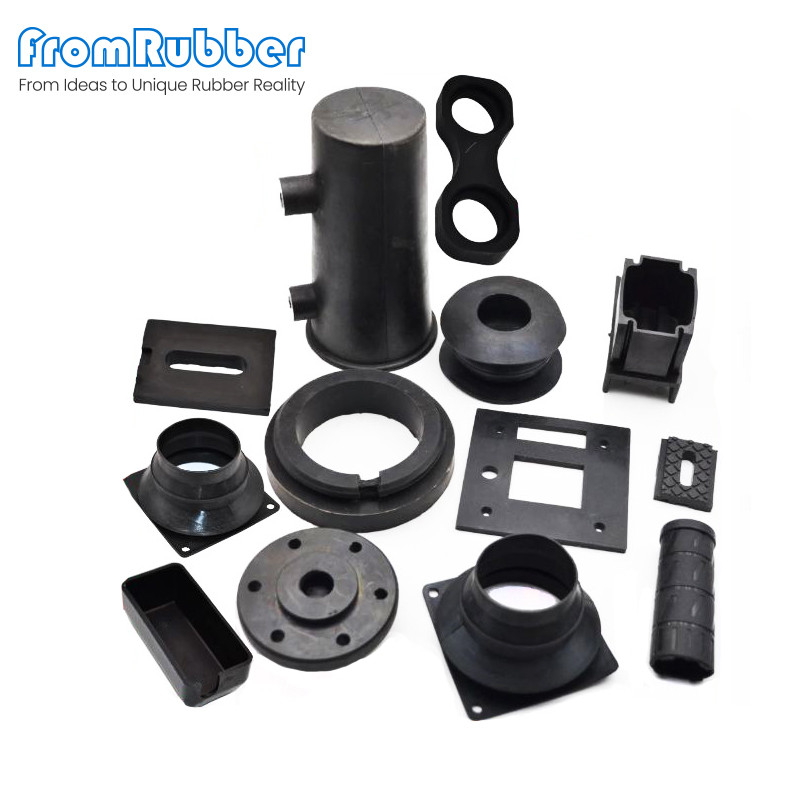
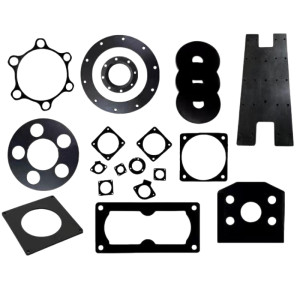
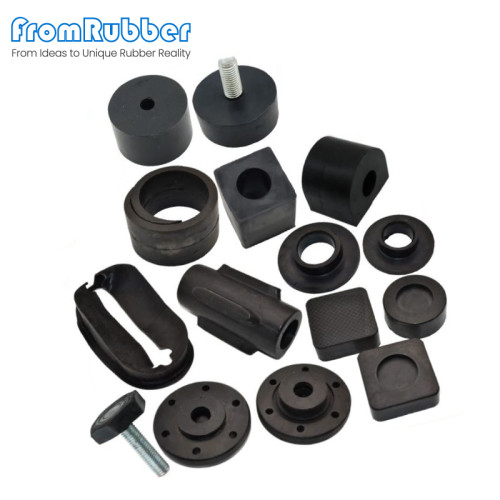
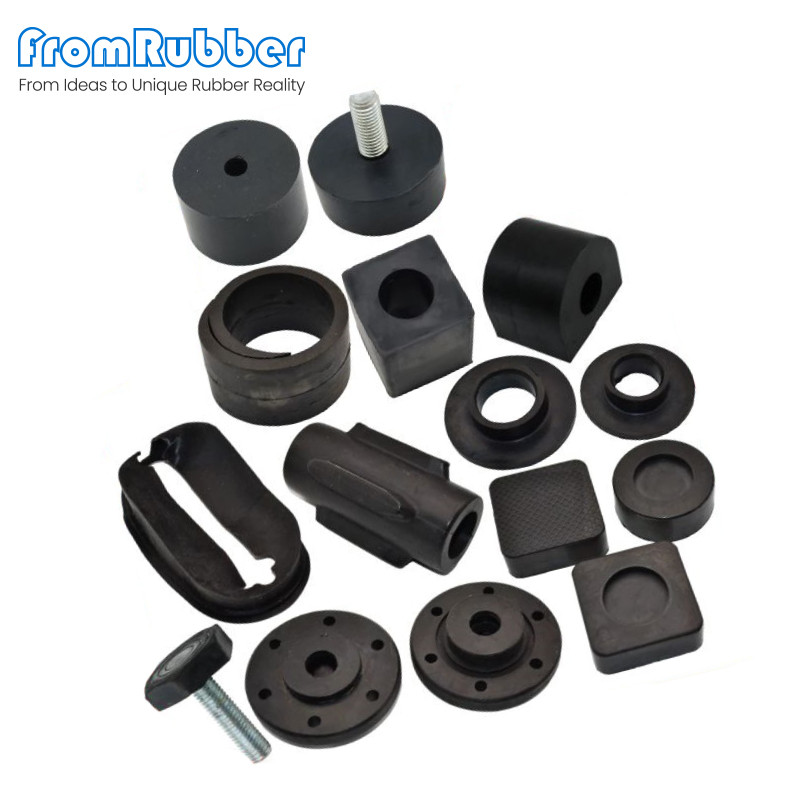
Assorted black rubber O-rings, gaskets, diaphragms and moulded profiles for sealing duty

FKM FPM rubber parts in the shapes a fluoroelastomer drawing usually calls for: rings, flat gaskets, diaphragms and moulded profiles.

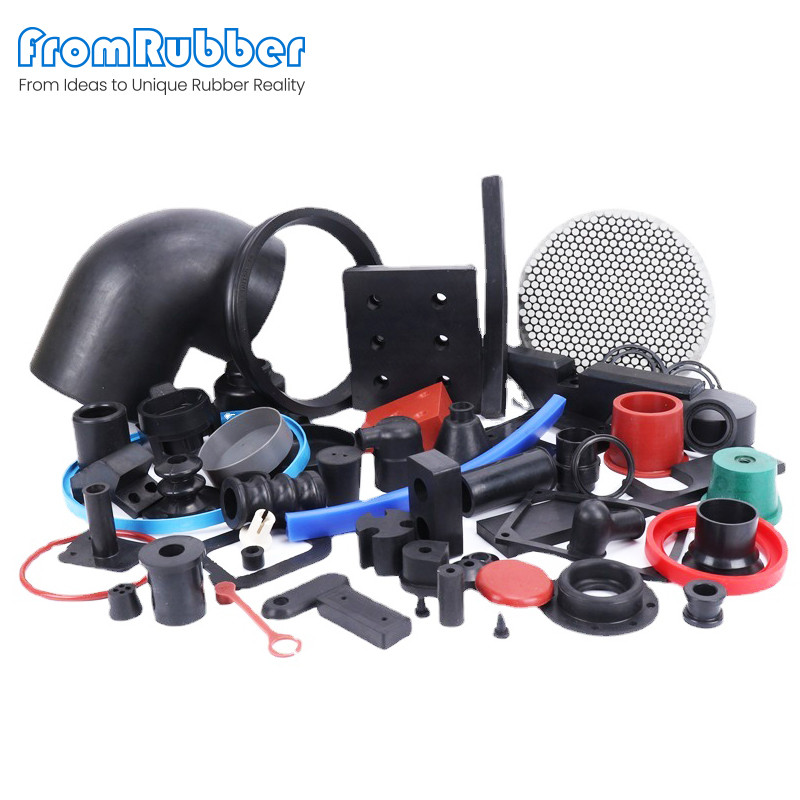
Black moulded rubber components including grommets, caps, plugs and profile sections

Geometry is the easy part. Two parts with the same section can still behave differently because the compound behind them is different.

Where FKM is the wrong answer

FKM is specified most often as a default upgrade. In five situations that default is the cause of the failure rather than the cure.

  • Ketones, esters, amines and organic acids. Acetone, MEK, ethyl acetate and acetic acid attack the polymer. A perfluoroelastomer (FFKM) or a PTFE-based seal is the realistic route.
  • Hot water and steam. Standard FKM degrades in steam. A peroxide-cured grade is required, and even then service life is shorter than an EPDM part in the same duty.
  • Glycol brake fluid. Swell is immediate and large. EPDM is the correct material, and the mistake usually surfaces after a fluid change on site.
  • Sealing below -25 C. Standard FKM stiffens well before its quoted service temperature. A low-temperature grade is a different polymer, not an additive package.
  • High-pressure gas with rapid decompression. Gas absorbed under pressure expands suddenly and blisters the part. This needs a specific grade or a different elastomer, and it cannot be fixed by hardness.

Cure chemistry, and what it changes in the part

The same base polymer cured three ways gives three different service envelopes. This is the table we use when a buyer asks why two FKM quotations differ by a factor of two.

Cure systemStrengthLimitWhere we use it
Bisphenol (ionic)Best heat resistance and compression set; the default for oil and fuelAttacked in aqueous and electrolyte mediaEngine and transmission seals, fuel-system parts
PeroxideBest in water, steam and electrolyte media, with low compression setNot as thermally stable as ionic cure; needs a coagent and tighter process controlHot-water seals, steam duty, selected fuel systems
DiamineStrong rubber-to-metal bondingVulnerable in aqueous media; largely superseded for sealingBonded parts where adhesion dominates the design

Compound houses number and name their FKM grades differently. We specify by function - fluid list, temperature band, hardness, compression set - and confirm against a named compound datasheet rather than a generic FKM description.

How to write the callout on a drawing
  • Fluid list and temperature band. Name the fluids, including cleaning agents and the fluid used in a fluid-change scenario, and give the continuous and peak temperatures separately.
  • Hardness and set at temperature. Hardness in Shore A or IRHD, and compression set to ISO 815 measured at the service temperature rather than at a default test temperature.
  • Swell limit and reference fluid. A volume swell ceiling and the fluid used for the immersion to ISO 1817, with hardness and tensile change limits alongside it.
  • Cure system when water is present. If steam, hot water or an electrolyte is in the duty, the cure system is nominated on the drawing, not left to the compound house.
  • Post-cure cycle. The post-cure is recorded because it sets the compression set of the delivered part. Two suppliers with the same compound and different post-cure cycles will not interchange.
  • Tolerances and finish. Dimensions to ISO 3302-1 with the class named per feature, plus any surface requirement that affects sealing.
Black moulded rubber parts with visible sealing lips and flanged sections

Compression set is a cured-part property: the same geometry can pass or fail depending on the post-cure cycle behind it.

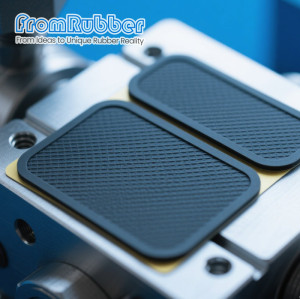
Close view of black rubber moulded parts including plugs, seals and small profile components

Small parts, tight tolerances: FKM shrinkage and cure temperature differ from silicone, so the tool has to be cut for the material.

Moulding FKM Is Not Moulding Silicone

  • A silicone tool is not a drop-in. Cure temperature and shrinkage differ, so a cavity cut for silicone will not hold the FKM dimensions. Expect a new cavity or a recut.
  • Post-cure is a separate cycle. Skipping or shortening it is the fastest way to a part that measures correctly and takes a set in service.
  • Inserts need the right bonding system. FKM bonds through specific primers; a silicone bonding agent will fail at the interface under heat.
  • Deflashing is harder. FKM is tougher at the flash line, so cryogenic deflashing is often required where silicone would be torn by hand.
  • Scrap cannot be blended back. Unlike some thermoplastics, cured FKM scrap is not reused in the compound. Yield planning has to account for it.

For the surrounding seal design, including gland and counterface decisions that apply to any elastomer, see waterproof seal design principles. A direct comparison of tensile and tear behaviour between silicone and FKM is answered in our seal material FAQ.

From fluid list to released part

The first two steps are desk work. Most FKM failures are decided there, before anyone cuts steel.

STEP 1Fluid dataFluids, temperatures and cleaning agents listed.
STEP 2GradeCure system and polymer family narrowed.
STEP 3ImmersionISO 1817 in the actual fluid at temperature.
STEP 4Tool and trialCavity cut for FKM, post-cure fixed.
STEP 5ReleaseSet, swell and hardness on the cured part.

Questions about FKM FPM rubber parts

Is FKM the same as Viton and FPM?

They describe the same polymer family, not the same grade. Viton is a brand of FKM owned by Chemours; FKM is the ASTM D1418 and ISO 1629 designation; FPM is the older German designation still found on DIN drawings. A drawing that says only FKM leaves the grade, the cure system and the compression set open.

Which grade should be used for engine oil at 150 C?

A bisphenol-cured FKM is normally the starting point when the fluid is mineral or synthetic oil and the continuous temperature stays below roughly 200 C. The grade is then confirmed by immersion in the actual oil at service temperature: swell, hardness change and compression set after ageing decide, not the headline temperature.

Can you mould FKM in the same tool as silicone?

No. Cure temperature and shrinkage differ, so a cavity cut for silicone will not produce correct FKM dimensions. A new cavity or a recut is needed, and metal inserts require an FKM-specific bonding system.

What documentation comes with a batch?

Compound lot and cure system, post-cure record, hardness, and compression set plus immersion results on the first article. RoHS and REACH declarations are issued with the batch; food-contact or potable-water grades carry their own approval documents.

Send the fluid list, not just the drawing
We return a grade recommendation with the cure system named, an immersion test plan in your fluid, and a tooling quotation for the FKM cavity.