Premium Silicone Hot Tool Pad for Hair Straighteners & Curlers
Item specifics
- Design
- Follow 3D Drawing Or Physical Object
- Printing
- Silk Screen Printing,Laser Etching
- Feature
- Heat Resistant
- MOQ
- 1000pcs
- Application
- Hair Straighteners & Curlers
Review
Description
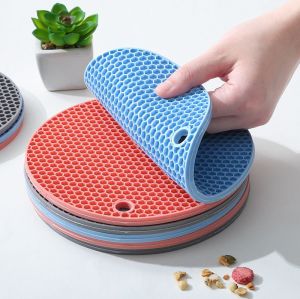
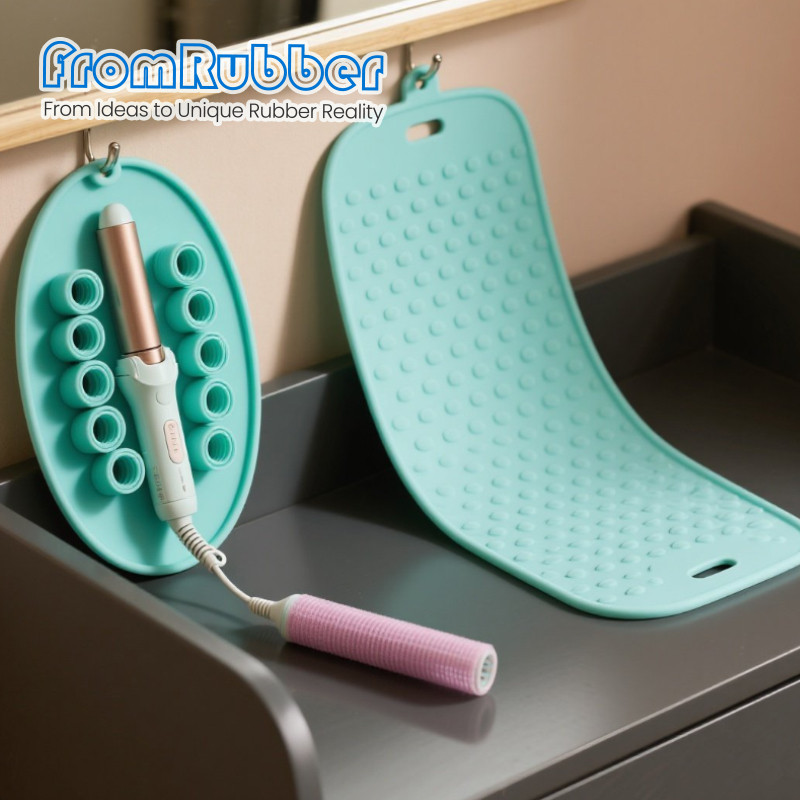
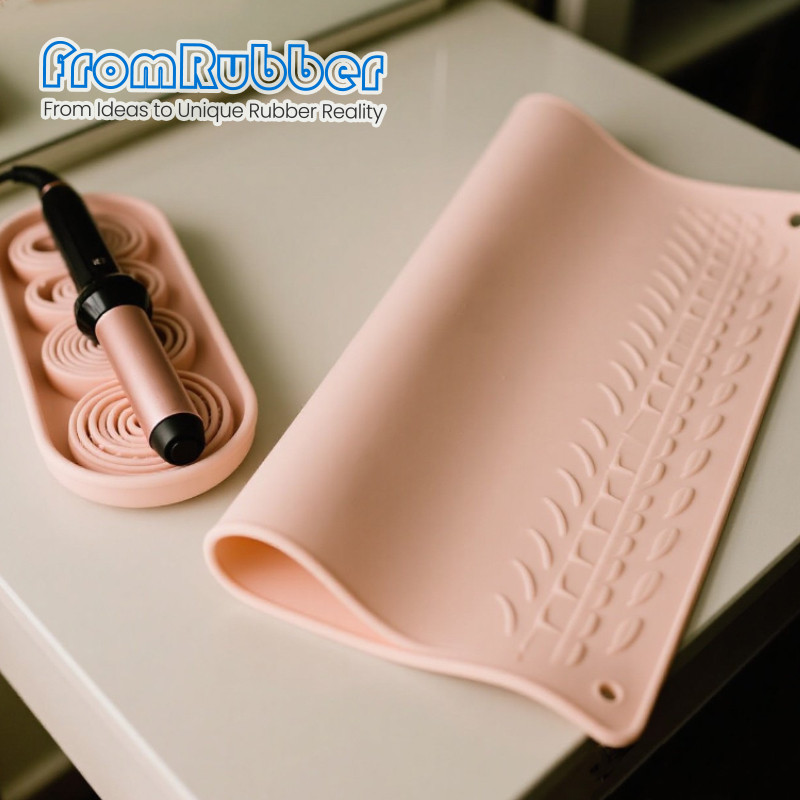
A hair straightener reaches its working temperature in seconds and holds it. Put it down on a counter and the counter is the thing being damaged - which is the problem the mat exists to solve. But the mat is not just a barrier: it has to break the heat path fast enough that the surface underneath stays below its own limit, grip the tool so it does not slide, and survive the styling products that end up on it. Those three requirements pull in different directions, and the shape of the pad is where they are reconciled. Contact heat. The plates are the hottest part and they are small, so the heat is concentrated. The pad must take that contact at the tool's highest setting and hold long enough for the tool to cool. Cycles. A pad is used several times a day, so the material sees repeated heating and cooling rather than a single exposure. That is where a cheap compound hardens and crazes. Chemistry. Heat-protect sprays, oils and styling products land on the pad. Silicone tolerates most of them; printed legends and some coatings do not. Cleaning. Wiped with a damp cloth, occasionally with alcohol. A raised printed logo will wear before the pad does. A thicker pad insulates better and takes longer to shed heat, so it stays warm where the plates rested. A thinner one cools faster but passes more heat through. The practical answer is a pad that is thick enough to break the path and shaped so the plates never sit flat on a large area. Relief helps twice: raised ribs reduce the contact patch, so less heat crosses at any moment, and a moulded groove gives the tool a place to sit so it does not roll off. A slight lip at the edge catches drips before they reach the counter. Rest the tool at its highest setting on the pad for the time a real routine takes, and measure the temperature on the underside. The number that matters is the surface below, not the pad. Repeat the contact test to the number of uses a year represents, then check for hardening, staining and cracking at the ribs. Place the tool on the pad at the angle it would naturally sit and check that it stays. A pad that insulates but lets the tool slide is a burn waiting to happen. Colour matched to the tool range, a logo that survives cleaning, retail-ready packaging and a size that fits the tool plus its cable. Silk-screen printing and laser etching are both available on this series, and the choice is the same as anywhere else: print gives colour, laser gives durability. Minimum order is 1,000 pieces, which is where a custom colour and a moulded logo become economic - typically for a salon chain, an appliance brand or a promotional programme rather than a single retail SKU. Heat protection for other hot appliances is covered in silicone protection for hot air tools. Other moulded mats sit under custom silicone pads. It reduces the heat reaching the surface, but a very hot tool left for a long time on a heat-sensitive surface is still a risk. State the tool's maximum setting and the material underneath, and test that combination. A silk-screen print sits on the surface and will wear with abrasion; a laser mark does not. If the pad is wiped daily, specify the laser mark. Thin pads can be rolled, thick ones cannot without stress at the ribs. If travel is the use case, design a thinner section and a strap rather than a thick pad. Mid and dark tones hide the slight discolouration that repeated contact causes; white and pale pastels show it first. If the brand demands a light colour, test it for cycles before committing. Thickness, relief and material follow from the tool's temperature and how long it rests. Send the appliance model and the surface it will protect, and we will propose a pad and a contact test that answers the real question.A hot tool pad is a thermal break, not a coaster
What the pad is asked to withstand
Four loads, not one

Geometry does the work the material cannot
Thickness, relief and a landing zone
Test it the way it is used
Contact test
Cycle test
Slip test
The commercial side: it is usually a branded item
What a brand or salon supplier needs
Specification on this series
Questions from brands and buyers
Will it protect any countertop?
Does the logo wear off?
Can it be rolled or folded for travel?
Which colour hides heat staining best?
Send the tool and its maximum setting