

Custom High-quality Escalator Rubber Parts for Safety Systems
- Model
- BH-parts
Item specifics
- Product Name
- Custom Rubber Parts
- Material
- Rubber
- Color
- Black,Custom
- Shape
- Custom
- Feature
- for Safety Systems
- Application
- Escalator
- Sales Method
- Molded Custom
- Consultation Email
- Suey@fromrubber.com
Review
Description
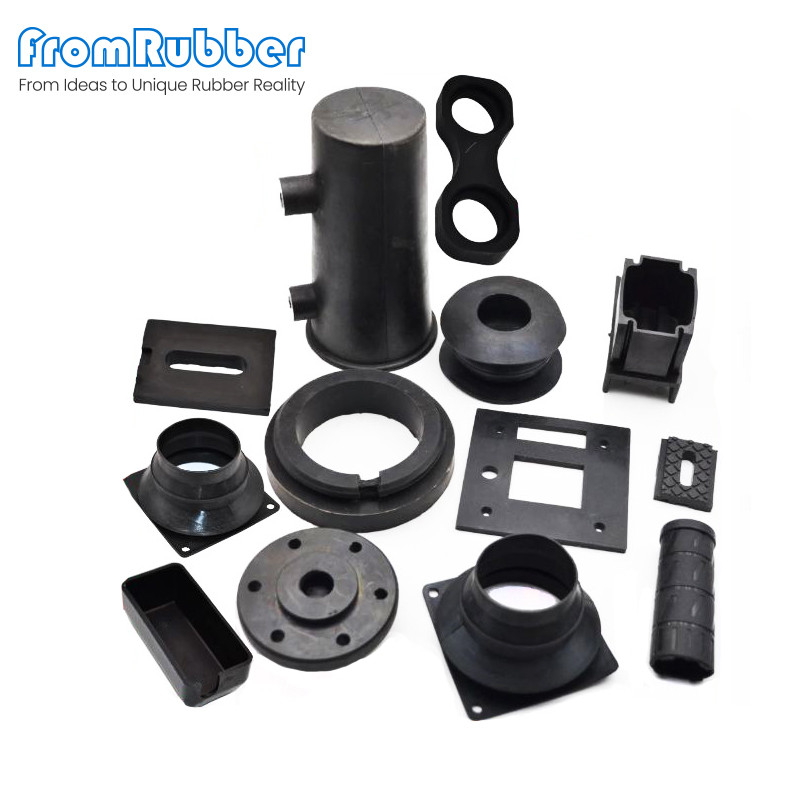
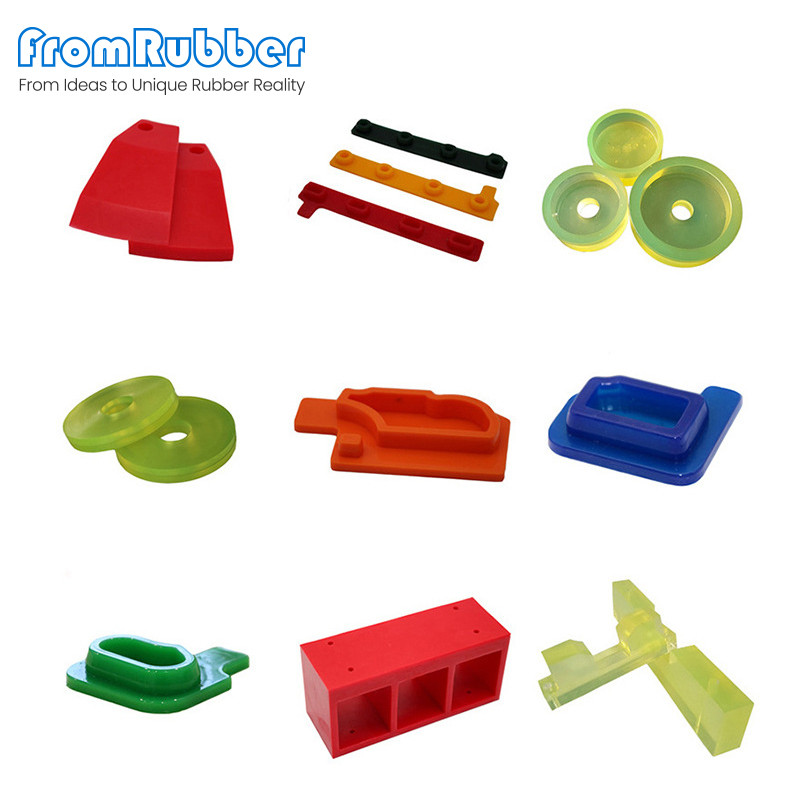
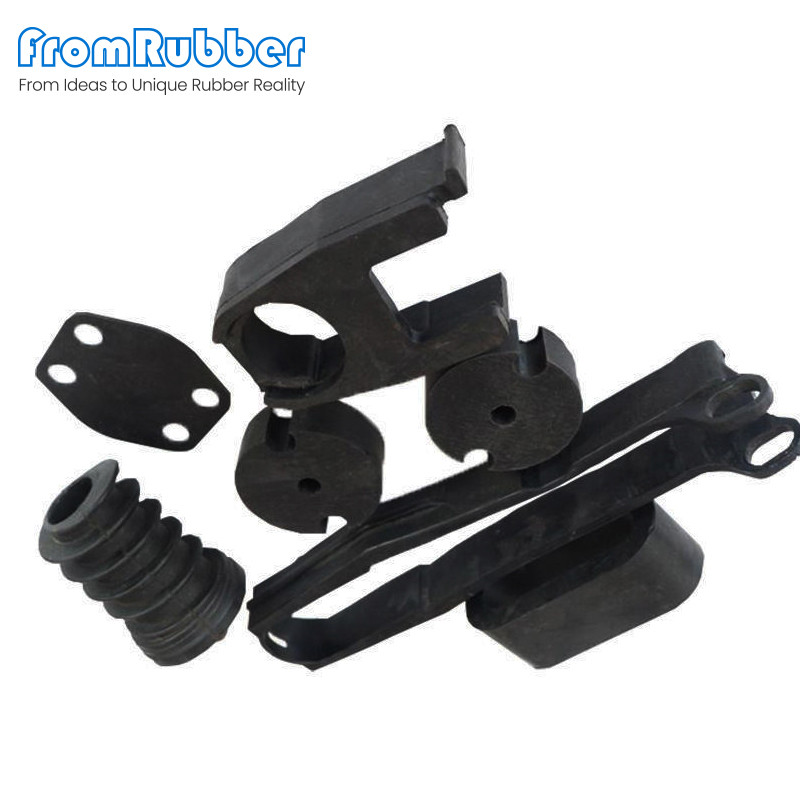
An escalator skirt brush is a low-cost rubber part carrying a safety function. It is judged by what happens when a soft shoe edge, a trolley wheel or a child hand reaches the gap between the step and the skirt panel: is the object guided away, or drawn in. The specification that moves that outcome is filament stiffness, tuft density and how the base is retained in the profile, not the word nylon on a material sheet. This page sets out the three escalator rubber parts we tool for, and the points where a cost reduction usually turns into a safety finding. Profile sections and grommets from the same press line that runs skirt deflector bases and step-edge strips. Colour, hardness and surface texture are set at the press; they are not finishing operations added later. These are the five changes buyers ask for when a quotation comes back high. Each one removes margin from the interface rather than from the process. Four escalator rubber parts cover most of the safety-interface work we quote. The right-hand columns are the items we control and the evidence we issue with the first article. Clearances, deflector geometry and marking requirements come from the safety code the unit is certified to, for example EN 115-1 in Europe or ASME A17.1 in North America, together with the OEM drawing. We tool to those dimensions; we do not set them. Bellows and boot sections show the same wall-control discipline that a deflector base needs at its retaining groove. Reference samples are sealed against a batch record, so a replacement run can be compared to the approved part. Maintenance suppliers often hold a worn part and nothing else. That is workable if the measurement is taken from the machine rather than from the part. Heavy equipment and moving-walk maintenance share the same problem of matching a part to a machine that is already in service; our page on rubber parts for heavy machinery covers the sealing and mounting side in the same way. The sequence is deliberately front-loaded: the measurements that decide whether the part works are taken before any steel is cut. The safety code the unit is certified to governs clearances and deflector geometry, for example EN 115-1 in Europe or ASME A17.1 in North America, together with the OEM drawing. Material standards are separate: compression set is reported to ISO 815, ozone resistance to ISO 1431, and flammability to whichever class the project names. We supply parts to the drawing and to the declared standard; we do not certify the unit itself. Yes, with one caveat: the profile and the tuft field are measured, but filament length and stiffness are set from the installed geometry rather than from the set filament. Copying a deformed sample reproduces the deformation. FR EPDM and FR NBR are standard options. Documentation is a compound declaration naming the FR additive package, a flammability report to the class the project specifies, and cured-part hardness and compression set results. We do not set inspection intervals, because they follow the maintenance manual of the unit and the local inspection regime. Our job is to keep profile and compound consistent from batch to batch so the interval stays predictable rather than drifting. We return a drawing review, the retention method we recommend for your profile, a compound and FR class shortlist, and a tooling quotation.Entrapment Risk Is Decided at Three Interfaces, Not by the Compound
Where a cost reduction becomes a safety finding
Component specification map
Component Function Typical material What we control Verification Skirt deflector brush Guides footwear away from the skirt gap FR EPDM or FR NBR base with PA6 filament Filament diameter and stiffness, tuft density, base retention method Pull-out force, flammability class, profile dimensions Handrail entry guard Closes the entry gap without creating a nip point NBR or EPDM, 60 - 75 Shore A Hardness, entry radius, trailing-edge geometry Compression set to ISO 815, dimensional report Step demarcation strip Visual and tactile cue at the step edge NBR or FR polymer Colour fastness, abrasion resistance, thickness Abrasion loss, UV and ozone ageing to ISO 1431 Noise and slip strip Reduces rattle and slip on the step surface NBR 70 Shore A Friction level, thickness, adhesive-free retention Friction check, compression set How a safety part is released

Replacement parts without an OEM drawing
From worn part to approved batch in five steps
Questions from maintenance and procurement teams
Which standard governs an escalator skirt brush?
Can you reproduce a brush from a worn sample?
Do you supply flame-retardant compounds, and with what documentation?
What replacement interval should we plan for?
Send the profile or the worn part