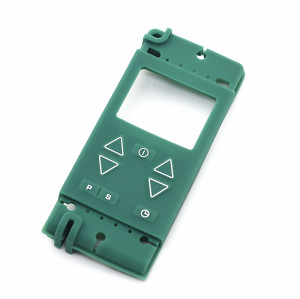
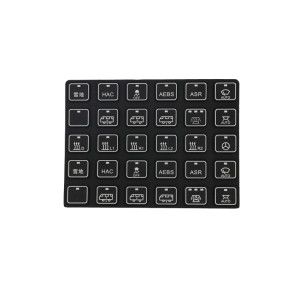
FromRubber Custom Rubber Silicone Keyboard For Vehicle Air Conditioner
Item specifics
- Design
- Follow 3D Drawing Or Physical Object
- Printing
- Silk Screen Printing
- Conduction Mode
- Conductive Carbon Pills
- MOQ
- 1000pcs
- Application
- Vehicle Air Conditioner
Review
Description
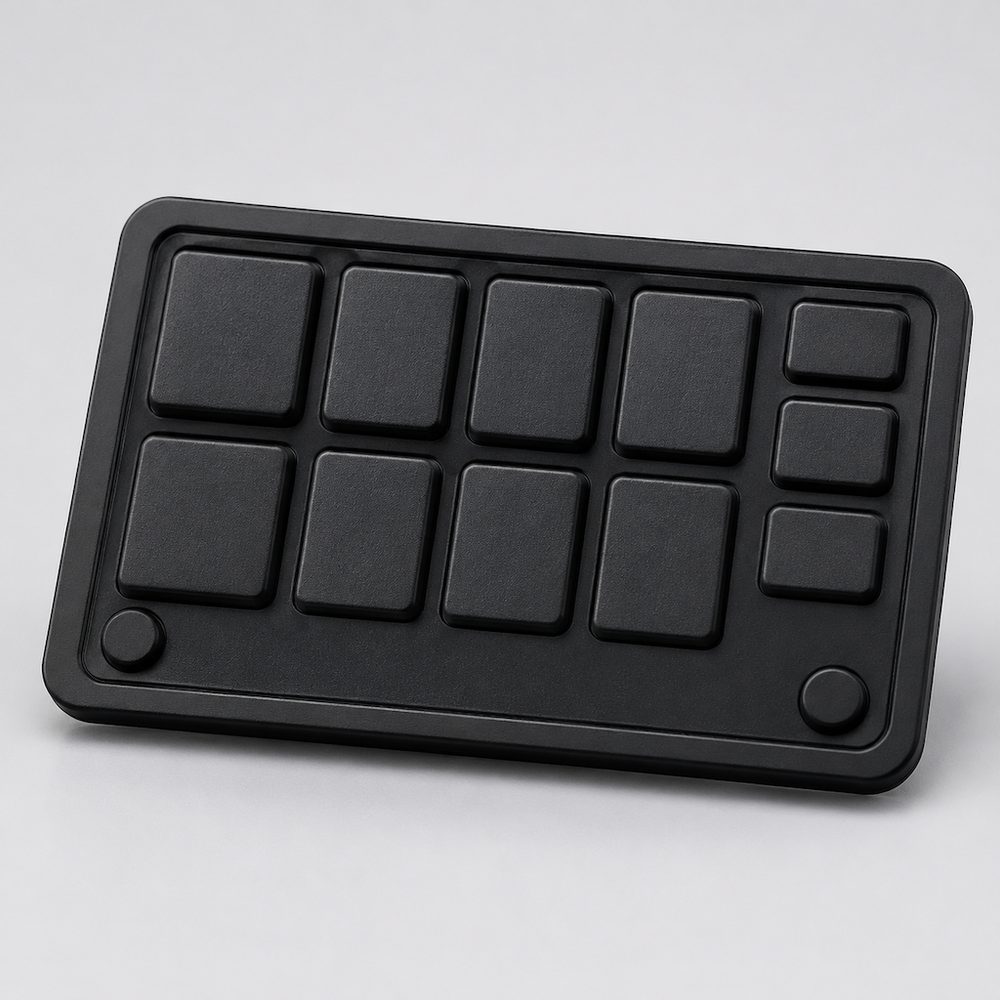
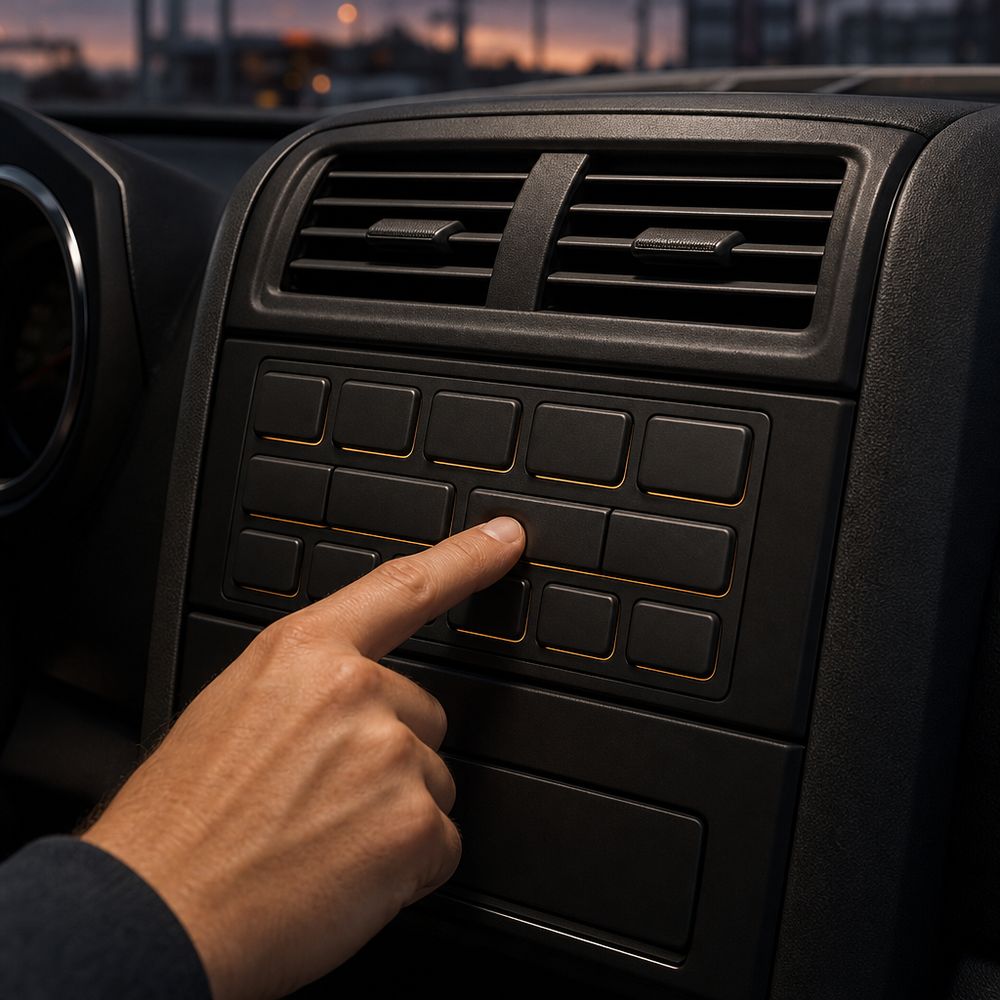
An HVAC control panel spends its life in the least forgiving place in a vehicle: a closed cabin that reaches high soak temperatures in sun, drops below freezing overnight, and is wiped with whatever the owner has in the glovebox. The keypad has to keep its legends readable, keep its backlight even, and keep its keys from sticking through that cycle. Material choice handles most of it, but the design has to stop the two failures that material cannot: legend loss and edge bleed. Automotive keypads are also specified and validated differently from consumer parts. Dimensional and appearance acceptance is documented at first article, and the process control expected by vehicle programmes shapes how the part is produced. Interior components are qualified on cycles rather than on single extremes, because the damage accumulates at the transitions. A dash-mounted panel swings between cold soak and sun load repeatedly. Silicone tolerates the range, but a compound with poor set resistance hardens and the keys stop returning crisply. Compression set measured at the upper soak temperature is the number that predicts this, and it is the mechanism described for steering-wheel keypads in High-Temperature Compression Set in Steering Wheel Silicone. Sunlight through the windscreen reaches the panel for hours at a time. UV hardens the surface and can change the feel and the legend adhesion. A UV-stabilised compound and a pigment system rated for interior exposure slow the effect; the tactile consequences are analysed in UV-driven tactile hardening. Volatiles from interior materials condense on the windscreen, and vehicle programmes limit them. Post-curing removes most of the volatile fraction before the part is installed, and it is the lowest-cost single improvement available to a moulder. Odour is assessed on the finished part, not on the raw compound. The ranges below are a starting envelope for a dash-mounted HVAC keypad. The vehicle programme's own standard governs the final values. Ranges describe a normal design envelope and are not a published product specification. Final material, tolerances and validation criteria follow the vehicle programme's standard. HVAC panels are lit at night, usually dimmed with the instrument cluster, and often have a curved or stepped surface. Both make even illumination harder. A thin panel gives little distance for light to spread, so the LED arrangement has to compensate. Where the panel is curved, the distance from LED to legend varies across the key field, and the brightness follows. Placing LEDs by measured distance rather than by a regular grid is the practical fix. Light escaping at the edge of a key reads as a glowing outline and looks like a defect at night. An opaque skirt around each key, or a full-depth barrier, contains it. On a curved surface the barrier has to follow the curvature, which is a tooling detail decided before the cavity is cut. The panel is dimmed with the rest of the interior lighting, so the legend must remain readable at the lowest setting without becoming invisible. That usually means specifying the legend's transmission at the dimmed current rather than at full brightness. Vehicle interior parts are bought with documentation as well as hardware. The moulder's process discipline is part of the product. Compounds and batches are traced, cure and post-cure are recorded, and dimensional results are retained against the part. This is the environment in which PPAP-style submissions and change control are expected, and it is worth confirming at quotation rather than at first article. Appearance is agreed with limit samples under defined lighting, and dimensions against the drawing with the sealing and contact features treated as critical. A part that passes dimensions and fails appearance is a common dispute, and limit samples prevent it. Heat cycle, cold cycle, UV, chemical wipe and actuation life are run in the order the vehicle sees them. Keypad and enclosure sealing practice is covered in Silicone Keypad and Plastic Enclosure Waterproof Sealing; the sequence matters because a seal that survives heat often fails the cold cycle that follows. Yes, with the right compound and cure. The more common issue is compression set reducing key return force over years rather than the material failing outright. Set resistance at the soak temperature is the property to specify. Because they see the most contact and the most cleaning. Two-layer laser-etched or moulded legends outlast surface printing by a wide margin, and on a high-use HVAC panel that difference is the whole service life. We work to documented process control with batch traceability, dimensional records and agreed limit samples for appearance. The specific submission format follows what the programme requires. Send the panel drawing, the illumination requirement and the validation standard the programme uses. We will review compound, cure, legend construction and backlight barriers. Related: compression set in steering-wheel keypads and UV-driven tactile hardening. FromRubber moulds silicone keypads for automotive and equipment programmes. We do not sell retail.Rubber Silicone Keyboard for Vehicle Air Conditioner Controls: The Cabin Is the Test
Heat, Cold, UV and Fogging
Thermal Cycling and Compression Set
UV and Surface Hardening
Fogging and Odour
Specification Envelope for an HVAC Control Keypad
Parameter Typical envelope Why it drives the result Material VMQ silicone, 40-60 Shore A, UV stabilised Heat, UV and compression set in one compound Service temperature Designed across the cabin soak and cold range Cycles, not single extremes, cause the damage Compression set Target under 25% at soak temperature Predicts key return force after years Legend Two-layer laser etched or moulded Thumb contact and cleaning wear printed legends Backlight Barrier at every key edge Edge bleed reads as a defect at night Fogging Post-cured, low-volatile Interior windscreen fogging limits Cure Post-cure recorded per batch Traceability and volatile control Even Backlight Behind a Curved Panel
Light Spread in a Shallow Panel
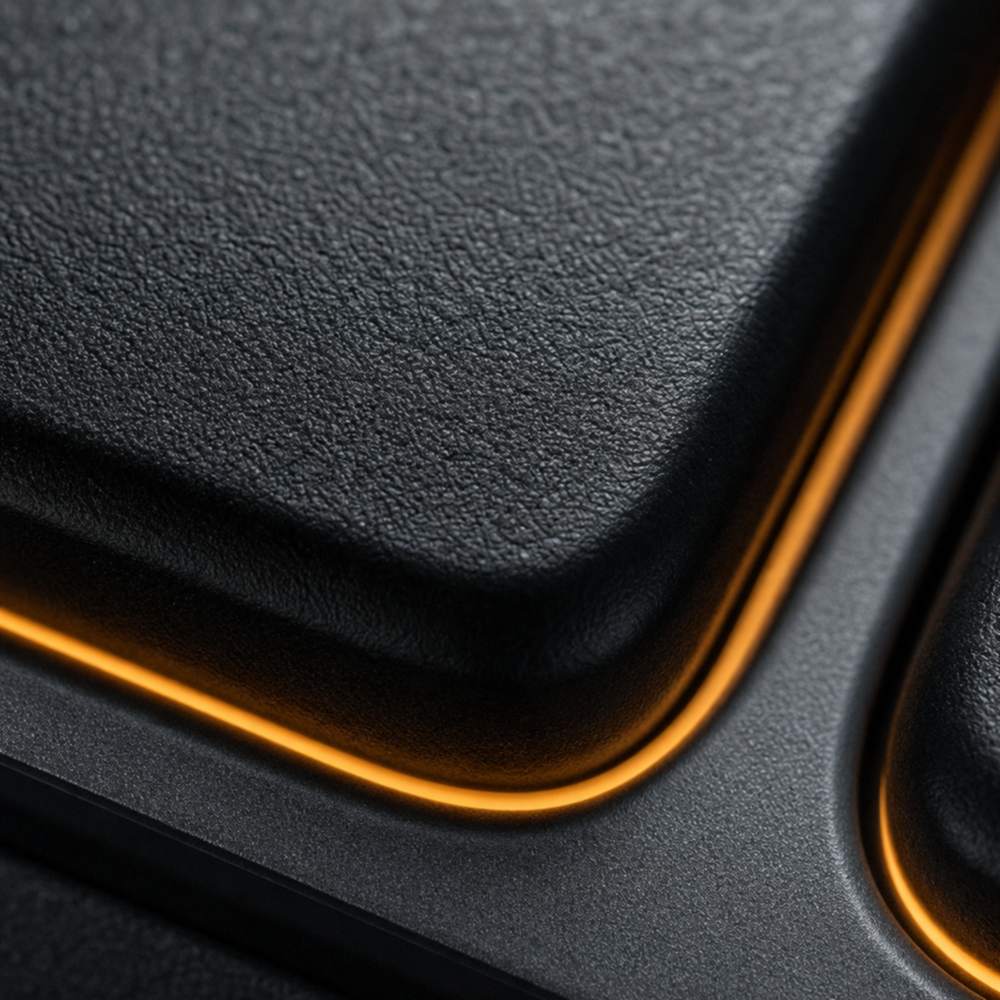
Edge Bleed
Dimming Compatibility
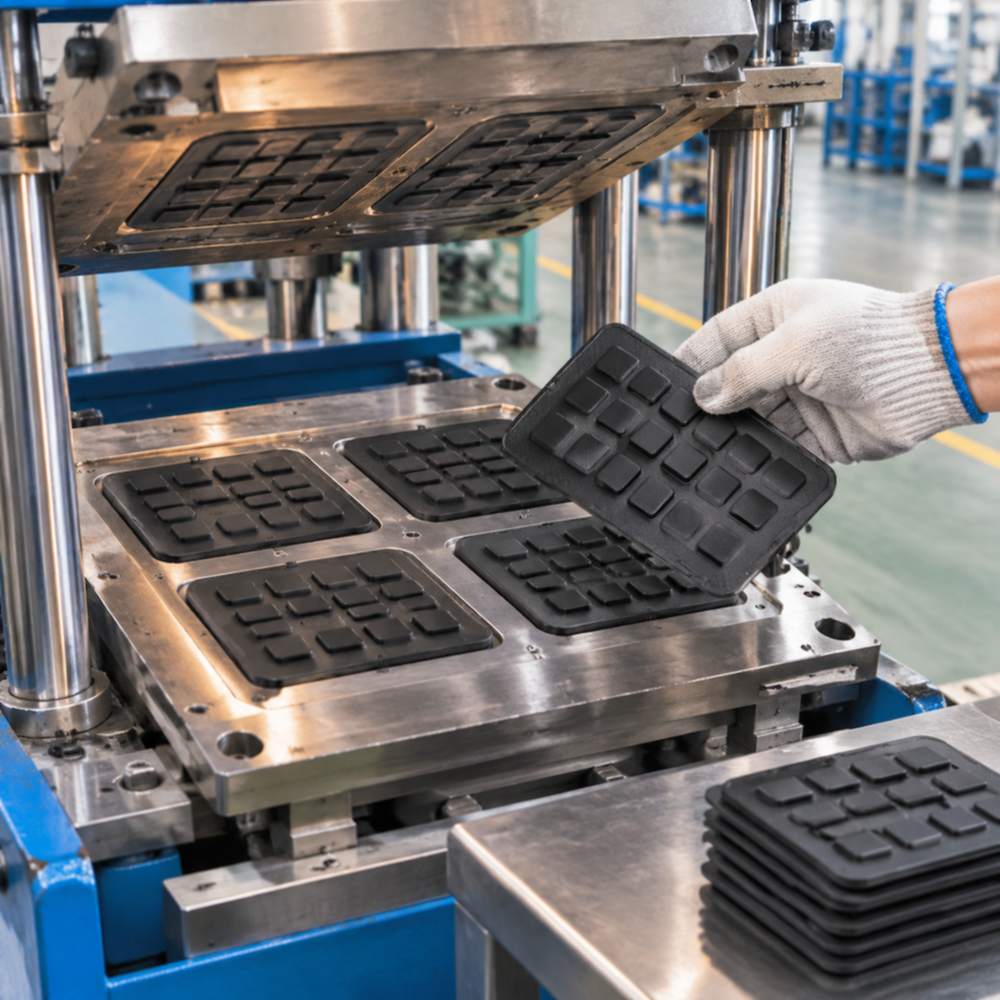
Process Control for Vehicle Programmes
Process Control and Traceability
Dimensional and Appearance Agreement
Validation Sequence
Automotive HVAC Keypad Questions
Can a silicone keypad survive dashboard heat soak?
Why do the legends wear out first?
Do you support PPAP-style documentation?
Send the Panel Drawing and the Validation Standard