Clear Silicone Label, Visible Edge
A transparent base with a thin rim gives a label that almost disappears on the fabric, which is what minimal brand marks need.


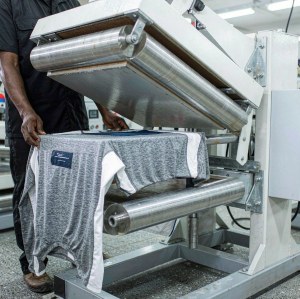
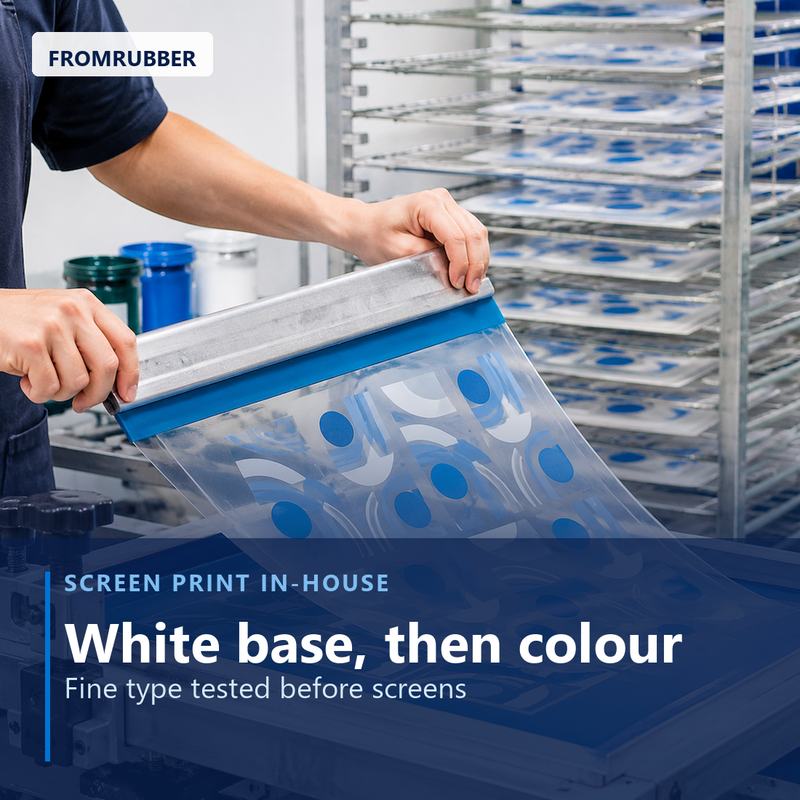
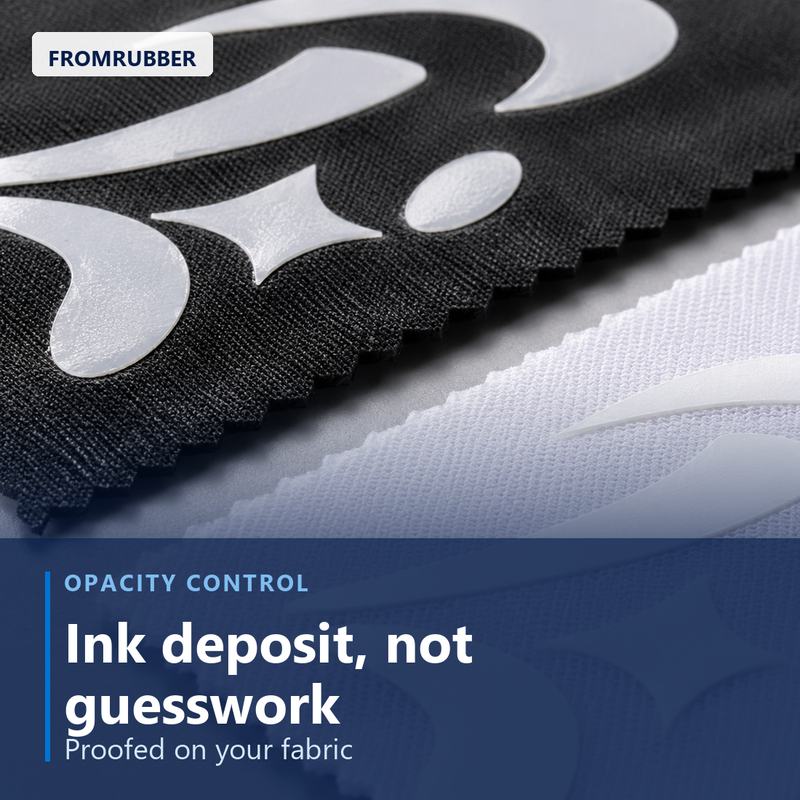
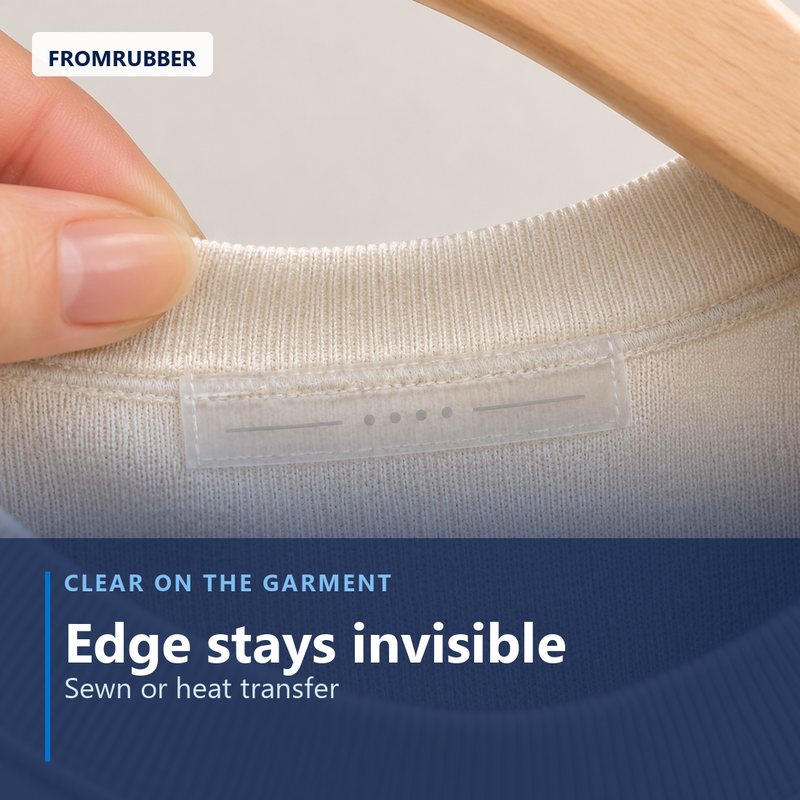
A transparent silicone label is a clear molded base printed on one face, so the garment color shows through the unprinted area. The base thickness, ink deposit and edge cut decide whether the label reads as glass-clear or as a milky film. A transparent base with a thin rim gives a label that almost disappears on the fabric, which is what minimal brand marks need. White ink is the foundation of every bright color on a clear base. Too thin and the color goes pastel; too thick and the edge bleeds. Screen printing holds fine detail better than molding at this size, but only if the artwork respects the minimum line width. The molded blank is straightforward; the print is where the product is won or lost. On a clear base, every color sits over the fabric, so a single pass of white determines the final brightness of everything printed above it. A label that looks correct on a white proof sheet can look washed out on a navy jersey. Edge sharpness is the second constraint. Screen printing on silicone requires an ink system that adheres to a low-surface-energy substrate, and the mesh, squeegee and cure schedule all influence how crisp the boundary is. Fine serif type and hairline rules are the first things to disappear. A dedicated white pass controls opacity. Its thickness is set by the target color, not by habit, because it is the layer that makes the rest readable. Hairlines and tight counters fill in. Artwork is adjusted to the achievable line width before screens are made. Under-cured ink rubs off in washing; over-cured ink cracks at the edge. The window is established on the actual base thickness. Typical builds for apparel branding. Base clarity and print resolution are confirmed on a physical proof against the target fabric. A clear label on a dark garment and the same label on a light garment are two different print specifications. Approve the proof on the actual fabric. A clear label reads differently on dark and light fabric. A clear label only works if the attachment does not add a visible border. Sewing needs a rim wide enough for a stitch line, which slightly reduces the transparent effect. Heat transfer keeps the edge clean but requires a base that tolerates the press. Adhesive suits hard goods and short-life applications. Most apparel programs choose heat transfer for the clean edge and specify a thin rim for handling. The heat transfer route shares tooling logic with our <a href="https://www.fromrubber.com/products2140752/Custom-Heat-Transfer-Patches.htm">heat transfer patches</a> range, so a brand can run a clear label and a molded patch from one supplier. A sewn clear label needs a rim wide enough for the needle without cracking the base. The rim is designed in, not trimmed after. Base thickness and ink cure both have to survive the press window. A label validated for sewing is not automatically press-safe. Where the label goes on a bottle, a case or a device, a pressure-sensitive backing replaces the stitch line. The proof on fabric is the decision point; a screen proof on paper is not representative. Type size, minimum stroke and color count are reviewed against the achievable print resolution. The clear base is molded, printed and cured, then applied to the target fabric for visual approval. The approved sample is washed and rubbed so adhesion and edge wear are judged before production. Printing runs to the approved screen set, then labels are cut and packed in the application orientation. The unprinted area stays clear, but printed colors need a white foundation to stay bright. On dark fabric that white layer becomes visible from the back, which is usually acceptable and should be approved on the real garment. It depends on the ink system and the line weight. We test the artwork at size and report what holds, rather than promising a number that a different ink lot may not meet. Yes, within the tested care window. We wash the sample and write the care instruction to the result, because the ink, not the silicone, is the limiting layer. Send the artwork, garment sample and attachment method. We will return a base and print proposal, a proof on fabric and a care recommendation. Related capabilities: Heat transfer patches · Custom rubber patches · Screen printing
Transparent Screen-Printed Silicone Labels: Ink Build and Edge Definition
Clear Silicone Label, Visible Edge
Ink Deposit Sets Label Opacity
Edge Definition at Small Type
Why a Clear Label Is a Printing Problem Before It Is a Molding Problem
White Base Layer
Minimum Line and Gap
Cure and Adhesion
Transparent Silicone Label Specification Envelope
Base material Clear silicone, molded or cast Base thickness Thin film through to a raised 3D base, set by application Print Screen printing with a white foundation layer Color count Single color through to multi-color artwork Edge Laser cut or die cut, clear or defined rim Attachment Sewn, heat transfer or adhesive depending on garment Finish Gloss, matte or soft-touch top coat Care Wash instruction matched to the tested ink and base
Proofed on the garment
Attachment: Sewn, Heat Transfer or Adhesive
Sew Channel Width
Heat Transfer Compatibility
Adhesive for Hard Goods
How a Transparent Label Is Approved
Artwork and Line Width Check
Base and Proof
Wash and Rub Test
Production and Cutting
Transparent Silicone Label Questions Brands Ask
Will the label stay clear on a dark shirt?
How small can the printed type be?
Can it be washed like a normal garment?
Developing a Clear Silicone Label for Apparel?