Embossed 3D Logo Silicone Labels for Brand Promotion
- Model
- BH-silicone label
Item specifics
- Design
- Follow 3D Drawing Or Physical Object
- Process
- Molding
- Feature
- Safe, colorful, and washable
- MOQ
- 1000pcs
- Application
- Laundry & Fabric Products
Review
Description
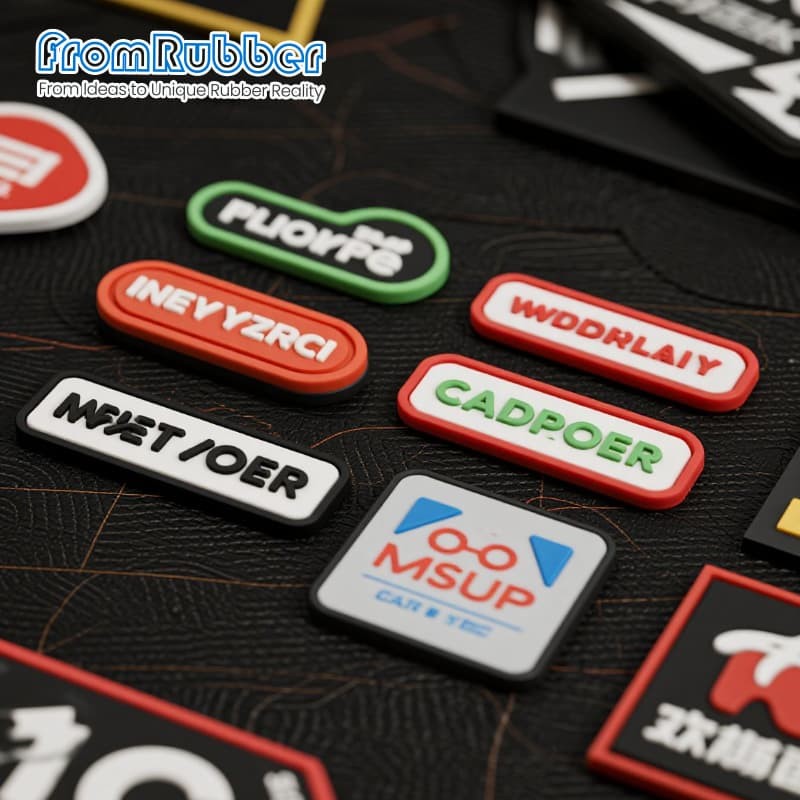
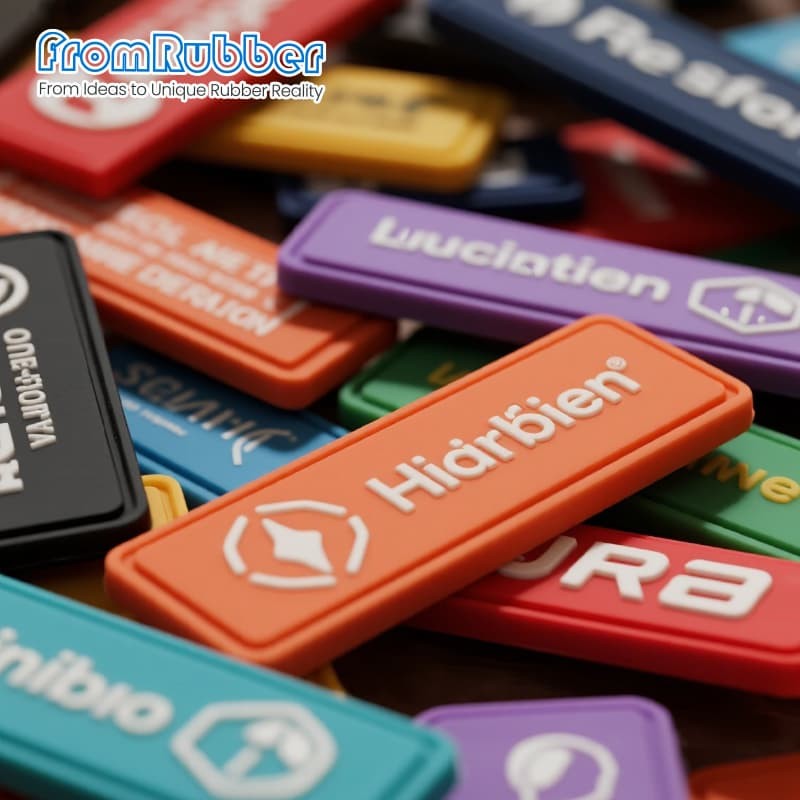
An embossed silicone label reads because of the shadow its relief casts, not because of its colour. That makes legibility a geometry problem: stroke width, relief height and viewing distance have to agree, or the logo turns into a soft bump that only reads at arm's length. Brands that approve a flat artwork proof and then cut a mould usually discover this at the sample stage, when the tool is already made. These labels belong on outerwear, caps, bags and footwear - anywhere a printed or woven label would wear, fade or sit flat. The moulding gives you a raised mark that survives washing and handling, and the same tool can carry a colour fill, a matte or gloss finish, or a second durometer for a soft-touch edge. Start from where the label will be read, then size the stroke and the relief. The values below are the working starting points we use to lay out a mould; the sample decides the final number, because the finish and the base colour change the contrast. Two rules sit underneath the table. Relief should not exceed roughly half the stroke width, or the letter fills badly and rounds over at the top. And a hairline serif at 0.3 mm will not survive moulding at all - simplify the mark before you cut the tool, not after. Vertical walls on a relief trap the part and tear at ejection. A small draft on each side of the letter solves it, and it costs nothing at the drawing stage. Material reaches a sharp internal corner last and the air has to leave first. A small radius at every internal corner improves fill and reduces short shots on fine detail. Contrast comes from the finish difference as much as from the colour. A matte base with a gloss raised mark reads at distance; two gloss surfaces tend to merge under shop lighting. A single filled colour is moulded in; a second colour adds a step and a registration tolerance. Decide the colour count before the tool, because it changes both the mould and the unit price. Relief too tall for the stroke, or no radius at the top edge. Reduce height or widen the stroke; do not simply increase pressure. Air trapped in a narrow cavity. Add radius, add draft, or accept a simplified mark at that size. Parting line pressure and mould wear. It shows first on a large flat field, which is why a busy background hides it and a clean one does not. Inconsistent mould temperature across a large part. It reads as a smudge on a dark label and is often mistaken for contamination. A second colour filled into a separate cavity has its own tolerance. On small text, that tolerance can exceed the stroke width, so single-colour moulding is often the better answer. Choose the embossed silicone label when the mark must be readable by touch, must survive repeated washing, or must sit on a curved technical panel. Choose woven when the brand needs fine type and many colours at low relief. Choose TPU when the priority is a sharp multi-colour print on a soft hand-feel. The full comparison, including how the three formats are priced in China, is in 3D silicone labels versus TPU patches versus woven labels. OuterwearCaps and bagsFootwearPromotional merchandise Attachment follows the same logic as any other moulded label: sew-down for heavy shells, heat transfer for smooth synthetics, and a backing adhesive only where the label is not subject to peel. If the part will be sewn, the flange rules on our sew-on silicone patch page apply here as well. We can start from a vector file, but the mould is cut from a 3D definition: relief height, edge radius, draft and colour separation. Send the vector plus the intended size and reading distance, and the 3D proposal will follow. It depends on stroke width more than on process. A wide mark can carry well over a millimetre; a 0.4 mm stroke cannot, because the wall would round over. The table above is the practical starting point. Yes. A lower-durometer compound gives a softer hand and a matte surface, at some cost in tear resistance on very thin sections. Tell us where it will be touched and we will balance the two. 1,000 pieces for a custom moulded label. Tooling is quoted separately and depends on size, relief complexity and colour count. Relief height, stroke width and colour count are decided before the tool is cut, and they follow from the size and the reading distance. Send a vector file with the intended dimensions and we will return a 3D layout and a tooling quote.Embossed 3D silicone labels: legibility is a mould dimension, not an art choice
Sizing the relief to the reading distance
What the mould needs in order to hold the mark
Draft
Every wall needs a way out
Corner radius
Sharp inside corners fill last
Finish split
Matte base, gloss relief
Colour fill
One colour is a cavity, two is a process
Five failures, and the dimension behind each
Rounded, unreadable letters
Short fill on fine detail
Flash across the background
Patchy gloss
Colour out of register

Label, woven badge or TPU patch
Questions from brand and product teams
Can you work from a flat logo file?
What relief height can moulding achieve?
Can the label be soft-touch or rubberised?
What is the minimum order?
Send the logo at final size, and where it will be read