Soft Silicone Name Labels for Kids' bottles, lunch boxes, and school supplies
- Model
- BH-silicone label
Item specifics
- Design
- Follow 3D Drawing Or Physical Object
- Process
- Molding
- Feature
- Safe, colorful, and washable
- MOQ
- 1000pcs
- Application
- bottles, lunch boxes, and school supplies.
Review
Description
A name label on a child's bottle is asked to do three things: stay on through a dishwasher cycle, stay legible through a school year, and come off eventually without leaving a scar. Silicone handles the first and second because it does not absorb water and does not go brittle. The third, and most failures, come down to how the label is fixed to a small, curved, frequently wet object. That is the design question this page answers. The shape and the character set are the easy part; substrate, fixing and cycle count are where a programme is won or lost. The same label behaves differently on five common school items. Read down the middle column before choosing a shape, because two of these substrates rule out adhesive entirely. If a buyer asks for "a sticker that survives the dishwasher", the honest answer is that the fixing has to change. Silicone is not the constraint; the bond is. Silicone is unaffected, but adhesives soften and creep. A label that is perfectly placed on day one can slide 2 mm by week six. Tablet detergent is aggressive over hundreds of cycles. Printed legends are the first thing to dull; moulded characters are not affected. Water jets and other items abrade the exposed edge. A raised legend on a thin flange is more exposed than a recessed one. Two practical consequences follow. First, test on the real item in a real dishwasher, not in a beaker of hot water. Second, specify the number of cycles the label must survive - a term-time bottle sees far more than a party favour. Best where the same first name ships in volume, or where the label carries a school or club mark. Moulding gives a raised, high-contrast legend that survives anything the dishwasher does, but every name needs its own cavity or insert, so it suits a defined character set. Rule of thumb: keep the character height at least 3 mm, and the stroke at least 0.6 mm, for a label read at arm's length by an adult in a hurry. Best where parents write the name themselves. A recessed or matte panel takes permanent marker and can be cleaned; a gloss panel smears and loses the writing within weeks. Specify a matte, slightly textured panel and state which marker the ink was tested with. Pair the panel with a moulded icon or a colour code so the item is identifiable even when the writing has faded. For textile applications of the same material, the chemistry is covered under washable laundry labels. For gear that faces sun and abrasion rather than detergent, see waterproof labels for outdoor gear. Sometimes, and that is the problem. On PP and Tritan the bond is marginal and fails unpredictably. Specify a band or a slip-on collar where the item will be dishwashed, and reserve adhesive for flat, higher-energy surfaces such as a lid panel. With interchangeable inserts, yes. Tooling and unit cost both depend on how many distinct names are in the set, so give us the full list before the mould is designed. Silicone is a common choice for that reason, but "safe" is a claim that needs documentation for the destination market. Ask for the material and migration test reports, and keep the design free of small detachable parts. Small enough to fit a bottle neck, but the character height and the fixing both set a floor. Below about 3 mm character height, moulded names stop being reliably readable for an adult at a glance. Bottle neck diameter, lid recess and dishwasher cycle count decide the fixing and the section. Send a sample of the item with your name list, and we will return a band or panel proposal plus a mould plan.Name labels for bottles and lunch boxes: the fixing decides survival, not the silicone
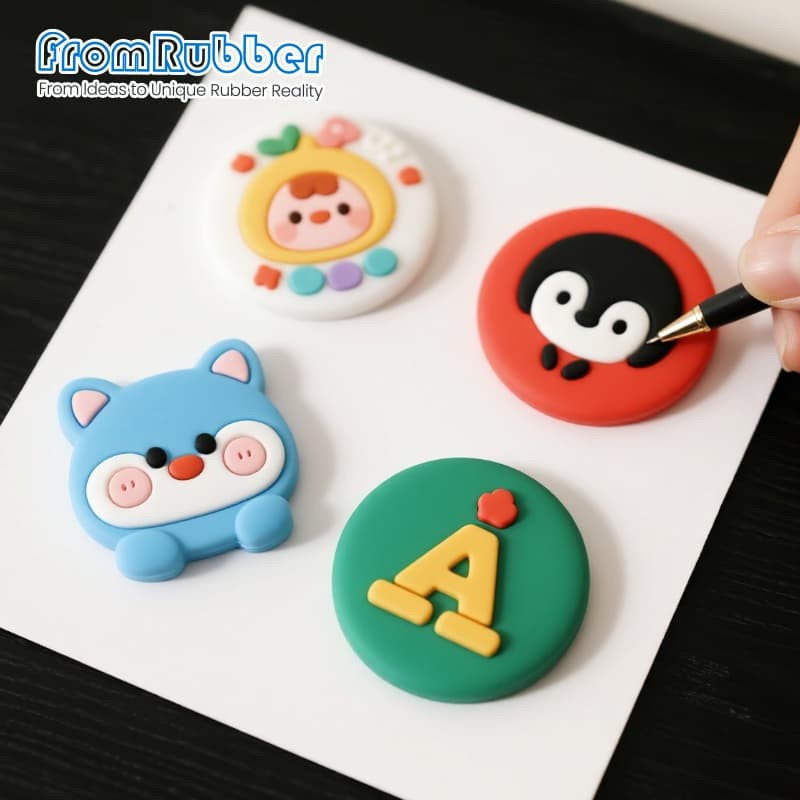
Match the fixing to the item, then to the wash cycle
The dishwasher is a harsher test than it looks
Heat
60 to 70 degrees C, repeatedly
Chemistry
Alkaline detergent
Mechanics
Jets and basket contact
Legibility is a character-width problem
Moulded name, fixed text
Writable panel
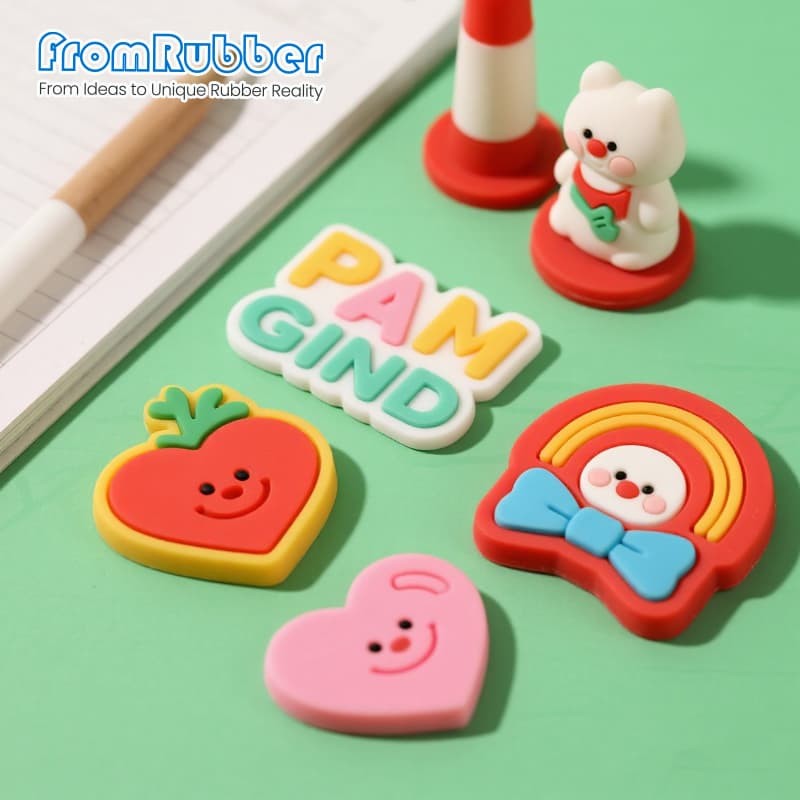
What a school or retail buyer should ask for
Product requirements
Commercial requirements
Questions from buyers and school suppliers
Will an adhesive label really stay on a plastic bottle?
Can one mould cover several names?
Is silicone safe for a product a child may chew?
How small can the label be?
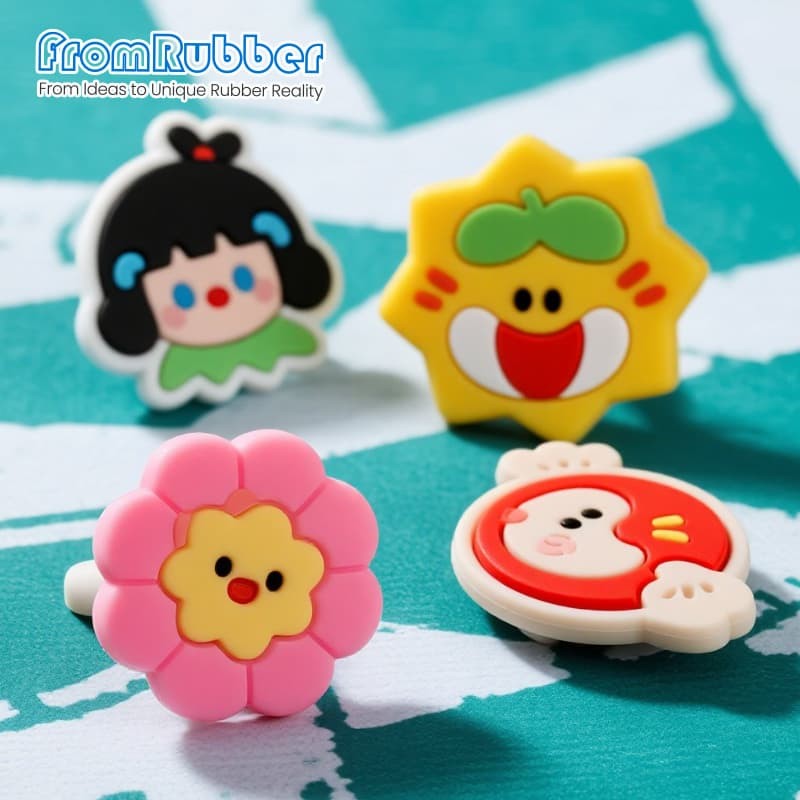
Send the item, not just the artwork