


IP67 Waterproof Plastic Junction Box Enclosure with Screw-Lock
- Model
- BH-Plastic Enclosure
Item specifics
- Design
- Follow 3D Drawing Or Physical Object
- Process
- Injection Molding
- Feature
- IP67 Waterproof
- MOQ
- 1000pcs
- Application
- cable management and wiring connections
Review
Description
IP67 means two things and only two: the enclosure is dust-tight, and it survives temporary immersion without water entering in harmful quantity. It is a test result on a complete assembly, not a property of the plastic. On a screw-locked lid, the result depends on how evenly the gasket is compressed around the whole perimeter - which is a function of screw count, screw spacing, boss stiffness and torque, not of the material. That is why two boxes made from the same resin can carry the same rating on paper and behave completely differently on a pole in the rain. This page is about the joint, the entries and the condensation - the three places where a screw-lock junction box actually lets water in. Between two screws the lid and the flange deflect away from the gasket under internal pressure or a knock. A screw at each corner and one mid-span on long sides is the usual minimum; longer sides need more. Driving one corner to full torque before the others pre-loads the gasket unevenly and can distort a thin lid permanently. Specify a sequence - diagonally, in two passes - as part of the assembly instruction. A gasket compressed at installation loses sealing force over time and temperature. A box opened twice a year needs a gasket that recovers, and a specification that states how many re-entries it tolerates. Self-tapping screws into plastic lose clamp load after a handful of cycles. If the box is a service point, specify metal inserts or a replaceable screw boss - otherwise the seal degrades with maintenance, not with weather. In field returns, the lid gasket is rarely the culprit. Water arrives along the cable, through a gland that was sized for a different cable diameter, or through a knock-out that was opened and never used. A gland seals over a stated cable diameter range, not a nominal size. Specify the range and the actual cable, and check that the gland's own O-ring sits against a flat, moulded face - not against a draft angle. Every cut-out that is opened and left open is a hole. Supply blind grommets with the box, not as an option, or specify moulded closed entries that are drilled only when used. Water runs down a cable. An entry at the top of a box needs a drip loop or a downward-facing gland; an entry at the bottom needs a service loop that does not sit in standing water. An IP67 box traps the air that was inside it on the day it was closed. Heat the box in sun and the internal pressure rises; cool it at night and the pressure falls, drawing moisture through the least-tight path and condensing it on the coldest surface - usually the lid, directly above the terminals. The result is a box that passes an immersion test and still corrodes its connections. Three practical answers, in order of preference: a breather vent that equalises pressure without passing liquid water; a desiccant sachet sized to the internal volume and the service interval; or a design that keeps the terminals off the floor of the box so condensate drains away from them. Choose one deliberately, because the box will do one of them whether or not you specify it. Correct gasket, correct screws, correct torque and sequence, glands fitted as they will be in service. A test on a bare box proves nothing. Depth and duration should match the rating being claimed, with the box at the temperature extremes it will see, not only at room temperature. Water inside the lid is a failure even if the terminals are dry. Record where it pooled; that tells you which feature to change. Open the box, re-seal it, and test again - twice. A junction box is maintained, so its rating has to survive maintenance. Warm and cool the sealed box and check for condensation. This is the test that catches the failures an immersion test misses. The wider lesson - a laboratory pass that still leaks on site - is written up in IP67 report versus field performance, and the rating scale itself in IP65 to IP68 explained. For wall-mounted boxes where the fixing pattern is the main design question, see the outdoor enclosure with mounting holes. No. IP67 covers temporary immersion in a test, not years of sun, frost and thermal cycling. For permanent outdoor mounting, specify UV-stabilised material and a condensation strategy alongside the rating. As many times as the gasket and the screw bosses allow, which is a design figure, not a default. Specify the service interval; if the box is opened quarterly, metal inserts and a replaceable gasket are the cheap answer. Terminal blocks and DIN rail features can be designed in, and cut-outs are made to drawing. What you cannot do is add a terminal block later without changing the internal geometry, so raise it at the design stage. Yes, with the same sealing logic, though the material and the UV exposure change. A clear lid makes inspection easier and demands more care over gasket compression around a stiffer part. Gland positions, screw pattern and gasket choice follow from how many cables enter, from which direction, and how often the box is opened. Send the schedule and the mounting location, and we will propose an enclosure with the joint and the entries resolved.IP67 junction box: the rating is a test condition, the sealing is a screw pattern
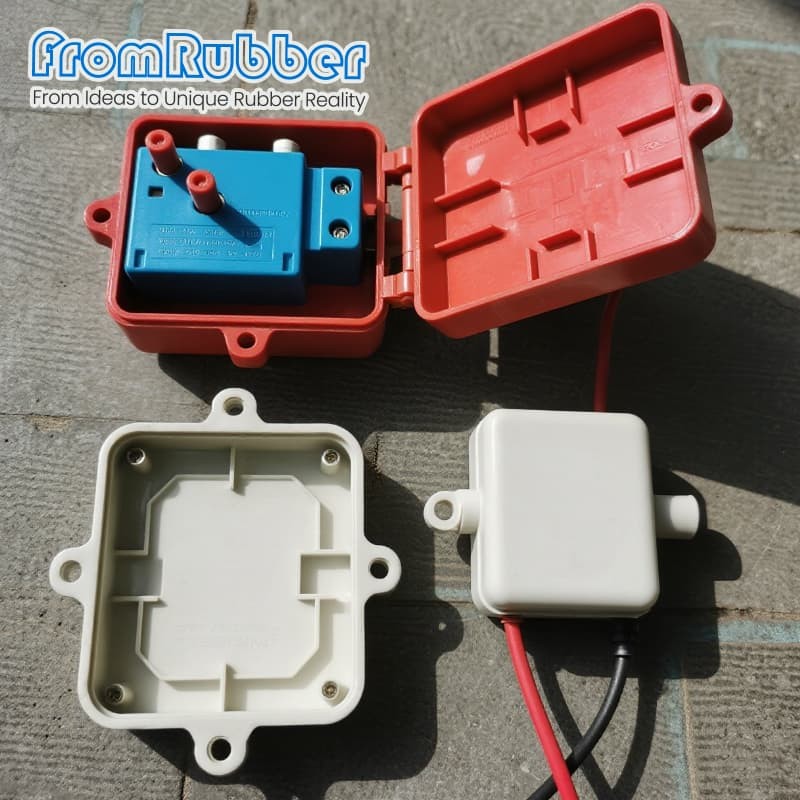
Four variables in a screw-locked lid
Screw count and pitch
Long unsupported spans bow
Torque and sequence
Tightening order matters
Gasket compression set
It relaxes between services
Boss durability
Threads wear on re-entry
Cable entry is where most of them leak
Gland range
Unused entries
Drip loop
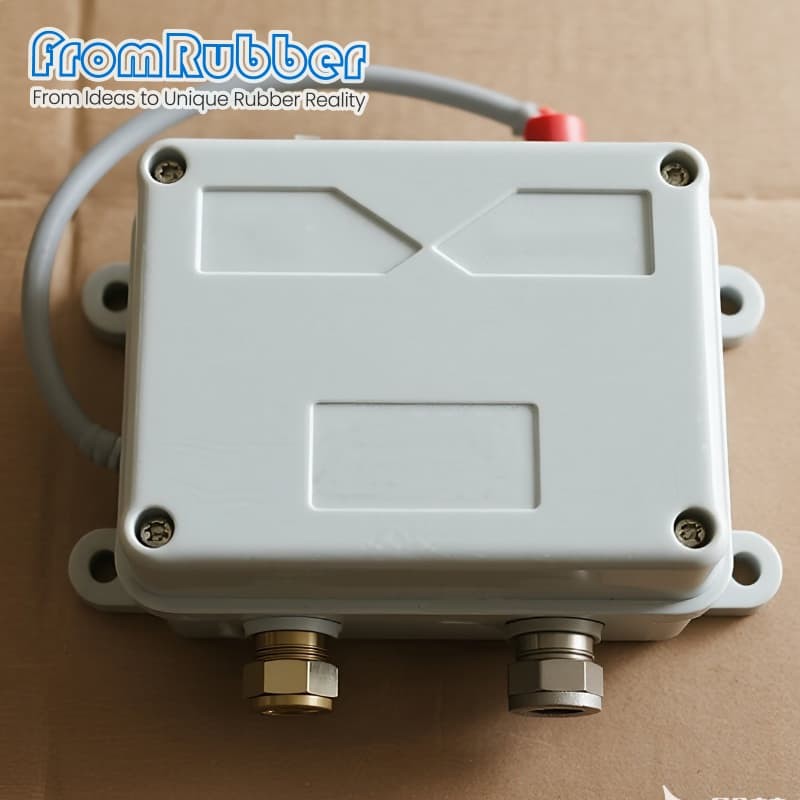
Sealed is not the same as dry
Specification on this series
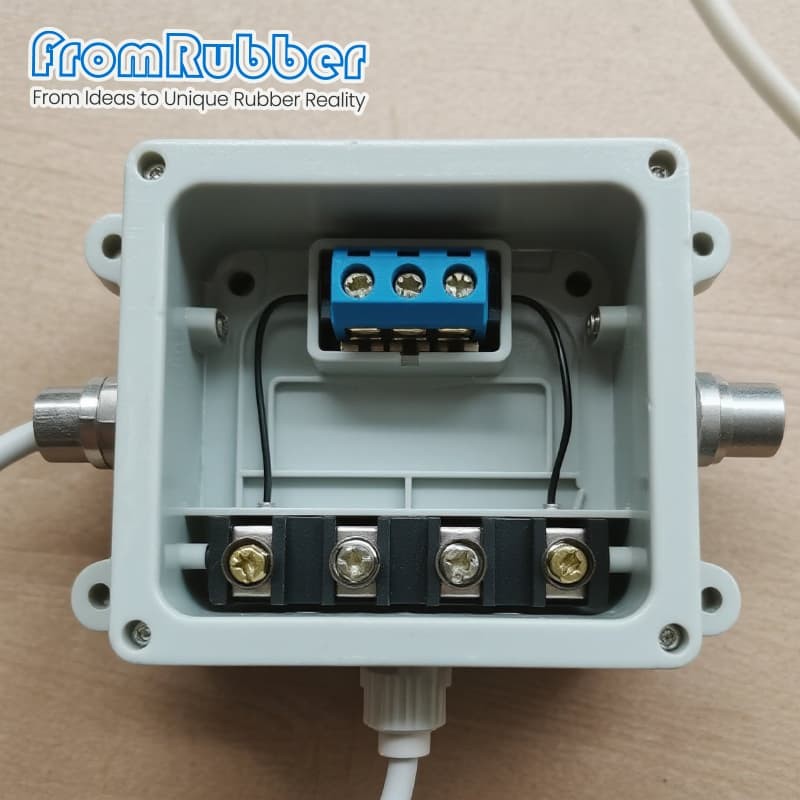
Qualifying the assembly, not the moulding
Assemble as shipped
Immerse to the claim
Open it and look
Re-enter and repeat
Cycle the temperature
Questions from specifiers and panel builders
Does IP67 mean it can be left outside permanently?
How many times can the lid be reopened?
Can the box be supplied with the terminals fitted?
Is a transparent lid available?
Send the cable schedule and the service interval


