Outdoor Plastic Enclosure with Mounting Holes - Secure & Rustproof
- Model
- BH-Plastic Enclosure
Item specifics
- Design
- Follow 3D Drawing Or Physical Object
- Process
- Injection Molding
- Feature
- Secure & Rustproof
- MOQ
- 1000pcs
- Application
- Outdoor
Review
Description
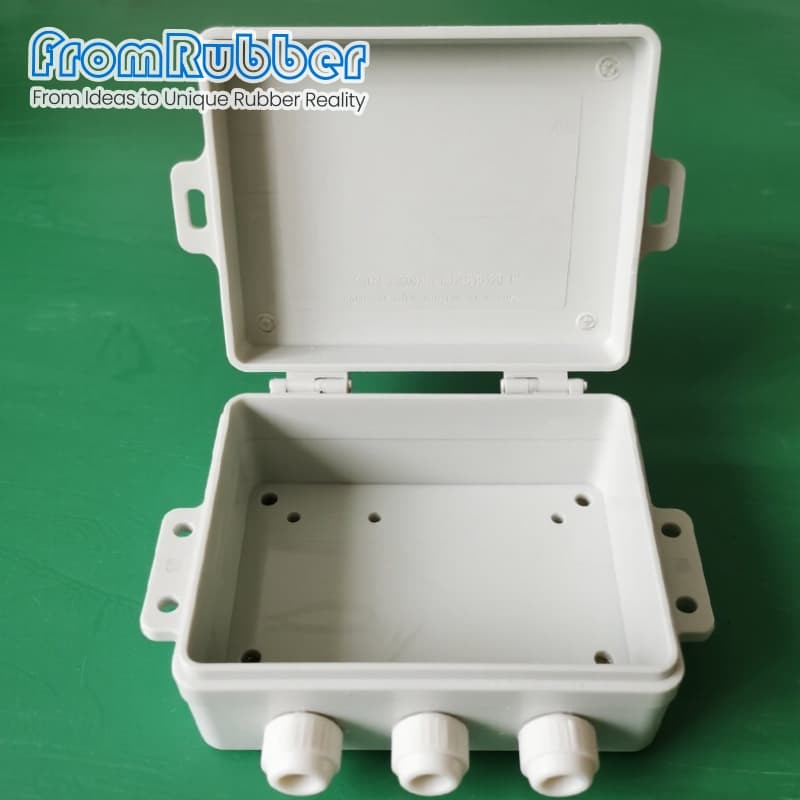
A wall-mounted outdoor box is held by four screws and tested by weather. The same four holes have to carry the weight of the box, the cable load and the wind, and they must not become the route by which water reaches the board. That is why the mounting feature is a design decision, not a hole added at the end of the drawing. Get it right and the box hangs for a decade. Get it wrong and you get two predictable complaints: a boss that cracks at the screw, or water tracking down the screw thread into the enclosure while the lid seal is perfectly intact. The boss is moulded on an external flange or ear, so the screw never enters the sealed volume. Water on the screw head has nowhere to go except down the outside. This is the configuration to choose when the box carries electronics and the fixing points cannot be protected. Cost: a wider footprint, a slightly larger tool, and a flange that has to be stiff enough not to bow when the screws are tightened. The screws pass through the sealed volume, so each one needs its own seal: a captive gasket washer, a blind boss that does not break through the inner wall, or a moulded-in thread that stops short of the cavity. Cheaper on footprint, harder to get right, and unforgiving of a missing washer on the line. If the thread is cut by a self-tapping screw, the wall must be thick enough that the screw does not break through into the cavity - a defect that is invisible until the first rain. The boss outside diameter needs enough material around the screw to resist hoop stress. Too tight and the boss splits along the mould line as the screw bottoms out. A boss that is much thicker than the adjoining wall shrinks differently and leaves a sink mark on the visible face, or a void inside the boss. Core it, do not thicken it. Self-tapping suits low-cycle assembly and low cost; a moulded-in or heat-set insert suits repeated service access. Decide by how often the box will be opened. A recessed head protects the screw from rain and from being sheared off against a wall. It also hides the fixing, which matters on visible installations. The pattern also sets the installation torque. A thin flange ear distorts long before a corner boss does, so the assembly instruction has to match the geometry - not the other way round. A plastic body has no corrosion path of its own, which is the real advantage over a sheet-metal box: no coating to scratch, no cut edge to rust, no galvanic couple at the fixing. But the screws are still metal. Specify stainless or a coated screw, and say so on the drawing, otherwise the enclosure outlives its fasteners and the first service visit finds four rusted heads. Two more details belong on the same drawing: a drain or weep feature if the box can collect condensation, and a UV-stabilised compound if the installation faces direct sun for years. The difference between an enclosure that looks the same after five summers and one that chalks is in the material grade, not the wall thickness. If the installation is exposed rather than sheltered, the ingress question moves from IP65 to immersion, and the sealing logic changes: see the IP67 screw-lock junction box. The rating scale itself is explained in IP65 to IP68 ratings, and general housing design in custom plastic enclosures. Usually yes if they sit on a flat area and do not require a side action. Moving a hole into a boss, or adding a counterbore, may need a tool change - which is why the pattern belongs in the first drawing review. Only if they pass through the sealed volume without their own seal. Specify external ears or blind bosses and the question disappears; specify through-bolts into the cavity and every screw needs a gasket washer. Enough for the box and its cable if the boss is cored and ribbed. Give us the installed weight, the cable pull and the vibration source, and the boss geometry follows from those three numbers rather than from habit. More per kilogram, and it brings better impact and heat resistance. On a sun-exposed installation the decision is usually made by UV and impact rather than by resin price. Hole pattern, boss geometry and sealing strategy follow from how the box is fixed and how often it is opened. Send the installation sketch and the load, and we will return a housing proposal with the mounting detail resolved before tooling.Mounting holes in an outdoor plastic enclosure are two features in one: a load path and a leak path

Decide the sealing strategy before the hole pattern
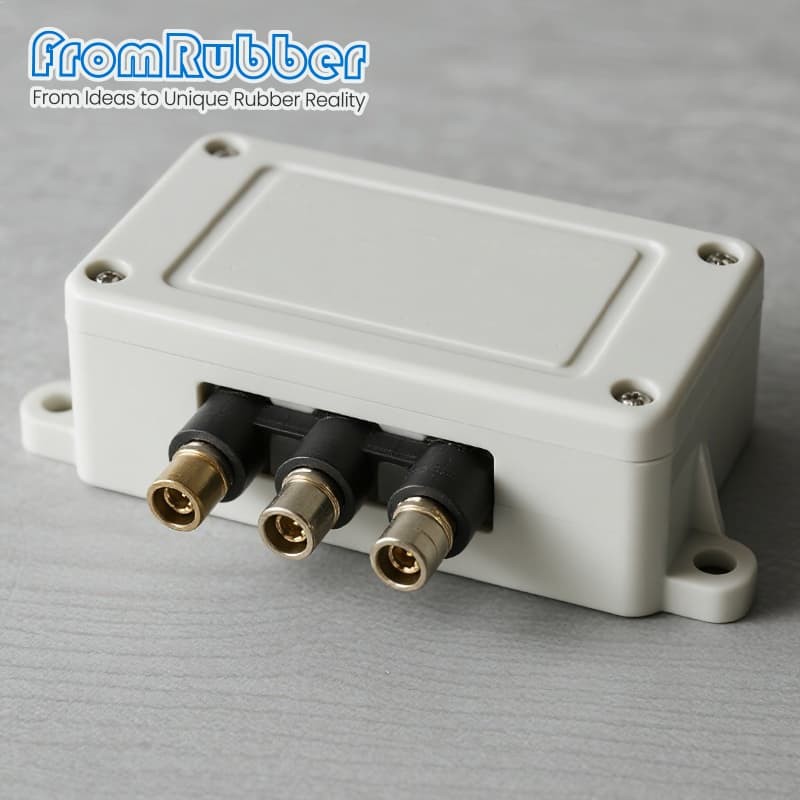
Holes outside the seal
Holes inside the seal
Anatomy of a mounting boss that survives
Boss diameter
Room for the thread, plus wall
Wall thickness
Uniform, not thick
Screw type
Self-tapping or insert
Counterbore
Head below the surface
Three patterns, three different trade-offs
"Rustproof" needs one more sentence
Specification on this series
Questions from installers and product engineers
Can the holes be added to an existing tool?
Will the mounting screws leak?
How much load can a boss take?
Does polycarbonate cost much more than ABS?
Send the wall, the screws and the cable load